Tennessee ATV Trails Near Chattanooga
Finding an ATV trail near Chattanooga can be frustrating: a road that looks rideable on a map may be closed, private, or intended for another kind of recreation. This guide explains the main nearby riding options, what to check before loading up, and how to choose a destination that suits your machine, experience, and plans.
Where to ride an ATV near Chattanooga
Chattanooga is close to a mix of public-land riding opportunities, private off-road parks, and larger destinations that make more sense for a weekend trip. They are not interchangeable. Rules, access, terrain, and the kinds of machines allowed can differ from one place to the next, so check the destination’s current information before you set out.
Prentice Cooper State Forest
Prentice Cooper State Forest is one of the first places Chattanooga-area riders often look into. It sits northwest of the city, in the direction of Signal Mountain and Soddy-Daisy, and includes public land with multiple kinds of recreation. Parts of a public forest are not automatically open to ATVs, though. The important step is confirming which roads or trails are designated for motorized riding and whether they are open on the day you plan to go.
The landscape is rugged compared with an easy gravel path: expect wooded terrain, uneven surfaces, and routes where weather can change how demanding a ride feels. A dry-looking trailhead can lead to a muddy section, loose rock, or a narrow road that requires careful passing. If you are riding with a novice, a child, or a stock machine, choose conservatively and do not assume every route is suitable just because it appears on a map.
Prentice Cooper is a public-land setting, not a private trail resort with one simple check-in process. Confirm the managing agency’s rules, access points, closures, vehicle requirements, and any permit requirements before you trailer out. For more location-specific context, see Prentice Cooper Above Chattanooga, Tennessee and [Tennessee Rules for Riding a WMA].
Adventure Off Road Park near South Pittsburg
Adventure Off Road Park near South Pittsburg is another option to investigate when you want an established off-road destination rather than trying to piece together public roads. A private park can be appealing for a first visit because the operator can explain its entry process, permitted vehicles, trail markings, and available facilities. Still, do not assume that another rider’s old trip report describes today’s conditions or rules.
Before you go, check the park’s own information for operating status, vehicle access, trail conditions, required waivers, and any rules for passengers or young riders. Ask whether your specific machine is suitable for the routes you have in mind. A two-seat side-by-side, a narrow ATV, and a wide or heavily modified machine can have very different practical limits on a tight trail.
A private park may have marked routes, but difficulty labels are not a guarantee that a trail will feel easy in wet weather or for a new rider. If you are unsure, ask staff to point you toward a manageable first loop and explain how to get help if your group has a breakdown. That small conversation can prevent a stressful day of backtracking.
When to consider a longer trip
If you are willing to travel beyond the immediate Chattanooga area, larger riding destinations can make a good fit for a full-day outing or a weekend. Windrock Park near Oliver Springs and the Brimstone area near Huntsville are examples riders may consider when they want a broader trail experience. They are not quick substitutes for a local ride, so account for travel time, lodging, permits, fuel, and the possibility that weather or closures may affect your plans.
A larger destination also calls for more planning. Check what type of machine is allowed, how the park handles trail access, where you can stage or park a trailer, and whether the trails you want to ride connect to the area you expect. A map can show an extensive network, but that does not mean every route is open or appropriate for every vehicle.
For a broad starting point, Where to Ride an ATV in Tennessee can help you compare areas across the state. If you are still weighing nearby options, this table gives you a practical way to think about the choice:
| Destination type | Best for | Before you go |
|---|---|---|
| Public land near Chattanooga | Riders looking for a nearby forest or WMA experience | Confirm designated motorized routes, access rules, closures, and permit requirements |
| Private off-road park near South Pittsburg | Riders who want a managed destination and park-specific guidance | Check operating details, machine restrictions, trail conditions, and entry requirements |
| Larger destination farther from Chattanooga | A full-day or multi-day ride with more extensive trail planning | Plan travel, lodging, fuel, staging, permits, and backup options |
How to choose a trail that fits your ride
A good trail choice is not just about distance. Think about the machine, the people riding with you, recent weather, and how comfortable your group is with changing conditions. A route that is fun for a confident rider on a well-equipped machine can feel like a poor choice for a family group that wants an easy outing.
Match the route to your machine and experience
Start with the trail’s restrictions and physical demands. A narrow ATV may fit where a wide side-by-side cannot. A long or heavily modified vehicle may need more room to turn, while a low-clearance machine may struggle on rocky or rutted sections. Confirm any posted width, vehicle-type, or equipment rules with the land manager or park before committing.
Be realistic about the least experienced person in your group. If one rider is new, plan a route that allows them to get comfortable with braking, steering, and changing terrain before tackling harder sections. Riding together does not mean everyone has to attempt the same trail. A managed park may offer route choices, while public-land routes can require more careful advance planning.
It also helps to think about recovery, not just forward progress. Ask whether your group has the right tires, basic tools, a way to contact help, and enough fuel for the route. Carrying a winch does not make every obstacle a sensible one to attempt. When the trail is beyond your group’s ability or the route is blocked, turning around is often the safest and least expensive decision.
Check maps, closures, and conditions
Use a map to plan, but do not treat a line on a screen as proof that a road is open to motorized riding. Digital maps can display roads, property boundaries, or trails that are closed, restricted, or not intended for your vehicle. Verify access with the official manager or park operator, and pay attention to signs and gates on site.
Tools such as onX Offroad can help you study terrain and plan a route, but use them as a planning aid rather than as permission to ride. Compare the map with official information, note likely exit points, and save the details you may need before entering an area with weak cell service. If your route depends on a road or trail that you cannot confirm, choose another plan.
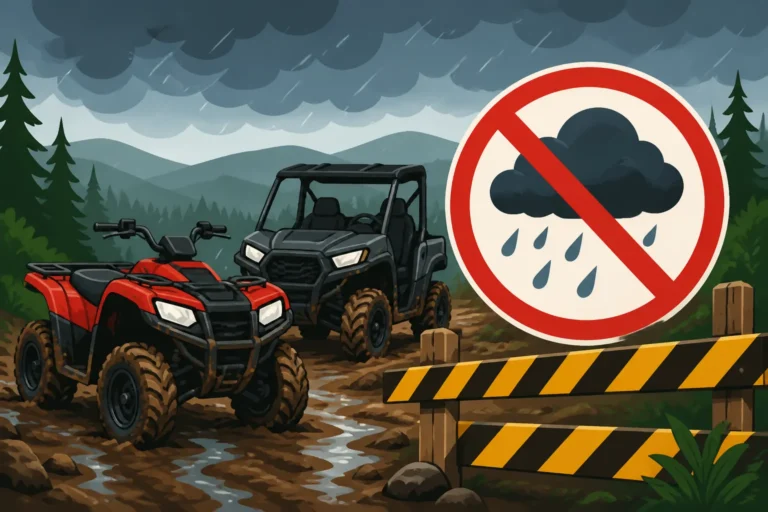
Weather deserves its own check. Heavy rain can turn a familiar route into a slick, deeply rutted ride; fog can make narrow roads and steep terrain more stressful; and a recent storm may bring downed limbs or washouts. Check [Tennessee Trail Conditions Before You Ride] and [Tennessee Trail Closures to Check First] as part of your preparation. If conditions are unclear, contact the land manager or park rather than relying on an old social media post.
Prepare for permits, safety, and the trip itself
A smooth ride usually starts before the trailer is hooked up. Confirm what your destination requires, gather documents and equipment, and make a simple plan for what you will do if the weather turns or your machine has a problem. These steps can feel like extra work, but they are easier than discovering a rule or a dead battery at the trailhead.
Confirm access and permit requirements
Tennessee does not have one rule that automatically gives every rider permission to use every trail. Access may depend on the landowner, the managing agency, or the private park. A permit or park pass for one destination should not be assumed to cover another. Check the specific place you are visiting and confirm whether the permit applies to the rider, vehicle, or both.
For public land, look for official details about designated routes, operating seasons, closures, machine requirements, and any special rules for the area. For a private park, check how admission works, whether reservations or waivers are involved, and what the operator expects riders to carry. [Tennessee Trail Permits Explained] provides broader context on permits, while destination-specific requirements should be confirmed directly before departure.
Do not use a neighboring road as a shortcut unless you have confirmed that it is open to your vehicle. A machine that is legal on a designated trail may not be legal on a public road. If your route includes a road connection, verify the rules for that particular road and the type of vehicle you are riding.
Pack for a changing day
Pack for a ride that may take longer than expected. Bring drinking water, food, basic first-aid supplies, a charged phone, and any required safety gear. Consider a paper map or an offline map in addition to your phone, especially if your route enters areas where service may be limited. Tell someone who is not riding with you where you plan to go and when you expect to check in.
Before leaving home, inspect the machine. Check tires, brakes, lights, fluid levels, controls, and any straps or cargo that could come loose. For a side-by-side, check seat belts and make sure passengers understand how to sit and hold on. For an ATV, review safe riding posture and make sure the rider can control the machine without being overwhelmed by the terrain.
Clothing should match the conditions, not just the forecast at the parking area. A shaded ridge can feel cooler than town, while a wet trail can soak gloves and boots. Eye protection matters when dust, branches, or debris are present. If you are riding in a group, agree on a pace and a simple regrouping plan so a gap between machines does not turn into confusion.
Plan for families and mixed-ability groups
When children or new riders are joining, make the day easier by setting expectations before you start. Explain that riders should stay on marked routes, follow the group leader, and stop if they feel uncomfortable. Choose a destination where you can confirm age, passenger, and machine rules in advance. Do not assume that a child who can sit on a machine is ready to operate it on a trail.
A mixed group may need a conservative route and frequent breaks. Let the newer rider set the pace, and avoid pressure to continue when someone is tired or anxious. Fatigue makes it harder to notice changing surfaces, judge turns, and respond calmly to obstacles. A shorter, enjoyable ride is better than stretching the day until the whole group is worn out.
If you are using onX Offroad or another navigation tool, make sure at least one other person in the group understands the route and how to return to the staging area. Keep your planned route simple enough that everyone can follow it. For more map-planning advice, see Tennessee Trail Maps Worth Carrying.
A practical Chattanooga-area ride plan
A little structure helps you turn a promising destination into a realistic outing. Start by choosing the type of ride you want, verify access, then prepare a backup plan. This is especially useful when you are traveling from Chattanooga and do not want to spend the day discovering that a route is closed or unsuitable for your machine.
Use this pre-trip checklist
- Choose the destination. Decide whether you want public-land riding near Chattanooga, a managed private park, or a longer trip to a larger riding area.
- Confirm your machine is allowed. Check vehicle type, size, passenger, and equipment restrictions with the official destination.
- Verify access for your route. Confirm that the trails or roads you plan to use are designated and open. Do not rely only on a digital map or an old ride report.
- Check conditions and closures. Look for recent notices and ask the park or land manager if the status is uncertain.
- Understand permit and entry requirements. Confirm what each rider needs and whether the requirements differ between public land and a private park.
- Prepare the machine and group. Inspect the vehicle, pack water and safety gear, and set a pace that works for the least experienced rider.
- Set a backup plan. Identify another approved route or destination in case weather, access, or trail conditions change.
For riders considering public-land routes, [Tennessee Rules for Riding a WMA] is useful background. It does not replace checking the specific area’s rules, but it can help you know what kinds of questions to ask before leaving home.
Make the ride enjoyable, not just ambitious
It is tempting to fill a day with as many miles as possible, especially if you have driven a trailer across town or traveled from farther away. But a satisfying ride is not measured only by distance. A route that leaves time to regroup, inspect the machine, and return before dark is often a better choice than a demanding loop that pushes the group’s limits.
If you are new to the area, begin with a conservative plan and learn how the terrain feels. Pay attention to trail signs, changing surfaces, and other users. Stay on approved routes, give other trail users room, and avoid creating new tracks around mud or obstacles. Riding off the marked route can damage land and may put you somewhere that is difficult or unsafe to leave.
For a Chattanooga-area ride, the best destination is the one that is open, appropriate for your machine, and comfortable for your group that day. Confirm details before you load, carry a backup plan, and be willing to change course when conditions call for it.
Disclaimer
This article is for general informational purposes only and does not constitute professional advice. Laws, prices and regulations vary by location and change over time. Consult a qualified professional for guidance on your specific situation.