Best Places to Ride an ATV in Tennessee
Tennessee’s best ATV riding depends on what you want from a day out: a maintained trail network, steep coal-country climbs, a family-friendly loop, or a quieter ride on a public-land route. This guide compares the main options, explains the practical differences between them, and shows what to check before you load up.
How to choose where to ride in Tennessee
Tennessee has several well-known riding areas, but they are not interchangeable. Some are privately operated parks with their own permits and trail systems; others are public lands where access is limited to designated routes and state rules apply. Start by deciding whether you want a managed park experience or a public-land ride.
Compare the main riding areas
Windrock, Brimstone Recreation and Ride Royal Blue are popular choices for riders seeking extensive trail networks and a dedicated riding destination. North Cumberland Wildlife Management Area offers riding on designated routes across a large public-land area, while Big South Fork’s O&W Road is a more specific option rather than a sprawling park trail network.
| Riding area | Location | Best fit | What to plan for |
|---|---|---|---|
| Windrock Park | Oliver Springs | Riders looking for a large trail network and varied terrain | Park permit, trail map, fuel and changing conditions |
| Brimstone Recreation | Huntsville | Riders wanting a managed recreation area and a range of routes | Land-use permit, route selection and local conditions |
| Ride Royal Blue | Near Pioneer | Riders planning a North Cumberland-area trip | Resort or land-use requirements and route planning |
| North Cumberland WMA | Northeastern Tennessee | Riders comfortable following designated public-land routes | State permit, unit boundaries, closures and seasonal rules |
| Big South Fork O&W Road | Big South Fork area | Riders interested in a defined route and scenic backcountry setting | Current access status and route-specific rules |
For a broader overview, see [Where to Ride an ATV in Tennessee]. If you already have a destination in mind, the individual guides to [Windrock Park at Oliver Springs, Tennessee], [Brimstone Recreation at Huntsville, Tennessee], and [Ride Royal Blue Resort in Tennessee] can help you narrow down the setting that suits your group.
Match the route to your experience and machine
A beginner may have a better day on a clearly marked, easier route than on a steep, rocky climb that looks exciting in a video. Ask whether the area has routes suited to your experience, whether a stock ATV can manage them, and how trail difficulty is described. Terrain can change quickly after rain, so a route that felt manageable in dry weather may become much more demanding when it is muddy or slick.
Your machine matters, too. A wide side-by-side may not fit comfortably on every narrow trail, and a small youth ATV may be poorly suited to long, rough routes. Before choosing a destination, confirm that your vehicle type and width are allowed on the routes you want to ride. [Tennessee Trails for Beginners] is a useful place to start if you are building a first-trip shortlist.
A map app such as onX Offroad can help you understand the general layout of an area and plan a route before you arrive. Treat it as a planning aid, not as permission to ride: posted signs, park maps, gates and land-manager directions take priority. Save the map information you need before heading into a spot with weak cell coverage.
Popular managed parks for ATV and UTV riding
Managed parks are often the simplest option for visitors who want a concentrated riding destination. They can offer marked routes, established access points and on-site or nearby services, but each park sets its own requirements. Do not assume that a permit purchased for one location will work at another.
Windrock Park near Oliver Springs
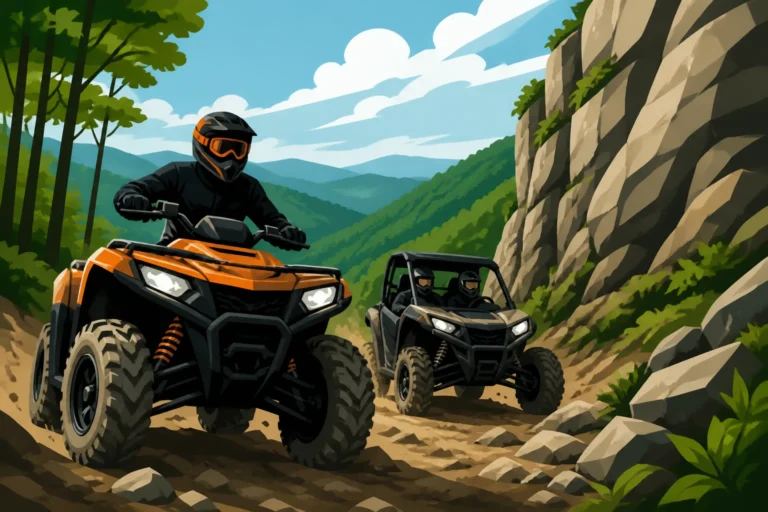
Windrock sits near Oliver Springs in East Tennessee and is known for a large network of routes through wooded, mountainous terrain. Riders can encounter everything from easier stretches to rocky, steep or technical sections, so choosing a route to match your group is important. A long trail network can be tempting, but a route that is too ambitious may leave a new rider tired well before the day is over.
Plan the day around more than trail mileage. Consider where you will start, how much fuel the machine can carry, how long your group wants to ride, and whether everyone is comfortable with the terrain. Cell service can be unreliable in mountain areas, so agree on a regrouping point and carry a paper map or an offline route option. The guide [Windrock's Trail Permits] can help you understand the park-specific permit question; check the park’s current rules before setting out.
Windrock’s size makes it worth thinking carefully about your first loop. A family with younger riders might choose a conservative route and leave time for breaks, while an experienced group could plan a longer ride with a clear turnaround point. For route planning, onX Offroad can be a useful second reference alongside the park’s own trail map. Confirm the day’s open routes with the park before relying on any saved track.
Brimstone Recreation and Ride Royal Blue
Brimstone Recreation, near Huntsville, is another major East Tennessee riding destination. Its trail system gives visitors a range of possible outings, but route difficulty, weather and the experience of the least-confident rider should shape the plan. If your group includes first-timers, agree in advance that anyone can call for an easier route or a break without feeling pressured to keep up.
Ride Royal Blue, near Pioneer, is a separate destination associated with the North Cumberland area. It can work well as a base for a dedicated riding trip, especially when you want to stay close to the trails. Still, do not assume that a Brimstone permit, Windrock permit or another park’s access rules apply there. Check the specific requirements for the place where you intend to ride.
For either destination, confirm what the permit covers, where you can stage, and whether your planned route is open. Keep the park map available even if you use a phone app; onX Offroad may help with general navigation, but it should not replace a park’s posted route information. For a comparison of the different state and park arrangements, read [Tennessee Trail Permits Explained].
Public-land riding and the Big South Fork route
Public-land riding can feel more remote and less like a traditional trail-park visit. That can be appealing, but it also means riders need to pay close attention to designated routes, boundaries and current closures. A road visible on a map is not automatically open to OHVs.
North Cumberland Wildlife Management Area
Tennessee’s North Cumberland Wildlife Management Area includes multiple units and designated routes. It is not one continuously open trail park where you can ride wherever a road or path appears. Riders need to understand the unit they are entering, stay on permitted routes and follow applicable access rules. See [Tennessee's North Cumberland WMA] before planning a public-land trip.
A useful preparation step is to identify your start point, the unit boundaries and the route you expect to follow. Check for seasonal notices and closures, and do not assume a route is open simply because it was open on a previous visit. If you are using a navigation app, compare it with official land-manager information and posted signs. onX Offroad can help organize a route plan, but it cannot turn a closed road or unauthorized track into an open riding route.
Public-land rides call for extra self-sufficiency. Bring enough water, food and fuel for the route you have chosen, and tell someone where you expect to ride. A group should decide what to do if a machine has a mechanical problem or a rider gets separated. If conditions change, turn around rather than pressing on because the route was part of the original plan.
Big South Fork’s O&W Road
Big South Fork’s O&W Road is a distinct route to research rather than a substitute for a large, interconnected park system. Its access and riding conditions may differ from the managed parks, and closures or other restrictions can affect whether a planned outing is possible. Start with current land-manager guidance and the route-specific details in [Big South Fork's O and W Road for Riders].
This type of ride rewards careful preparation. Check where the road begins and ends, what vehicles are permitted, and whether any sections are closed. Do not use an old trip report as proof that the route is open today. Carry a map that shows your return route, and leave enough daylight to finish without rushing.
The scenery and backcountry feel can make the route appealing, but riders should resist treating a scenic road as an invitation to explore adjoining tracks. Stay on the route that is open to your vehicle, respect gates and signs, and avoid disturbing wildlife or nearby property. When conditions or access rules are unclear, choose a managed park instead.
Plan a safer, smoother Tennessee ride
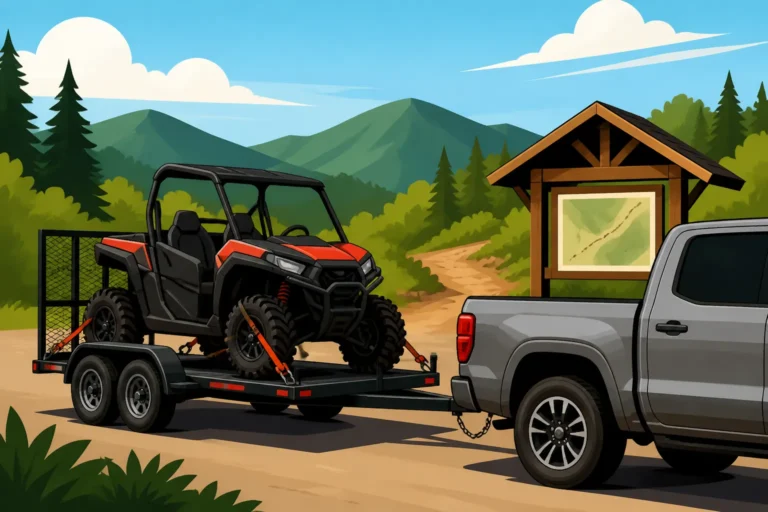
A good riding day is usually decided before the trailer leaves the driveway. Confirm the destination’s access rules, check the weather, choose a realistic route and make sure your machine is ready. Those small checks matter even more when you are traveling a long distance to reach the trails.
Check permits, trail status and route limits
Permit rules vary by location. A state permit for a public-land area does not necessarily cover a private park, and one park’s pass may not be valid elsewhere. Review the rules for every riding area on your itinerary, including whether each rider needs a permit and whether passengers have separate requirements. [Tennessee Trail Permits Explained] covers the broader distinctions.
Before leaving, check trail notices, weather and any posted route restrictions. Heavy rain can make a rocky climb slippery, turn a creek crossing into a hazard or lead to temporary closures. If a gate is closed or an official notice conflicts with a saved map, follow the closure. [Tennessee Trail Conditions Before You Ride] can help you build a practical pre-trip routine.
Also confirm that the planned route suits the machine. A route that works for a compact ATV may be uncomfortable or inaccessible for a wide UTV. Keep an eye on fuel range, tire condition, brakes and recovery equipment. A basic tool kit and a charged phone are helpful, but neither replaces a plan for dead zones or a machine that cannot continue under its own power.
Pack for the ride you are actually taking
A short afternoon loop and a full-day mountain ride call for different preparation. For a longer trip, bring water, food, weather-appropriate layers, a first-aid kit and any needed medication. Pack protective riding gear and check the destination’s helmet and equipment rules before departure. If the weather may change, a dry layer can make the ride home much more comfortable.
Discuss group expectations before starting. Decide who leads, who sweeps at the back, where to regroup and what everyone should do if the group gets separated. New riders may feel embarrassed asking to slow down, so make it clear that breaks and route changes are part of the plan. That small conversation can prevent a stressful day on unfamiliar terrain.
Finally, leave room to change your mind. If rain makes the route too difficult, a rider is tired or your group is running short on daylight, choose a shorter return route. The best Tennessee ATV destination is not necessarily the one with the most miles; it is the one where your group can ride within its abilities, follow the rules and return safely.
Disclaimer
This article is for general informational purposes only and does not constitute professional advice. Laws, prices and regulations vary by location and change over time. Consult a qualified professional for guidance on your specific situation.