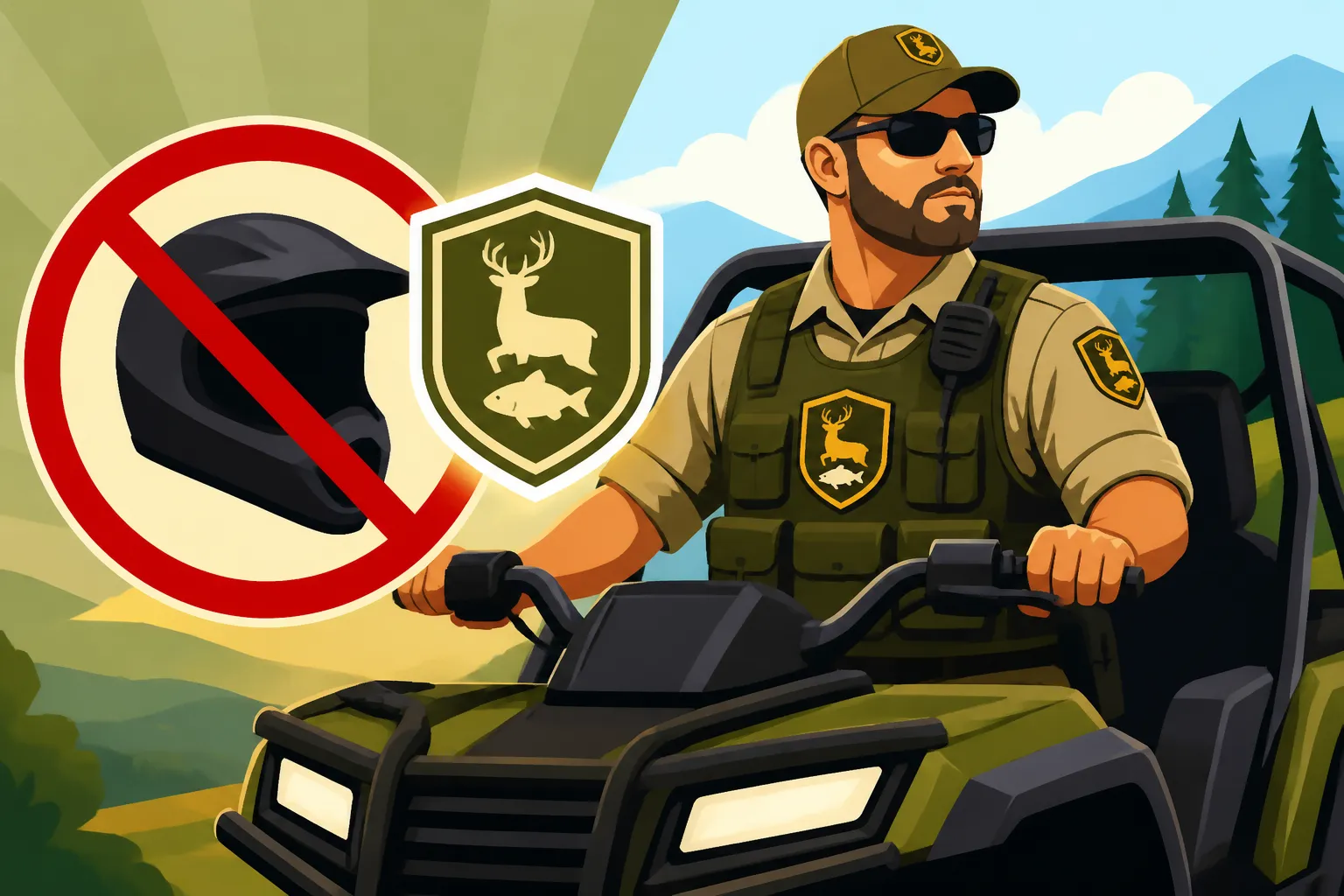
Why Wildlife Officers Are Exempt From the Helmet Rule
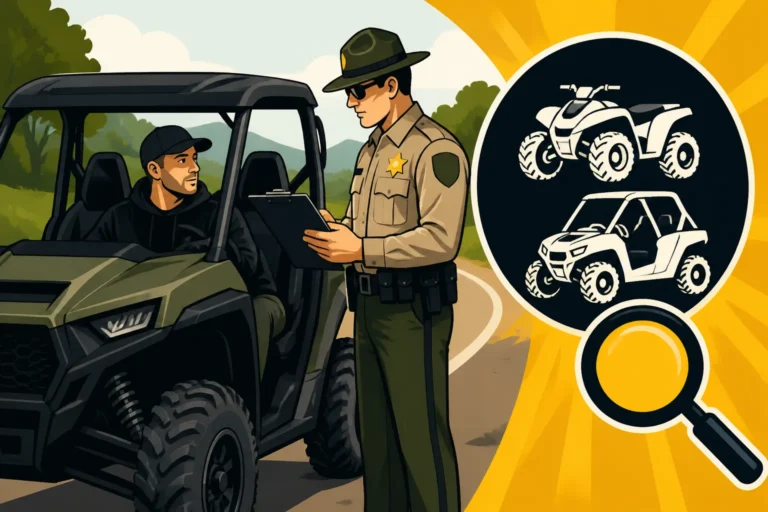
It’s a common sight on the trails and even on designated county roads in Tennessee: riders geared up, helmets securely fastened. But then you see it—a Tennessee Wildlife Resources Agency (TWRA) officer on an ATV or UTV, cruising without a helmet, and a tiny voice in your head pipes up, "Hey, what gives?" It’s a perfectly natural question to ask why some folks seem to play by different rules. This guide is here to demystify Tennessee's specific helmet laws, especially focusing on why those dedicated wildlife officers have an exemption, while the rest of us are expected to don our protective headgear.
Understanding Tennessee's Helmet Laws for OHVs on Roads
Navigating the rules for off-highway vehicles (OHVs) in Tennessee can feel a bit like sifting through a tangled fishing line – there are a lot of threads to follow! When it comes to helmets, the state has clear expectations for most recreational riders, especially when you venture onto public roads. This isn't just about personal preference; it's about a commitment to safety that the state takes seriously.
The General Rule for Most Riders
For the vast majority of us who love to hit the trails or ride our side-by-sides on designated county roads, Tennessee has a pretty straightforward rule: if you're operating an ATV or UTV on a public road, you need a helmet. This isn't just for the driver, but for passengers as well. The rationale here is simple and universally accepted: helmets save lives and prevent severe injuries. Imagine you’re riding down a gravel road in Scott County, maybe enjoying the crisp autumn air, and you hit an unexpected pothole or have to swerve for a deer. A helmet is that crucial layer of protection between your head and the unforgiving ground. Even if you’ve invested in top-of-the-line accessories from a company like SuperATV to make your rig more capable, that helmet is arguably the most important piece of gear you own for road use. The state is really clear on [Tennessee Helmet Law for ATV Riders] and [Tennessee Helmet Law for Passengers] when it comes to public roads.
This requirement isn't meant to be a nuisance; it's born from a long history of accident data showing just how critical head protection is. While the thrill of riding can make some feel invincible, the reality is that accidents can happen to anyone, regardless of their skill level or the quality of their machine. Wearing a helmet is a non-negotiable part of riding responsibly on any public thoroughfare, ensuring that you're prepared for the unexpected. Think of it as part of your essential equipment, just like a fire extinguisher or a first-aid kit, items that are often overlooked until they're desperately needed.
Age-Based Requirements and Off-Road Nuances
The helmet discussion gets a little more nuanced when we talk about age and whether you're on or off a designated road. In Tennessee, the law places particular emphasis on younger riders. Specifically, anyone under the age of 18 is generally required to wear a helmet, regardless of whether they are on a public road or private off-road trails. This is a common-sense measure designed to protect minors who might have less experience, slower reaction times, or a developing understanding of risk. This specific requirement is often highlighted when you look into [Why Tennessee Binds Off-Road Helmets Under 18]. The idea is to instill safe riding habits from a young age and provide maximum protection during their formative years of riding.
When it comes to adult riders (18 and over) on private land or dedicated off-road parks that don't fall under the public road classification, the helmet rules can vary. Many private parks and trails recommend helmets for all riders, and some may even require them as part of their entry waiver, but the state's legal mandate for adults generally focuses on public road use. However, even when not legally required, wearing a helmet off-road is always the smartest choice. The terrain can be unpredictable – steep climbs, sudden drops, hidden roots, and rocks are all part of the adventure. A rollover can happen in an instant, and without a helmet, the consequences can be catastrophic. So, while [Tennessee Helmet Law Off-Road] might offer some leeway for adults, always err on the side of caution.
The Rationale Behind the Wildlife Officer Exemption
Now, let's tackle the burning question: why do TWRA officers get a pass? It's not because they're above the law or think themselves immune to injury. Their exemption is deeply rooted in the practical, often high-stakes demands of their job, where a helmet can genuinely hinder their ability to perform critical duties effectively and safely for the public.
Public Safety and Emergency Response
Tennessee Wildlife Resources Agency officers are not just wardens; they are fully commissioned law enforcement officers with a broad range of responsibilities that often put them in emergency situations. Picture a scenario where an officer is responding to a poaching incident deep in a remote area, tracking a lost hiker, or assisting in a search and rescue operation after an accident on a river. In these time-sensitive moments, every second counts, and clear communication is paramount. Wearing a helmet, while great for impact protection, can impede hearing critical sounds – a faint call for help, the rustle of an animal, or the subtle crunch of leaves indicating a person's movement. It can also muffle radio communications, making it harder to coordinate with other units.
Furthermore, in many emergency situations, an officer might need to quickly dismount their ATV or UTV to pursue a suspect on foot, administer first aid, or access specialized equipment. The act of removing and securing a helmet, even if it only takes a few seconds, can be a crucial delay when lives or critical evidence are on the line. Their job often involves a fluid transition between driving and engaging directly with people or situations in the field. The exemption is designed to ensure that these officers can operate with maximum efficiency and situational awareness, which ultimately benefits public safety. This falls under the broader umbrella of [Why Wildlife Officers Are Exempt From the Helmet Rule], focusing on the practical demands of their unique role.
Practical Operational Needs
Beyond immediate emergency response, the daily operational needs of TWRA officers often justify the helmet exemption. These officers frequently patrol vast, diverse territories, from dense forests to sprawling wetlands, often far from paved roads. Their duties include wildlife management, fisheries enforcement, boating safety, and land conservation. Imagine an officer needing to quickly scan the tree line for a camouflaged hunter or assess a remote campsite for illegal activity. A helmet, particularly one with a visor, can restrict peripheral vision, limit the field of view, and create glare, all of which compromise their ability to observe their surroundings thoroughly. In their line of work, clear, unobstructed vision is not just a convenience; it's a safety necessity for them and for the public they protect.
Consider also the need for direct interaction. TWRA officers frequently engage with the public, whether it's checking hunting licenses, educating campers, or responding to citizen complaints. A helmet can create a barrier, both physically and psychologically, making it harder to establish rapport and communicate effectively. Removing a helmet for every brief interaction would be incredibly inefficient and disruptive to their patrol routine. The exemption acknowledges these practical realities, allowing officers to perform their multifaceted roles without unnecessary impediment. This operational flexibility is a key reason for [Tennessee Equipment Rules for Road Use] having this specific carve-out for official personnel.
Broader Exemptions for Official Duties
The exemption for wildlife officers isn't an isolated quirk in Tennessee law. Rather, it fits into a broader framework of exemptions granted to various official personnel whose duties require a different set of rules for public safety and operational efficiency. Understanding these broader categories helps to contextualize the TWRA officer's situation.
Other Emergency and Government Personnel
Think about other first responders you see in action. Police officers, firefighters, and emergency medical personnel often operate vehicles and equipment under different regulations than the general public. For instance, a police officer in pursuit might exceed speed limits, or an ambulance might run a red light – actions that would be illegal for a civilian driver. These exemptions are not about privilege, but about enabling these professionals to do their jobs effectively in critical situations. Similarly, other law enforcement or emergency personnel might have specific exemptions for riding ATVs or UTVs if their duties demand it. This could include park rangers, search and rescue teams, or certain government officials working on land management.
The core principle here is that when an individual is acting in an official capacity, performing duties vital to public safety, law enforcement, or critical government operations, the standard rules sometimes need to be bent to allow them to achieve their objectives. This is especially true in scenarios where personal protective equipment, while generally beneficial, could actively hinder their specific mission, such as requiring rapid communication, broad field of vision, or immediate physical interaction. These exemptions are carefully legislated and apply only when the individual is actively performing their official duties, not during personal use.
Agricultural and Specific Work-Related Exceptions
Beyond emergency personnel, Tennessee law also acknowledges other specific situations where OHV use is essential for work, and where certain rules might be relaxed, particularly concerning helmets. The most common of these is the agricultural exception. If you're operating an ATV or UTV solely for agricultural purposes – say, checking fences on your farm in Hickman County, herding cattle, or transporting feed – the helmet requirement might be waived, especially for short distances on unpaved farm roads or private land. This exemption recognizes the practical realities of farm work, where frequent mounting and dismounting, varied tasks, and often low-speed operations make a helmet less critical in certain contexts and potentially cumbersome. You can find more details on this in [Why Farm Work Exempts a Tennessee Helmet] or [Tennessee Rules for Agricultural Road Use].
However, it's crucial to understand that these work-related exemptions are narrowly defined. They are not a blanket pass to ride helmetless if you happen to be "working" in a broader sense, like hauling tools for a construction job on an OHV, unless explicitly covered by law. The intent is specifically for traditional agricultural activities. This distinction is vital because many recreational riders might try to stretch the definition of "work" to avoid helmet use, but the law is usually quite precise. A farmer using their ATV to check livestock is one thing; a weekend warrior using their rig to haul firewood to a campsite is another, and the latter would still be subject to standard helmet laws if on a public road.
What This Means for the Everyday Rider
So, after delving into the specific reasons for the wildlife officer exemption, it's critical to bring this back to what it means for you, the everyday recreational rider. The short answer? It doesn't change your responsibilities one bit.
No, It Doesn't Apply to You
Let’s be absolutely clear: the exemption for Tennessee Wildlife Resources Agency officers is specifically for them, and only when they are performing their official duties. It does not, in any way, extend to the general public or recreational riders. Just because you saw a TWRA officer without a helmet doesn't mean you can now ditch yours for your weekend ride through Windrock Park or on a designated county road near Oliver Springs. The moment you are not a commissioned TWRA officer acting in an official capacity, you are subject to the standard helmet laws. This is a common misunderstanding, and it's vital to dispel it. If you're riding your SuperATV-equipped rig down a state-designated road, you need that helmet on, regardless of what you might have seen. Ignoring this distinction can lead to significant consequences.
This strict delineation is in place to ensure public safety. Wildlife officers undergo extensive training, operate specialized vehicles, and are constantly assessing risks in a professional context. Recreational riders, while often skilled, do not share the same legal mandate or operational context. Trying to apply their exemption to your recreational ride will not hold up if you're stopped by a deputy or involved in an accident. You will be held accountable to the rules that apply to you.
Prioritizing Your Own Safety and Compliance
Given all this, the takeaway for every ATV and UTV enthusiast in Tennessee is straightforward: prioritize your safety and adhere to the law. When you're riding on public roads where OHV use is permitted, such as in certain Adventure Tourism Districts, wearing a helmet is not just a legal requirement, but a fundamental aspect of responsible riding. You should also be aware of rules like [Tennessee Minimum Age to Ride a Road] and [Tennessee Driver's License Rules for UTVs]. These rules are designed to protect you, your passengers, and others sharing the roads. The consequences of not wearing a helmet can range from a substantial fine – [Tennessee Fines for Illegal UTV Road Use] can be steep – to severe, life-altering injuries in the event of an accident.
Think of your helmet as an investment in your future adventures. It allows you to explore the beauty of Tennessee's backroads and trails with confidence, knowing you've taken a crucial step to protect yourself. Beyond helmets, remember other safety measures like carrying proof of insurance – checking [Tennessee UTV Insurance Requirement] is a good start – and always riding within your skill level. The goal is to enjoy the incredible experience of off-roading safely and legally, ensuring that your adventures create lasting positive memories, not preventable regrets.
Disclaimer
This article is for general informational purposes only and does not constitute professional advice. Laws, prices and regulations vary by location and change over time. Consult a qualified professional for guidance on your specific situation.