Tennessee Rules for Riding in Winter
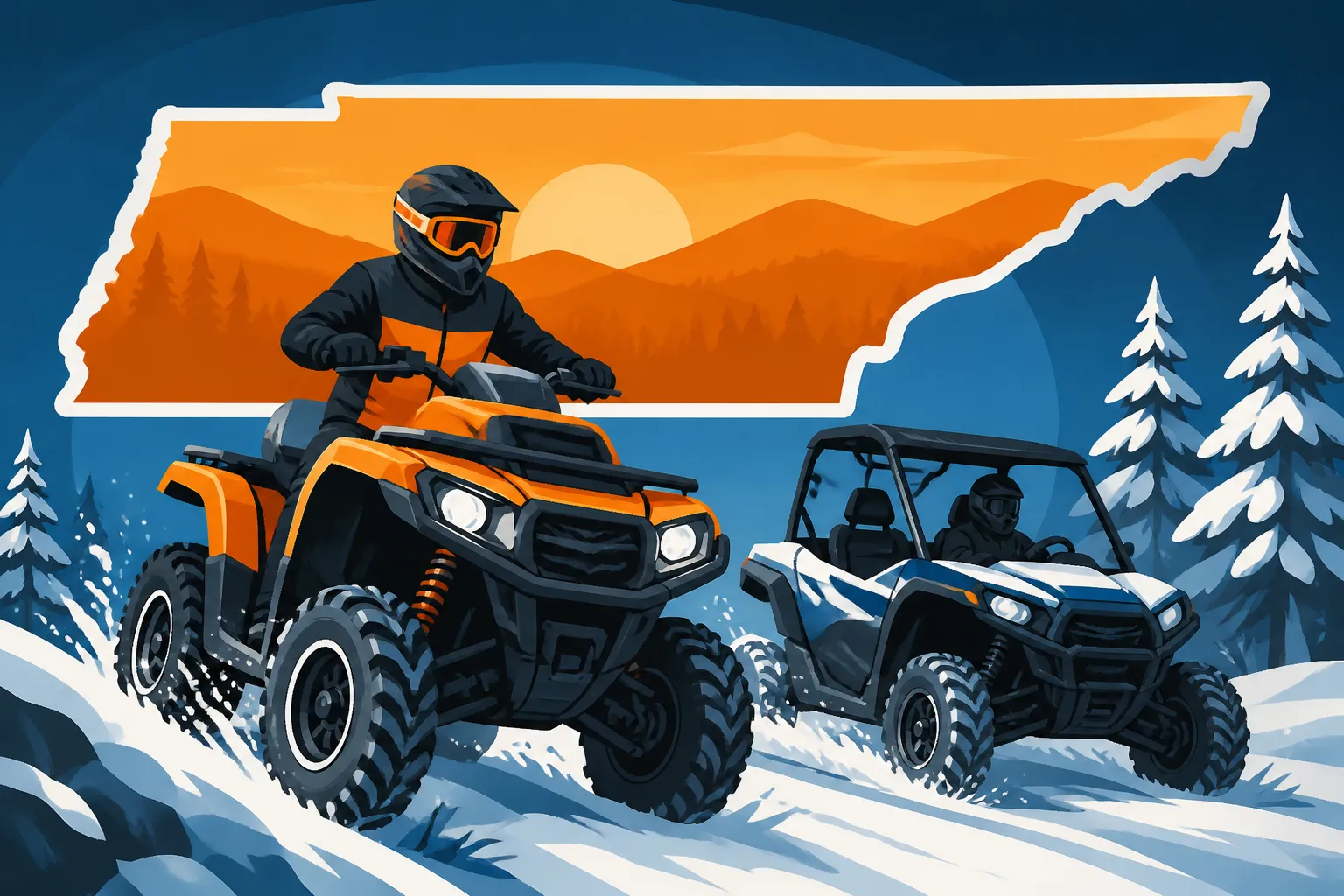
There’s something undeniably magical about riding your ATV or UTV in Tennessee during the winter months. The air is crisp, the crowds are often thinner, and the dormant trees can open up views that are hidden in lush summer foliage. But don't let the serene beauty fool you; winter riding comes with a unique set of challenges and specific rules you absolutely need to understand before you hit the trails or roads. This guide will break down the essential Tennessee rules, safety protocols, and crucial preparations for riding your machine when the mercury drops.
The Allure and Risks of Winter Riding in Tennessee
Winter in Tennessee offers a truly distinct experience for ATV and UTV enthusiasts. The quiet beauty of snow-dusted ridges or the stark elegance of bare trees can be incredibly inviting. However, the season also introduces significant risks and demands a different approach to riding.
Why Winter Riding is Different
When the temperature drops, the very environment you ride in transforms. What was a muddy rut in July might be a treacherous sheet of ice in January. The crisp air feels invigorating, but it also carries the bite of potential hypothermia. You might find trails less crowded, offering a sense of solitude that's hard to come by during peak seasons. The views can be spectacular, especially after a fresh snowfall, revealing landscapes usually obscured by thick greenery.
However, these benefits come with inherent dangers. Shorter daylight hours mean you’ll be riding in low light or darkness sooner, increasing the risk of disorientation or hidden obstacles. The cold itself can affect both your machine and your body, making parts brittle or causing fluids to thicken. Perhaps the biggest difference is the change in traction. What feels like a grippy surface on a warm, dry day can become dangerously slick with even a thin layer of moisture, frost, or black ice. Unexpected patches of ice on a shaded trail or road can turn a fun ride into a harrowing experience in a split second.
Essential Preparations for Cold Weather
Getting ready for a winter ride isn't just about throwing on an extra jacket; it requires meticulous planning for both your machine and yourself. For your ATV or UTV, cold weather can expose weaknesses you might not notice otherwise. Start by checking all your fluids – engine oil, coolant, brake fluid – to ensure they are at appropriate levels and viscosities for colder temperatures. Your battery is another critical component; cold saps its power, so ensure it's fully charged and in good health. Inspect your tires for proper inflation and wear, as good tread is vital for maintaining what little traction winter conditions offer. If you're tackling snow, you might even consider specific snow tires or chains for added grip.
Personal preparation is equally, if not more, important. Layering is key to staying warm without overheating. Think moisture-wicking base layers, insulating mid-layers, and a waterproof, windproof outer shell. Don't forget extremities: quality gloves or mittens, warm socks, and waterproof boots are non-negotiable. A helmet liner can make a huge difference in keeping your head warm, and a good pair of goggles will protect your eyes from wind and debris, which can feel much colder in winter. Always carry extra clothing in a dry bag, along with plenty of water (even in cold weather, hydration is crucial) and high-energy snacks. Before you even leave, make sure you know the current [Tennessee Trail Closures to Check] and weather forecast for your specific riding area.
General Road Rules and Winter Conditions
Riding an ATV or UTV on designated Tennessee roads during winter brings additional considerations beyond the standard regulations. Even if a road is open, winter conditions often dictate a more cautious approach and heightened awareness.
Visibility and Lighting Requirements
One of the most immediate challenges of winter riding, especially in Tennessee, is the drastic reduction in daylight hours. The sun sets earlier, and often rises later, meaning more of your ride might take place in twilight or darkness. Couple this with potential fog, mist, or even light snow, and visibility can quickly plummet. This makes adherence to [Tennessee Lighting Requirements for UTVs] absolutely critical. Ensure all your headlights, taillights, brake lights, and turn signals are fully functional and clean. It's not just about seeing where you're going; it's about being seen by other vehicles, whether they're cars on a county road or another rider on a shared trail.
Imagine you're on a less-traveled county road in Scott County as dusk quickly approaches. A sudden cold front rolls in, bringing with it a thick fog that clings to the holler. If your lights aren't working perfectly, you become a ghost on the road, a danger to yourself and others. This isn't the time to rely on weak headlights or a single taillight. Consider adding auxiliary lighting for better illumination and reflective tape to your machine or gear for enhanced conspicuity, especially when crossing roads or riding during dawn or dusk.
Speed Limits and Traction Challenges
While Tennessee has established [Tennessee UTV Speed Limit on Roads] for ATVs and UTVs allowed on specific roadways, winter weather demands a significant reduction from these posted limits. A road that feels perfectly safe at 35 mph in July can become a death trap at 15 mph with a thin layer of ice or compacted snow. Traction, which is often already reduced for an ATV or UTV on pavement compared to a traditional vehicle, becomes almost non-existent on slick surfaces.
Black ice is a particularly insidious threat in Tennessee winters. It's nearly invisible, forming on shaded patches of road, bridges, and overpasses where temperatures can drop just enough for moisture to freeze. You might be riding along a seemingly clear road, feeling confident, and then suddenly hit a patch of black ice, losing all control. Even on gravel or unpaved roads, frozen mud or packed snow creates unpredictable traction. Always assume there could be ice around any curve, in any shaded dip, or on any bridge. Gentle braking, smooth steering, and maintaining ample distance from other vehicles are not just good practices; they are survival strategies in winter. If you feel your machine losing grip, ease off the throttle and steer gently into the skid, if possible, rather than hitting the brakes hard.
Trail Riding: Permits, Closures, and Specific Winter Advisories
The allure of winter trail riding is strong, but accessing Tennessee's vast network of trails in colder months demands vigilance. Riders need to be acutely aware of ever-changing conditions and specific park policies.
Checking for Winter Trail Closures
It's a frustrating scenario many riders have faced: you load up your machine, drive for hours, and arrive at the trailhead only to find a "Closed" sign. In winter, this experience is even more common. Snowfall, ice accumulation, and sustained freezing temperatures can all lead to [Tennessee Trail Closures to Check] across state wildlife management areas (WMAs) and private parks like Windrock or Brimstone. These closures aren't arbitrary; they are put in place for rider safety and to protect the trails themselves. Wet, frozen, and then thawing ground is incredibly susceptible to damage from ATV and UTV tires, leading to erosion and deep ruts that can take months to repair.
Before you ever leave your driveway, make it a habit to check the websites or social media pages of the specific park or WMA you plan to visit. Better yet, pick up the phone and directly contact the park office. For example, [Calling a Tennessee Park Before You Load] can save you a wasted trip. Some parks, especially those at higher elevations or in specific geographic features like the Cumberland Plateau, may close certain sections of trail or even entire areas for extended periods due to snow and ice. Understanding the freeze-thaw cycle is important too: a trail might be frozen solid and rideable in the morning, but by afternoon, as temperatures rise, it can turn into a slick, muddy mess. Always have a backup plan or be prepared to turn back if conditions deteriorate.
Permits and Off-Trail Rules in Winter
The fact that it's winter doesn't change the requirement for a valid permit. Whether you're riding in July or January, [Tennessee Trail Permits Explained] are mandatory for legal access to designated trails, especially within WMAs and private parks. Don't assume that because there are fewer people out, the rules are relaxed. Park rangers and wildlife officers are still on patrol, and fines for riding without a permit are just as steep in winter as any other season.
Winter conditions also make it even more crucial to stick to marked trails. Snow cover can easily obscure trail markers and boundaries, making it tempting to venture off what seems like the path. However, going off-trail not only risks getting lost but also causes significant environmental damage, particularly when the ground is soft, muddy, or thawing. Within WMAs, there are specific [Tennessee Rules for Riding a WMA] that are strictly enforced, and these apply year-round. You might also encounter active hunting seasons, which means adhering to rules like wearing [Blaze Orange on a Tennessee November Ride] if you are riding during specific hunting dates, even if you are not hunting yourself. Safety is paramount, and ensuring you have the right gear for winter can mean the difference between an enjoyable ride and a dangerous situation. Speaking of gear, while not a rule, consider adding a winch from a company like SuperATV to your machine; it can be a literal lifesaver if you get stuck in deep snow or slick mud far from help.
Safety and Emergency Preparedness in the Cold
Riding in winter drastically elevates the importance of safety and emergency preparedness. The consequences of a breakdown or an accident are far more severe when cold temperatures are added to the equation.
Gear Up for Cold and Wet
Your choice of clothing and gear is arguably the most critical aspect of winter riding safety. Layering isn't just a suggestion; it's a necessity. Start with a base layer that wicks moisture away from your skin – cotton is a terrible choice as it holds moisture and will make you colder. Follow with an insulating mid-layer, like fleece or wool, to trap body heat. Finally, an outer shell that is both waterproof and windproof is essential to protect against the elements. You'll want sturdy, waterproof boots that can handle snow and slush, and high-quality gloves or mittens that allow for dexterity while keeping your hands warm. A balaclava or neck gaiter under your helmet will help retain significant body heat, and don't forget a [Tennessee Helmet Law for ATV Riders] still applies, offering both protection and insulation.
It's wise to pack extra sets of gloves and socks in a dry bag. If your primary pair gets wet, having a dry replacement can prevent frostbite. Also, consider bringing a thermos of hot coffee, tea, or cocoa. A warm drink can provide a surprising boost to your core temperature and morale on a cold day. Remember, staying dry is just as important as staying warm; wet clothes can quickly lead to hypothermia, even in above-freezing temperatures if there's a wind chill.
What to Carry for Winter Emergencies
A well-stocked emergency kit is vital for any off-road adventure, but in winter, it expands significantly. Beyond the usual first-aid supplies, you should include emergency blankets (space blankets are compact and effective) and hand warmers. A fire starter or waterproof matches are crucial in case you need to build a warming fire. Pack extra high-energy food that won't freeze, like nuts or energy bars, and plenty of water in an insulated container to prevent it from freezing solid.
Communication is key: your cell phone might not have service in remote areas, so consider a satellite messenger or a two-way radio to stay in touch with your riding group or call for help. A fully charged power bank for your phone is also a must. Navigation tools, whether a GPS unit with preloaded maps or a physical map and compass, are essential, especially if snow obscures familiar landmarks. A small shovel or collapsible snow shovel can be invaluable if you get stuck in deep snow or mud. And for those really sticky situations, a winch, perhaps a robust unit from SuperATV, along with recovery straps, could be the difference between a minor delay and a dangerous overnight stay in the wilderness. Hypothermia and frostbite can set in rapidly in cold, wet, or windy conditions, making immediate self-rescue or the ability to call for help paramount.
Navigating Specific Winter Scenarios
Winter riding in Tennessee presents unique challenges beyond just the cold. Knowing how to handle specific snow and ice conditions can be critical for safety and enjoyment.
Riding on Snow-Covered Roads and Trails
Riding on snow-covered surfaces requires a completely different skillset than dry conditions. The type of snow makes a huge difference: fresh, light powder offers better traction than old, packed-down snow, which can be extremely slick. The worst, however, is a layer of ice under a thin dusting of snow – a hidden trap. When riding on [Tennessee Rules for Riding a Snow-Covered Road] or trail, your braking distance will increase dramatically, and your steering response will be slower. You'll need to use lower gears to maintain control and rely on engine braking more than your actual brakes, applying them gently to avoid skidding.
If you encounter deeper snow, maintain a steady, moderate speed to build momentum without spinning your tires excessively. Avoid sudden turns or abrupt changes in throttle. Be aware that snow can hide obstacles like rocks, logs, or deep ruts, so maintaining a watchful eye on the terrain ahead is crucial. Riding with a group is highly recommended in these conditions, as a stuck machine is much easier to recover with multiple hands and machines. Also, consider the specific rules of the park or WMA; some areas may have restrictions on riding after a certain amount of snowfall.
Dealing with Ice and Frozen Water Crossings
This is perhaps the most dangerous aspect of winter riding: ice. The cardinal rule for frozen water crossings is simple: never assume ice is safe. Even if it looks thick, currents, hidden springs, or previous thaws can create dangerously thin spots. The risk of plunging through ice, even in seemingly shallow water, is incredibly high, leading to immediate hypothermia and potentially a life-threatening situation. It's almost always best to find an alternative route, even if it adds significant time to your ride.
If you absolutely must cross a very small, shallow, and certainly frozen stream (and you have personally verified its thickness and depth), do so with extreme caution, ideally on foot first. If you are on your machine, go slowly and steadily. But for anything larger, deeper, or with unknown conditions, turn back. The consequences of misjudging ice are simply too dire. Remember that ice can also form on rocks, logs, and muddy banks near water, creating treacherous slip hazards. Always proceed with the utmost care, and if in doubt, choose safety over speed or adventure.
Winter Riding Challenges and Solutions
| Challenge | Description | Solution |
|---|---|---|
| Reduced Traction | Ice, snow, and frozen mud make control difficult, increasing skid risk. | Lower speeds, cautious and smooth braking, appropriate tire pressure, consider snow tires or chains. |
| Hypothermia/Frostbite | Cold exposure leads to rapid body temperature drop and tissue damage. | Layered waterproof and windproof clothing, frequent breaks in warm shelters, hot drinks, emergency blankets, hand/foot warmers. |
| Limited Visibility | Shorter daylight hours, fog, mist, and snow reduce sightlines. | Ensure all lights are clean and functional, carry auxiliary lighting, wear bright clothing, ride with a group, and avoid riding after dark if possible. |
| Trail Closures | Parks and WMAs close trails for safety or environmental protection. | Check park websites/social media, call park offices (e.g., Windrock, Brimstone) ahead of time, have backup plans. |
| Getting Stuck/Breakdowns | Cold can cause mechanical issues; snow/mud can trap vehicles. | Thorough machine inspection before riding, carry recovery gear (winch, shovel, tow straps), ride with a group, know basic field repairs. |
| Hidden Obstacles | Snow can conceal rocks, logs, and deep ruts on trails and roads. | Maintain a slower speed, constantly scan the terrain ahead, and be prepared for sudden impacts. |
| Freezing Equipment | Water bottles, fuel lines, or battery can freeze, causing operational issues. | Use insulated water bottles, check fuel line antifreeze, ensure battery is fully charged and cold-weather rated. |
Disclaimer
This article is for general informational purposes only and does not constitute professional advice. Laws, prices and regulations vary by location and change over time. Consult a qualified professional for guidance on your specific situation.