Tennessee Rules for an Electric Machine on a Road
Riding your electric ATV or UTV in Tennessee offers a uniquely quiet and powerful experience on the trails, but when it comes to taking that machine onto public roads, things can get a little murky. Many folks assume that because a machine is electric, it automatically falls into a different, perhaps more permissive, category than its gasoline-powered counterparts, but that's often not the case. This guide is here to untangle the specific rules and classifications that apply to electric off-highway vehicles (OHVs) if you're hoping to drive them on Tennessee roads.
Understanding Tennessee's Vehicle Classifications for Electric Machines
The first, and most crucial, step in figuring out if your electric machine can legally hit the pavement in Tennessee is to understand how the state classifies vehicles. It's not about what powers it, but rather its physical characteristics and intended use.
Not All Electric Machines Are Created Equal
It’s easy to get confused. We see golf carts on neighborhood streets, and sometimes even smaller, street-legal electric vehicles. The natural assumption is that if your ATV or UTV is electric, it must be similar, right? Unfortunately, that's often where the misconception begins. Tennessee law has very distinct definitions for different types of vehicles, and simply being "electric" doesn't grant your robust electric side-by-side the same privileges as a purpose-built golf cart or a designated low-speed vehicle (LSV).
Think about it this way: an electric mountain bike and an electric moped are both electric, but the state treats them very differently. Your powerful electric ATV, designed for rugged off-road terrain, is fundamentally different in design and capability from a small, four-wheeled electric vehicle designed solely for low-speed urban environments. The law looks at factors like weight, width, top speed, and passenger capacity far more than it looks at the energy source. This means that if your electric UTV looks and performs like a traditional UTV, it will likely be subject to the same rules as one.
How Electric OHVs Fit into Class I and Class II
Tennessee has specific definitions for off-highway vehicles, broken down primarily into Class I and Class II. Your electric ATV or UTV will fall into one of these categories based on its physical attributes, just like a gas-powered one. It's less about the motor and more about the frame. For instance, a typical electric ATV is likely a [Tennessee's Class I OHV Definition], meaning it's generally 50 inches or less in width, has a dry weight of 1,200 pounds or less, and is designed for one rider. An electric side-by-side, especially a larger model from a brand like Polaris or Can-Am, might easily fit the [Tennessee's Class II OHV Definition] criteria, which often allows for machines over 50 inches wide, up to 2,500 pounds dry weight, and sometimes designed to carry up to four passengers.
For example, if you have an electric utility vehicle (UTV) that's 64 inches wide and weighs 1,800 pounds, it unequivocally falls under the Class II definition. The fact that it runs on batteries rather than gasoline doesn't change its classification one bit. This means that any road use regulations that apply to a gas-powered Class II OHV will apply equally to your electric Class II OHV. The state doesn't have a separate set of rules just because you're running clean energy. You still need to ensure your machine is titled correctly, as explored in articles like [Titling an OHV in Tennessee], and understand that the road use privileges are tied to its OHV classification, not its electric powertrain.
Road Use Regulations Specific to Electric OHVs in Tennessee
Once your electric machine is properly classified as an OHV, you can then begin to understand the specific rules governing its use on Tennessee public roads. Spoiler alert: the fact that it's electric doesn't give it a free pass.
The Core Road Use Rules for All OHVs (Electric Included)
Tennessee has been working to standardize rules for OHV road use across the state, moving away from a patchwork of county-by-county regulations. However, it's a slow process, and local discretion still plays a massive role. The fundamental truth is that your electric OHV, whether it's an ATV or a UTV, is subject to the same [Tennessee UTV Road Requirements] as its combustion-engine counterparts. This means that generally, OHVs (including electric ones) are restricted to roads designated by local authorities, typically county roads or specific municipal streets. You won't be able to hop on an interstate or most state highways.
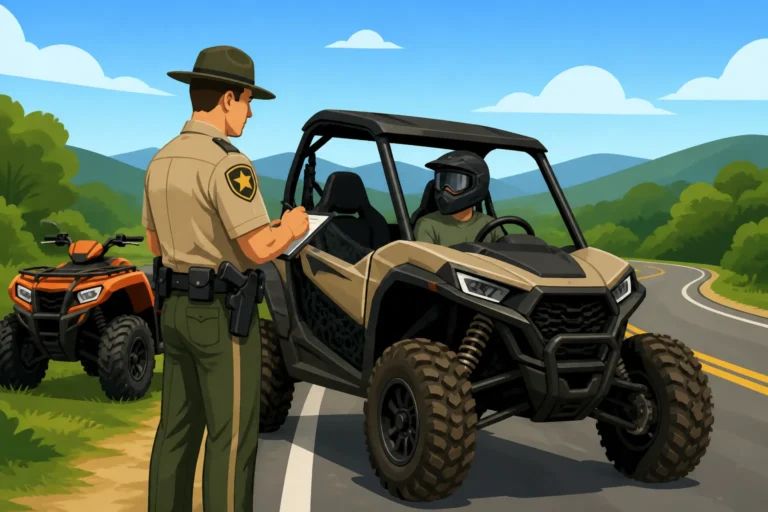
These road use privileges are often tied to specific conditions: riding during daylight hours only, adhering to posted speed limits, and often being limited to roads with a speed limit of 45 mph or less. So, if you're cruising down a designated county road in your electric UTV, you'll need to abide by the same speed limits, turn signal requirements (if applicable), and time-of-day restrictions as someone in a gas-powered Polaris Ranger or Can-Am Defender. The quiet hum of your electric motor won't exempt you from a deputy pulling you over if you're on a non-designated road or out after sunset.
Equipment Requirements for Road-Legal Electric OHVs
Here's where many electric OHV owners might need to make some adjustments. Just like any vehicle operating on public roads, your electric ATV or UTV must meet certain safety and equipment standards. These are not unique to electric machines; they are standard requirements for any OHV granted road use privileges. You’ll need to ensure your machine has:
- Headlights: Capable of illuminating the road.
- Taillights and Brake Lights: Clearly visible from the rear.
- Turn Signals: Functional front and rear indicators (though some older laws might have wiggle room, it's always best practice for safety).
- Mirrors: Typically at least one rearview mirror, often two.
- Horn: An audible warning device.
- Seatbelts: For all occupants if it's a UTV designed for them.
- Spark Arrester: Even though it's electric, sometimes this can still be a requirement on specific trails (though not typically for road use, it's worth noting the distinction with gas).
This is where aftermarket parts come into play. Many electric ATVs and UTVs come from the factory ready for the trail, but not necessarily for the road. You might find yourself needing to install a signal kit, a horn, or additional mirrors. Companies like SuperATV offer a wide range of accessories specifically designed to help riders make their machines road-legal, from full turn signal kits to mirrors and even windshields for UTVs. Beyond the machine itself, remember the human element: the [Tennessee Helmet Law for ATV Riders] still applies, especially to those under 18, and you'll need a valid driver's license as per [Tennessee Driver's License Rules for UTVs].
Insurance and Permits for Electric OHVs on Roads
Another critical aspect that doesn't change for electric OHVs is the need for proper documentation and coverage. If you plan to use your electric machine on any public road, you'll need to meet specific insurance requirements. [Tennessee UTV Insurance Requirement] mandates that any OHV operating on public roads carry liability insurance, just like a regular car or truck. This is for your protection and the protection of others in case of an accident. Don't skip this step thinking your electric machine is somehow exempt; the financial risks of an uninsured accident are simply too high.
Furthermore, your electric OHV will still need a valid title. Tennessee uses the [Tennessee TDR Sticker Explained] system to confirm that an OHV has been properly titled. This sticker is a physical proof that your machine has gone through the state's titling process. You can't just buy an electric UTV and expect to ride it on roads without it being formally recognized by the state. This means going through the same steps of [Titling an OHV in Tennessee] as any other OHV owner. Think of it this way: your electric machine is a vehicle first, and its power source is a secondary detail. All the administrative hoops that other OHV owners jump through, you'll need to jump through too.
Navigating Local Regulations and Adventure Tourism Districts
While Tennessee has made strides in creating more consistent statewide regulations for OHVs, local control remains a powerful factor. Understanding this is key to legally riding your electric machine on roads.
The Importance of Local Ordinances
Even with state laws providing a framework, individual counties and cities in Tennessee retain significant authority over which, if any, of their roads are open to OHVs. This means that an electric UTV perfectly legal on a designated county road in Scott County might be completely prohibited on a similar-looking road just across the county line in a different jurisdiction. You can't assume that because one area is open, all areas are. This can be a huge source of frustration for riders.
Therefore, before you trailer your electric machine to a new area with the intention of riding public roads, you absolutely must check with the local county clerk's office, sheriff's department, or municipal government. Many [Tennessee Counties That Allow UTVs on Roads] and [Tennessee Cities That Allow UTVs on Streets] will have specific ordinances or lists of designated roads available on their websites. Some might even have maps. Ignoring these local rules could lead to fines or even your electric machine being impounded. It’s not enough to know the state law; you have to know the local application of it.
Electric OHVs in Adventure Tourism Districts
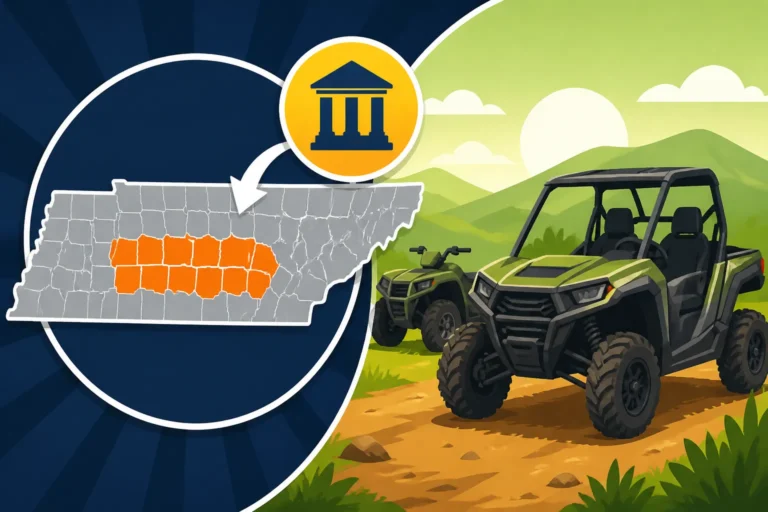
Tennessee has established [Tennessee's Adventure Tourism Districts] in certain counties, primarily in East Tennessee, where outdoor recreation is a major draw. These districts, which include places like Scott, Anderson, and Campbell counties, have generally been more progressive in opening roads for OHV use to support tourism and access to trail systems. For an electric OHV owner, these areas often represent the best opportunities for legal road riding. The idea is to connect riders from campgrounds or lodging to trailheads, or to allow access to local businesses.
However, even within these districts, the road usage isn't a free-for-all. Specific roads are designated, and rules regarding speed, hours of operation (typically sunrise to sunset), and equipment requirements are strictly enforced. You'll often see other riders on these designated roads with their machines outfitted with aftermarket accessories from brands like SuperATV, ensuring they meet the necessary road-legal standards. For instance, you might be able to ride your electric UTV on certain county roads in Windrock's Coal Creek area to get from your campsite to a general store, but you'll still need to follow all the posted rules and ensure your machine has the required lights, mirrors, and safety gear. These districts are a great step forward, but they require riders to be just as diligent in understanding the local nuances.
Comparing Electric OHVs with Other Low-Speed Vehicles
To further clarify why an electric ATV or UTV isn't automatically street legal, it helps to understand the distinct legal categories Tennessee uses for other low-speed electric vehicles. This comparison highlights that your electric OHV's classification, not its power source, dictates its road use.
| Vehicle Type | Key Characteristics | Typical Road Use Rules in Tennessee | Example |
|---|---|---|---|
| Electric OHV | Designed for off-road, follows Class I/II criteria | Generally restricted to designated county/local roads; follow OHV laws. | Electric ATV/UTV (e.g., Polaris EV, Can-Am Maverick R) |
| Low-Speed Vehicle | 4 wheels, 20-25 mph top speed, automotive features | Street-legal on roads 35 mph or less; needs title, registration, insurance, safety equipment. | Polaris GEM, Neighborhood Electric Vehicles |
| Medium-Speed Vehicle | 4 wheels, 30-35 mph top speed, automotive features | Street-legal on roads 45 mph or less; needs title, registration, insurance, safety equipment. | Larger electric shuttle vehicles |
| Golf Cart | Designed for golf courses, lower speed | Highly restricted road use, typically only in specific gated communities or by local ordinance. | Standard electric golf cart |
As you can see, your electric OHV, despite being electric, does not automatically become a Low-Speed Vehicle (LSV) or a Medium-Speed Vehicle (MSV). Those categories are for purpose-built vehicles that comply with federal safety standards for on-road use and have distinct speed and equipment requirements. Your electric ATV or UTV remains an OHV in the eyes of the law, and its road legality hinges entirely on whether it meets the Class I or Class II definition and whether it's on a road specifically designated for OHV use by local authorities.
The bottom line for electric machine owners in Tennessee is this: your powerful, quiet, and eco-friendly off-highway vehicle is still an off-highway vehicle when it comes to road use. Don't assume its electric nature grants it any special privileges that a gas-powered machine wouldn't have. Always confirm its classification, ensure it has the necessary safety equipment (perhaps with some help from SuperATV), obtain proper insurance and titling, and, most importantly, check local county and city ordinances for designated roads before you roll out onto the pavement. By doing so, you can enjoy the best of both worlds – the silent power of electric on the trails and legal access to the roads that connect them.
Disclaimer
This article is for general informational purposes only and does not constitute professional advice. Laws, prices and regulations vary by location and change over time. Consult a qualified professional for guidance on your specific situation.