Insurance Tennessee Requires on a Road
Navigating the ever-changing landscape of off-highway vehicle (OHV) rules in Tennessee can feel like trying to ride a trail blindfolded. One of the biggest areas of confusion, especially with more ATVs and UTVs venturing onto designated public roads, revolves around insurance requirements. It’s no longer enough to just have a machine and a permit; if you plan to hit those county roads, you absolutely need to understand what kind of insurance Tennessee demands. This guide is here to untangle the complexities, clearly outlining the insurance you need to keep your adventures legal and your investment protected on Tennessee's permissible routes.
Understanding Tennessee's Evolving Road Rules for OHVs
For years, the thought of legally riding your ATV or UTV on a public road in Tennessee was largely a pipe dream, confined to very specific and often agricultural exceptions. However, recent legislative shifts have started to carve out more defined pathways for OHV use on certain public roads. This isn't a free-for-all, mind you, but it does mean that if you're going to take advantage of these new allowances, you need to be just as prepared, legally speaking, as you would be in your truck or car. The days of simply having a good time off-road are merging with the responsibilities of on-road vehicle operation, and insurance is a huge part of that.
The Recent Legislative Changes and Why They Matter
Tennessee's approach to OHVs on public roads has been a slow but steady evolution. For a long time, counties had very little leeway, and state routes were pretty much always off-limits. But the rise of adventure tourism districts, and the undeniable economic impact of OHV recreation, began to spark conversations about how to safely integrate these machines into local road networks. This led to significant legislation, notably [What House Bill 810 Changed in 2025], which gave counties and even some municipalities more power to designate specific roads for OHV use. This wasn't just about opening up trails; it was about acknowledging that riders needed a way to connect from campgrounds to trailheads, or to access local businesses in OHV-friendly towns.
These changes are significant because they shift OHV operation, in these specific contexts, from a purely off-road activity to one that shares space with traditional motor vehicles. And when you share the road, the same fundamental principles of safety and financial responsibility that apply to cars and trucks suddenly apply to your side-by-side or quad. This means that while some roads remain entirely off-limits, others are now open, but with caveats. You can't just assume your old habits or assumptions about OHV use still apply once those tires hit the pavement.
The implications of this legislative shift are far-reaching. It means that riders now have to pay closer attention to local ordinances and specific road designations, which can vary wildly even between neighboring counties. What's legal in Scott County might be strictly forbidden a few miles down the road in another. This patchwork of rules can be incredibly confusing, but the one constant that emerges when a machine is permitted on a public thoroughfare is the expectation of financial accountability in case of an accident.
The Distinction Between Off-Road and On-Road Requirements
It's absolutely crucial to understand that Tennessee draws a sharp line between off-road and on-road operation when it comes to legal requirements, especially for things like titles, stickers, and yes, insurance. When you're solely on private land or within the confines of a designated off-road park like Windrock or Brimstone, the state's direct insurance mandates typically don't apply. Your liability in an accident on private property might be covered by your homeowner's policy, or a specific off-road insurance policy you voluntarily purchased, but it's not a state requirement to legally ride there.
However, the moment your wheels touch a designated county road, a town street, or any other public way where OHVs are permitted, you transition into a different legal category. Suddenly, your OHV isn't just a recreational toy; it's a vehicle operating in the public sphere, subject to traffic laws and, critically, financial responsibility requirements. This is where the insurance mandate kicks in. It’s the state saying, "If you're going to share these roads, you need to be prepared to cover potential damages if you cause an accident, just like any other driver."
Think of it this way: your side-by-side might be built for rugged trails and mud, but when you're crossing a two-lane highway or driving down a local street, it's essentially operating like a compact, open-air vehicle. The risks of colliding with another vehicle, a pedestrian, or public property become very real. This distinction is paramount, and it's why failing to grasp it can lead to significant legal and financial headaches down the line. Don't assume that because your machine has a [Tennessee's TDR Sticker Explained] for titling purposes, it automatically qualifies for road use without the added layer of insurance.
Why Insurance is Now a Critical Piece of the Puzzle
With the advent of more designated road access for OHVs in Tennessee, insurance has moved from being a "nice-to-have" for peace of mind to a "must-have" for legal operation. This isn't just about protecting yourself; it's about protecting others. If you're involved in an accident on a public road, and you're at fault, the costs can be astronomical. We're talking about medical bills, property damage to another vehicle, damage to public infrastructure, and potential legal fees. Without insurance, you, as the owner and operator, are personally on the hook for all of it.
Consider a scenario: you're riding your UTV down a designated county road in Scott County, heading towards a trailhead. You misjudge a turn, clip a parked car, and scrape its side. If you don't have the proper road-legal OHV insurance, that repair bill for the other car falls squarely on your shoulders. Or even worse, imagine a low-speed collision with another vehicle that results in injuries to the occupants. The medical costs alone could be life-altering without the backing of an insurance policy. The state's requirement for insurance when on public roads is a consumer protection measure, ensuring that victims of accidents caused by OHVs have a means of recovering their damages.
Beyond the legal and financial ramifications, having the right insurance also offers a significant layer of personal protection for your investment. Modern ATVs and UTVs, especially those tricked out with aftermarket parts from brands like SuperATV, represent a substantial financial commitment. While liability insurance primarily covers damages you cause to others, additional coverage options can protect your machine from theft, fire, or damage incurred in an accident, whether you're on a public road or a private trail. It transforms insurance from a mere legal obligation into a comprehensive safety net for your entire OHV experience.
The Core Requirement: Liability Insurance for Road Use
When Tennessee allows OHVs onto public roads, it's not just a suggestion that you get insurance; it's a firm legal mandate. Just like every car, truck, or motorcycle on the road, your ATV or UTV, when legally operating on designated public thoroughfares, must meet the state's financial responsibility requirements. This almost universally means carrying liability insurance. It’s the baseline, the non-negotiable aspect of road-legal OHV operation, and understanding its intricacies is vital.
What "Financial Responsibility" Means in Tennessee
In Tennessee, "financial responsibility" is the legal term for proving you can cover damages if you cause an accident. For most drivers, and now for road-legal OHV operators, this is primarily met by carrying an auto insurance policy. The state doesn't care how you pay for damages you cause, just that you can pay. Liability insurance is the most common and practical way to demonstrate this capability. It’s a contract where your insurance company agrees to pay, up to your policy limits, for the costs of damages or injuries you inflict on other people or their property if you're found at fault in an accident.
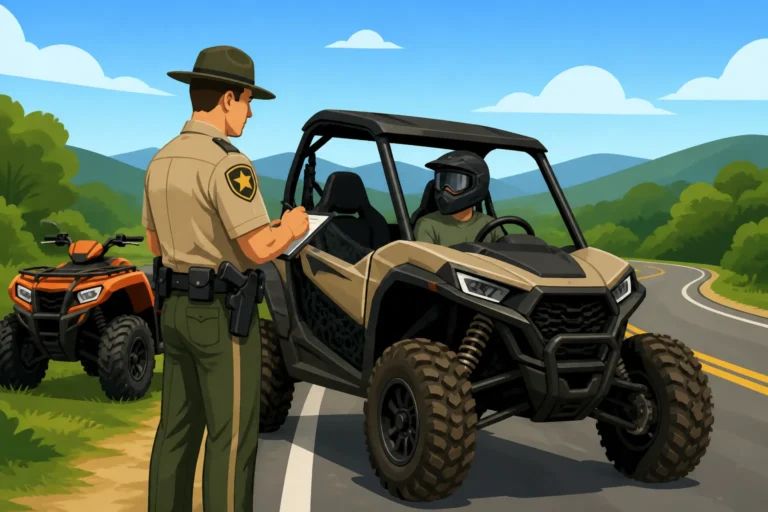
It's a critical distinction to remember: liability insurance does not cover damages to your own OHV or your own medical bills. It's solely for the "other guy." This is often a point of confusion for new OHV owners who might assume their policy covers everything. When a [Tennessee Deputy Checks Roadside], they're verifying that you have this basic level of protection to ensure public safety and financial accountability for other road users. This concept underpins all road-use regulations, ensuring that the burden of an accident doesn't fall solely on an innocent party.
Think about a simple fender-bender in a parking lot. If you're at fault, your liability insurance pays for the repairs to the other car. Now, translate that to an ATV or UTV on a county road. If you swerve and hit a mailbox, your liability coverage is what pays the county or the homeowner to replace that mailbox. If you collide with another vehicle, it covers their repair costs and medical expenses. This is the bare minimum protection Tennessee expects when you bring your machine onto shared public spaces.
Minimum Coverage Limits You Need to Know
Tennessee law specifies minimum coverage amounts for liability insurance that all motor vehicles, including properly designated OHVs, must meet when operating on public roads. These numbers are often referred to in a "split limit" format, meaning they specify maximum payouts for different categories of damages. While specific figures can fluctuate and should always be verified with the Tennessee Department of Revenue or a licensed insurance agent, the general structure includes:
- Per Person for Bodily Injury: The maximum amount your policy will pay for injuries to one person in an accident you cause.
- Per Accident for Bodily Injury: The maximum amount your policy will pay for all bodily injuries in a single accident you cause, regardless of how many people are injured.
- Per Accident for Property Damage: The maximum amount your policy will pay for damage to another person's property (like their vehicle, fence, or mailbox) in an accident you cause.
For example, a common minimum might be expressed as 25/50/15, meaning $25,000 for bodily injury per person, $50,000 for total bodily injury per accident, and $15,000 for property damage per accident. These figures are the absolute floor. While meeting them technically satisfies the law, many insurance professionals and experienced riders will tell you that these minimums are often woefully inadequate given the high costs of medical care and vehicle repairs today.
Here's a quick reference table for illustrative purposes (always check current state requirements):
| Coverage Type | Per Person (Example) | Per Accident (Example) | Description |
|---|---|---|---|
| Bodily Injury Liability | $25,000 | $50,000 | Covers medical expenses and lost wages for others. |
| Property Damage Liability | N/A | $15,000 | Covers damage to other vehicles or property. |
It's really important not to view these minimums as a target, but rather as a starting point. If you have a significant asset like a home or substantial savings, and you cause an accident where damages exceed these minimums, you could be personally sued for the difference. For this reason, many riders opt for higher liability limits to better protect their financial future.
Understanding the Consequences of Non-Compliance
Operating an ATV or UTV on a designated Tennessee public road without the required liability insurance (or other proof of financial responsibility) carries serious consequences. It's not a minor infraction; it's a violation that can lead to significant penalties, both immediate and long-term. A law enforcement officer conducting a [Tennessee Road Use Rules for ATVs] check will ask for your proof of insurance, just as they would for any other driver.
The immediate repercussions can include a citation and a fine. These fines can be substantial, and they often come with court costs and administrative fees that quickly add up. Beyond the monetary penalty, your OHV could potentially be impounded. Imagine being miles from home on a trail connector road, getting pulled over, and having your machine towed away because you lacked proper insurance. That's a logistical nightmare on top of the financial one.
Longer-term, a lack of insurance can lead to the suspension of your driving privileges. This isn't just about your OHV; it could impact your ability to drive your car or truck. Furthermore, if you are involved in an accident while uninsured, not only are you personally responsible for all damages, but you could also face a lawsuit from the injured parties. This personal financial liability could lead to garnishment of wages, liens on your property, or even bankruptcy. The cost of a proper OHV insurance policy, while an annual expense, pales in comparison to the potential financial devastation of an uninsured accident. It simply isn't worth the risk to ride without it when you're on a public road in Tennessee.
Beyond Liability: Considering Additional Insurance Protections
While liability insurance is the legal bare minimum for operating your OHV on Tennessee roads, it's really just the starting point. Savvy riders understand that their investment, their well-being, and their future often require a more robust safety net. Modern ATVs and UTVs are powerful, complex machines, often modified with high-value accessories from companies like SuperATV. Relying solely on liability coverage leaves you exposed to a host of other risks. Thinking beyond the basic legal requirement is simply smart planning for any serious rider.
Collision and Comprehensive: Protecting Your Investment
If you've ever bought a new ATV or UTV, you know they're not cheap. Even a well-maintained used machine represents a significant financial commitment. This is where collision and comprehensive insurance come into play – they're designed to protect your machine.
Collision coverage pays for damages to your own ATV or UTV if it collides with another vehicle or object, or if it rolls over. This is critical for road use, where the risk of hitting a guardrail, another vehicle, or even just misjudging a turn on a gravel [Tennessee Rules for Riding a County Road] and ending up in a ditch is very real. Without collision, if you're at fault in an accident or hit a tree, you're paying out of pocket for all repairs, which for a damaged frame or engine can easily run into thousands of dollars. Imagine you're riding a designated route to a trailhead and another vehicle suddenly stops short; your collision coverage would help cover the damage to your machine.
Comprehensive coverage handles everything else that's not a collision. This includes theft, vandalism, fire, natural disasters (like hail or floods), and even hitting an animal. Given that ATVs and UTVs are popular targets for theft, and often stored in areas susceptible to weather, comprehensive coverage offers significant peace of mind. If your machine, loaded with [Tennessee Equipment Rules for Road Use] like a winch or light bar, is stolen from your garage or a campground while you're visiting a trail system, comprehensive is what steps in to help you replace it. Many financial institutions will require both collision and comprehensive coverage if you finance your OHV, because they want to protect their investment as much as you do.
Uninsured/Underinsured Motorist Coverage: Why It's Smart
This type of coverage is often overlooked but can be a true lifesaver, especially when you consider the number of uninsured drivers on the roads. Uninsured Motorist (UM) coverage protects you if you're involved in an accident with another driver who doesn't have any liability insurance. Underinsured Motorist (UIM) coverage kicks in when the at-fault driver has insurance, but their policy limits aren't enough to cover all your medical expenses or property damage.
Here's why this is so important for OHV riders on public roads: Even though Tennessee requires insurance, not everyone follows the law. You could be riding your side-by-side legally on a designated county route when an uninsured driver swerves into your lane, causing an accident. If you're injured or your machine is severely damaged, and they have no insurance, who pays? Without UM/UIM coverage, you might be left to foot those bills yourself or pursue a difficult, drawn-out legal battle against someone who has no assets.
UM/UIM coverage can help cover your medical expenses, lost wages, and even damage to your OHV (if your policy includes UM property damage) when the at-fault party can't. This is a vital layer of protection that safeguards you from the irresponsible actions of others, which is sadly a reality on many roads today. Given the open nature of many OHVs, occupants are more vulnerable in a collision, making this coverage even more crucial.
Medical Payments and Personal Injury Protection (PIP)
These coverages are designed to pay for medical expenses for you and your passengers, regardless of who was at fault for the accident. While they might sound similar, there are some key differences:
Medical Payments (MedPay) coverage is generally broader and pays for reasonable and necessary medical expenses incurred as a result of an accident, up to your policy limit. This can include ambulance fees, hospital stays, doctor visits, and even funeral expenses. It kicks in regardless of fault and can supplement your health insurance or even pay deductibles and co-pays. If you or a passenger on your ATV are injured while crossing a [Tennessee Rules for Riding a Bridge] on a designated road, MedPay can start covering those immediate medical costs.
Personal Injury Protection (PIP), sometimes called "no-fault" coverage in other states (though Tennessee is an "at-fault" state), can be even more expansive. Besides medical expenses, it can also cover lost wages if you're unable to work due to your injuries, and sometimes even services like childcare or house cleaning you can no longer perform. The availability and exact scope of PIP can vary by insurer and specific policy language for OHVs, but it generally offers a more comprehensive financial safety net for accident-related injuries than MedPay.
The value of these coverages cannot be overstated, particularly for OHV riders. Many OHVs offer less protection than a closed-cab vehicle, meaning injuries in an accident can be more severe. Even if you have excellent health insurance, an accident can quickly deplete savings with deductibles and out-of-pocket maximums. MedPay or PIP can fill those gaps, ensuring that your focus can be on recovery rather than crushing medical bills. When you’re planning to use your UTV on public roads, especially with passengers, these coverages provide essential peace of mind.
How OHV Insurance Differs from Car Insurance
It's a common misconception that if you have car insurance, it might automatically cover your ATV or UTV. This is rarely the case, especially for road use. OHV insurance is a specialized product, designed to address the unique risks and operational characteristics of these machines. Understanding these distinctions is paramount to ensuring you have adequate coverage and aren't caught off guard in an accident. Don't assume your current auto policy offers any protection when your side-by-side is on a designated [Tennessee UTV Road Requirements].
Specific OHV Policies Versus Standard Auto Policies
The most fundamental difference lies in the type of policy itself. Standard auto insurance policies are written for cars, trucks, and SUVs – vehicles designed and registered for regular highway use. They are rated based on factors specific to those vehicles, like safety features, typical usage patterns, and crash statistics. ATVs and UTVs, even those modified for road use, fall into a different category.
Dedicated OHV insurance policies, often called ATV, UTV, or off-road vehicle insurance, are tailored to the unique risks of these machines. They recognize that an OHV might be used off-road for recreation, on private land, for farming, and now, in Tennessee, on specific public roads. The risks associated with these varied uses are different from those of a sedan commuting to work. For instance, an OHV policy might account for the higher likelihood of rollovers, the exposure to elements, or the potential for unique modifications (like lift kits or specialized tires from a company like SuperATV) that impact performance and risk.
Trying to shoehorn an OHV onto a standard auto policy is generally not possible or advisable. Even if an auto insurer offers a "rider" or "endorsement" for an ATV, it’s usually for very limited coverage, typically only covering theft or damage when the machine is stored or transported, not when it's actively being ridden, especially on public roads. For the kind of road-legal operation now permitted in Tennessee, a full, standalone OHV policy is almost always required to meet the state's financial responsibility mandates.
Navigating Exclusions and Limitations
All insurance policies come with exclusions and limitations, and OHV policies are no different. However, due to the diverse nature of OHV use, these can be particularly important to understand. Exclusions are specific situations or types of damage that your policy will not cover. For OHV policies, common exclusions might include:
- Racing or competitive events: Most standard OHV policies will not cover damage or liability incurred while participating in organized races or speed contests.
- Commercial use: If you're using your ATV or UTV for business purposes, like a guided tour operation or certain types of professional landscaping, a personal OHV policy might not cover it. You'd likely need a commercial OHV policy.
- Illegal modifications: While many riders customize their machines with accessories, some modifications that render the vehicle unsafe or non-compliant with laws could potentially void coverage.
- Unlicensed operators: If a driver without a valid [Tennessee Driver's License Rules for UTVs] (where required) is operating your machine and gets into an accident, your policy might deny the claim.
- Operating in non-designated areas: If your policy is specifically for road-legal use in Tennessee, but you're operating it on an interstate or a state highway where [Tennessee Rules for Riding a State Highway] explicitly forbid OHVs, coverage could be denied.
Limitations refer to caps on payouts or specific conditions that must be met for coverage to apply. For example, some policies might have lower limits for accessories compared to the base vehicle value, or specific deductibles for certain types of claims. It's critical to read your policy document carefully, paying close attention to the fine print about what is and isn't covered, and under what circumstances. Don't be afraid to ask your agent for clarification on any section you don't fully understand.
The Role of Endorsements and Specialized Riders
Sometimes, a standard OHV policy might not perfectly fit every rider's needs. This is where endorsements, also known as riders, come in. An endorsement is an addition to an insurance policy that either adds, removes, or modifies coverage. They allow you to customize your policy to better suit your specific situation and the way you use your OHV.
For example, if you have heavily modified your UTV with expensive aftermarket parts, an "accessories endorsement" might be crucial. This adds specific coverage for those extra parts, ensuring that their value is included in your comprehensive or collision payouts. Without it, you might only get compensated for the stock value of your machine, leaving you out of pocket for all those specialized components. This is especially relevant if you're investing in performance or protection parts from a brand like SuperATV.
Another common endorsement for OHV riders might be specific coverage for trailer theft or damage, especially if you frequently haul your machine to various trailheads or ride parks. Some policies also offer rental reimbursement if your OHV is being repaired after a covered incident, allowing you to rent a temporary replacement. These specialized riders can make the difference between having adequate protection and facing unexpected expenses after an incident. Always discuss your specific riding habits, modifications, and concerns with your insurance agent to see what endorsements might be beneficial for your Tennessee OHV use.
Factors Influencing Your OHV Insurance Premiums in Tennessee
Just like with car insurance, the cost of insuring your ATV or UTV in Tennessee for road use isn't a one-size-fits-all number. A multitude of factors contribute to how insurers assess your risk and, consequently, what they charge you for coverage. Understanding these elements can help you make informed decisions, potentially save money, and ensure you're getting the best value for your specific riding style and machine.
Your Machine: Type, Value, and Modifications
The very nature of your OHV plays a huge role in its insurance premium. Insurers look at several characteristics of the machine itself:
- Type of OHV: Is it an ATV (quad) or a UTV (side-by-side)? UTVs often have higher seating capacities, larger engines, and a higher purchase price, which can translate to higher premiums due to increased liability exposure and replacement costs. For example, a multi-passenger UTV legally designated for [Tennessee UTV Road Requirements] will likely cost more to insure than a single-rider ATV.
- Make, Model, and Year: Newer, more powerful, or higher-value machines typically cost more to insure. A brand-new, top-of-the-line sport UTV will naturally have a higher premium than an older, less powerful utility ATV, simply because its replacement cost is higher and its performance characteristics might imply a higher risk of collision.
- Engine Size and Performance: More powerful engines can lead to higher speeds and, potentially, a greater risk of accidents, which insurers factor into their rates.
- Modifications and Accessories: This is a big one for many riders. If you've invested heavily in aftermarket parts – lifts, larger tires, custom cages, enhanced suspension, or extensive lighting from companies like SuperATV – you need to ensure these are properly accounted for in your policy. While these upgrades increase the value and capability of your machine, they also increase the cost to repair or replace it. If not properly endorsed, you might find yourself underinsured for your custom build. Always disclose significant modifications to your insurer to ensure proper coverage and avoid issues during a claim.
Your Riding Habits and History
Insurance isn't just about the machine; it's about the operator, too. Your personal profile and history are key determinants of your premium:
- Driving Record: If you have a history of traffic violations (even in your car), at-fault accidents, or DUIs, these will almost certainly translate to higher OHV insurance premiums. Insurers view these as indicators of higher risk. Conversely, a clean driving record can help keep your rates lower.
- Experience Level: While less directly tied to rates for seasoned riders, a new rider, especially a younger one, might face higher premiums initially.
- Where You Primarily Ride: While all road-legal OHV use in Tennessee requires insurance, where you typically ride your machine could indirectly affect rates. If you live in an area with a higher incidence of theft or vandalism, or if you report that your machine is frequently parked in high-risk areas, this could be factored in. Riding predominantly on private property versus frequently utilizing public roads in high-traffic adventure districts might also subtly influence risk assessment, though specific road use always triggers the requirement.
- Usage Frequency: How often you plan to use your OHV on public roads can also be a factor. A machine that rarely sees pavement might be perceived differently than one that is routinely used for transportation on designated roads.
Where You Ride: Adventure Tourism Districts and Local Ordinances
The specific geographic areas in Tennessee where you intend to ride your OHV on public roads can also have an impact on your insurance needs and, potentially, your rates. While the state sets the minimum liability requirements, the varying local rules play a role in the overall risk profile.
- Adventure Tourism Districts: In areas like Scott, Anderson, or Campbell Counties, which are part of designated Adventure Tourism Districts, there might be more miles of permissible roads for OHVs. While this is great for riders, it could also mean a higher potential for OHV-related incidents due to increased traffic. Insurers might factor in the local OHV density or accident statistics in these regions. The very presence of [Tennessee Counties That Allow UTVs on Roads] means a higher probability of exposure to road risks.
- Urban vs. Rural Designated Roads: Riding on a quieter, less-trafficked rural county road might present a different risk profile than navigating a busier designated street in a small town. The density of other vehicles, pedestrians, and fixed objects all contribute to the potential for an accident.
- Local Ordinance Specifics: Some local ordinances may have additional [Tennessee Equipment Rules for Road Use] for road-legal OHVs, such as specific lighting or signaling requirements. While not directly affecting insurance cost, failing to adhere to these rules could impact your coverage in an accident scenario, as operating an illegally equipped vehicle could lead to a denial of claims. Always ensure your machine meets all local and state requirements for road use.
Getting Insured: Steps and Considerations for Tennessee Riders
Securing the right insurance for your road-legal ATV or UTV in Tennessee doesn't have to be a complicated process, but it does require diligence. You want to make sure you're not just checking a box, but truly protecting yourself, your passengers, and your investment. Taking the time to properly shop for and understand your policy will pay dividends down the road.
Shopping for Quotes: What to Ask Your Agent
Don't settle for the first quote you receive. Shopping around is key to finding the best coverage at a competitive price. When you contact insurance agents or companies, whether they specialize in OHV insurance or are general providers, be prepared with specific questions. Here's what you should ask:
- "Do you offer specific OHV insurance policies that cover road use in Tennessee?" This is your most important opening question. Not all insurers cover OHVs, and fewer still offer policies that fully meet Tennessee's financial responsibility laws for public road operation.
- "What are the minimum liability limits required by Tennessee for OHVs on designated roads, and can I get higher limits?" Understand the legal minimum, but also discuss the benefits of higher liability limits to protect your assets.
- "What types of physical damage coverage (collision, comprehensive) do you offer, and what are the deductibles?" Discuss the value of your machine and any modifications to ensure you're getting adequate coverage for your entire investment.
- "What about uninsured/underinsured motorist coverage, and medical payments or PIP?" These are crucial for personal protection, so ask about their availability and recommended limits.
- "Are there any exclusions or limitations regarding off-road use versus on-road use, or specific types of roads (e.g., [Tennessee Rules for Riding a County Road] vs. specific town streets)?" Clarify where and when your policy is active.
- "How do you handle modifications and accessories? Do I need a separate endorsement for aftermarket parts like those from SuperATV?" Make sure your custom parts are protected.
- "Are there any discounts available for multi-policy bundling (e.g., with home or auto insurance), safety courses, or specific vehicle features?" Every little bit helps.
- "What is your claims process like, and what are your customer service hours?" You want an insurer that's easy to work with if you ever need to file a claim.
Be honest and thorough in providing information about your OHV and your intended use. Misrepresenting facts on an application can lead to denied claims later on.
Documenting Your Machine and Its Features
Before you even start shopping for insurance, have all the relevant documentation for your ATV or UTV readily available. This includes:
- Make, model, and year: These are fundamental identifiers.
- Vehicle Identification Number (VIN): The VIN is unique to your machine and is essential for identification.
- Title and registration information: This confirms ownership and that your machine is legally titled in Tennessee.
- Purchase price and date of purchase: Helps determine replacement value.
- List of modifications and accessories: If you've added valuable aftermarket parts, create a detailed list, including the cost of these additions. Photos of your machine, especially showing unique features or expensive modifications, can also be helpful for your records and for the insurer. For instance, if you've added a heavy-duty winch, a full skid plate kit, or an upgraded lighting system from SuperATV, document them.
Having this information at hand will streamline the quoting process and ensure accuracy in your policy. It also helps your agent understand the true value of your machine, so they can recommend appropriate coverage limits for physical damage.
Understanding Your Policy: The Fine Print Matters
Once you receive your policy documents, don't just file them away. Take the time to read through them carefully. Insurance policies are legal contracts, and understanding what you've purchased is critical. Pay particular attention to:
- Declarations Page: This is the summary of your coverage, including your name, OHV information, policy period, types of coverage, limits, and deductibles. Double-check that all information is accurate.
- Exclusions and Limitations: As discussed, these sections outline what is not covered. Ensure there are no unexpected exclusions that would leave you vulnerable.
- Definitions: Insurance policies use very specific language. Understand terms like "covered vehicle," "insured person," and "accident."
- Conditions: These are the rules you must follow for your coverage to remain valid, such as reporting accidents promptly or cooperating with investigations.
If anything is unclear, call your agent and ask for clarification. It's far better to understand your policy before an incident occurs than to find out you're not covered when you need it most. Keep a copy of your policy documents in a safe place, and always carry proof of insurance with you when you're riding your OHV on public roads in Tennessee.
The Practicalities of Carrying Proof of Insurance
Having the right insurance policy is one thing; proving you have it when asked by law enforcement is another. Tennessee takes its financial responsibility laws seriously, and the expectation is that you, as an operator of an OHV on public roads, can produce valid proof of insurance on demand. Failing to do so can lead to citations, fines, and other complications, even if you are, in fact, insured.
What a Tennessee Deputy Checks Roadside
When a [Tennessee Deputy Checks Roadside] while you're operating your ATV or UTV on a designated public road, they're typically looking for a few key pieces of documentation. Just like with a car stop, they'll usually ask for your driver's license (or other proof of age/permit if applicable), your OHV's title or registration information, and proof of insurance.
The proof of insurance they're looking for needs to clearly indicate:
- Your Name: As the insured party.
- Your OHV's Information: Make, model, and VIN, matching the machine you're operating.
- Policy Number: The unique identifier for your insurance contract.
- Effective Dates: Showing that the policy is current and active.
- Coverage Type: Confirming that it's a liability policy that meets state minimums for road use.
- Insurance Company Name: The provider of your coverage.
They want to see that you are financially responsible for the specific machine you are operating, and that your coverage is current. If you're riding an OHV that doesn't match the details on your insurance card, or if the policy has expired, you'll likely face issues. This routine check is part of enforcing [Are UTVs Street Legal in Tennessee?] regulations, ensuring that those who take advantage of road access are also upholding their legal obligations.
Digital vs. Physical Proof: What's Accepted
Good news for those who prefer less paper! Like many states, Tennessee generally accepts both physical and electronic proof of insurance.
- Physical Card: The traditional paper insurance card issued by your insurer is always accepted. It's a good idea to keep a physical copy in a waterproof bag or container on your OHV, especially since electronics can fail or get damaged out on the trails.
- Electronic Proof: You can typically show proof of insurance on your smartphone or other electronic device. This might be a digital insurance card from your insurer's app, an email from your provider, or a PDF document. However, always ensure your device has enough battery life and is protected from the elements. If you can't access your phone or the screen is cracked and unreadable, it might not be accepted.
While both are generally acceptable, consider the rugged environment an OHV operates in. Mud, rain, dust, and vibrations are common. A laminated card or a photo of your card kept separately in a secure, waterproof pouch might be more reliable than a fragile smartphone in many riding scenarios. Ensure that whatever method you choose, it's easily accessible and clearly readable to avoid any delays or complications during a roadside stop.
What Happens If You Can't Provide Proof
Even if you are insured, if you cannot provide immediate proof to a law enforcement officer in Tennessee when requested, you can still face penalties. This is often treated as a "failure to show proof" violation, which can carry its own set of fines.
In such a scenario, the deputy will likely issue you a citation. You might then have to go to court and demonstrate that you did have insurance at the time of the stop, often by showing your valid policy documents. If you can prove you were insured, the charge might be dismissed or reduced to a lesser administrative fee. However, this process takes time, effort, and possibly legal fees, which could have been avoided by simply having your proof of insurance readily available.
If you are genuinely uninsured and caught operating an OHV on a designated public road in Tennessee, the consequences are much more severe, as discussed earlier. You're looking at significant fines, potential impoundment of your machine, and possible suspension of your driving privileges. The bottom line is simple: if you plan to utilize Tennessee's new allowances for OHV road use, make sure you have the proper insurance and can provide immediate, legible proof whenever asked. It’s a core component of [Tennessee UTV Road Requirements] and responsible riding.
Navigating Specific Scenarios and Common Questions
The world of OHV road use in Tennessee is still relatively new and can present unique questions and situations for riders. From understanding how insurance applies in specific districts to figuring out rental coverage, having clear answers can make all the difference in staying legal and protected.
Riding in Adventure Tourism Districts and Insurance Needs
Tennessee's Adventure Tourism Districts, particularly in counties like Scott, Anderson, and Campbell, are specifically designated areas where local authorities have more leeway to open certain roads to OHVs. While these districts represent a fantastic opportunity for riders to connect trails and access local amenities, they don't exempt you from the state's insurance requirements for road use.
When you're riding your OHV on a designated road within one of these districts, whether it's [Riding Main Street in Huntsville] or a less-trafficked county lane, your machine is operating on a public thoroughfare. Therefore, the state's financial responsibility laws kick in. You absolutely must carry liability insurance that meets Tennessee's minimum requirements. The "adventure tourism" designation might facilitate road access, but it doesn't alter the legal obligations of operating a vehicle on those roads.
In fact, given the increased potential for OHV traffic in these districts, having higher liability limits, along with collision and comprehensive coverage for your machine, might be even more advisable. More machines on the road, even at lower speeds, can increase the statistical chance of an incident. Always confirm the specific [Tennessee Rules for Riding a County Road] or town streets you plan to use within these districts and ensure your insurance policy covers operation in those environments.
Rented OHVs and Insurance Coverage
Renting an ATV or UTV from an outfitter in Tennessee for a day or a weekend is a popular option for many visitors and locals alike. However, it raises a critical question: what about insurance? When you rent a machine, the responsibility for coverage can be a bit different than when you own one.
Most reputable OHV rental companies, especially those near popular parks like Windrock or Brimstone, will have their own insurance policies covering their rental fleet. When you sign the rental agreement, you'll typically be required to sign a waiver that outlines your responsibilities. Many rental agreements will include:
- Basic Liability Coverage: The rental company's policy will likely provide the legally required liability coverage for the machine while you operate it. This protects the company and meets state mandates.
- Damage Waivers/Optional Coverage: You will almost always be offered (and often strongly encouraged to purchase) a damage waiver or optional insurance coverage. This is crucial because, without it, you are typically responsible for the full cost of any damage you cause to the rental machine itself, even if it's not a collision. These waivers or optional coverages can protect you from paying thousands out-of-pocket for bent A-arms, cracked body panels, or a damaged engine.
- Deductibles: Even with optional coverage, there might be a significant deductible that you are responsible for in case of damage.
It's vital to read your rental agreement carefully and understand exactly what is and isn't covered. Your personal OHV policy or even your auto insurance might not extend to rental OHVs. Don't assume you're covered; ask the rental company directly about their insurance provisions and the optional damage protection they offer. Always ensure you understand your financial liability before you take the keys.
Insurance for Youth Riders or Passengers
When it comes to insurance and youth riders or passengers on ATVs and UTVs, several layers of considerations come into play, especially when operating on public roads in Tennessee.
- Age and Driver's License Requirements: For an OHV operator to legally drive on designated public roads in Tennessee, they must meet the state's minimum age requirements and often hold a valid driver's license, depending on the OHV classification. If a youth rider is operating an OHV on a public road and doesn't meet these legal requirements, your insurance policy could potentially deny a claim in the event of an accident. This is a critical point that links [Tennessee Minimum Age to Ride a Road] with insurance validity.
- Passenger Coverage: Most OHV insurance policies, especially those covering road use, will extend liability and medical payments/PIP coverage to passengers. However, the limits still apply. If you frequently carry passengers, especially children, consider higher medical payment limits to ensure adequate coverage in case of injury.
- Supervision: Even if a youth rider is legally old enough to ride an OHV on certain roads, supervision requirements might still apply, particularly off-road or in certain park settings. While not directly an insurance question, a lack of proper supervision (if legally mandated) could be a factor in an insurance claim's outcome if negligence is involved.
The best approach is always to discuss youth riders and passengers with your insurance agent. Confirm how your policy applies to anyone operating or riding as a passenger in your OHV, especially when operating on public roads. Ensuring everyone is properly covered and that all legal operating requirements are met is paramount for safety and peace of mind.
Disclaimer
This article is for general informational purposes only and does not constitute professional advice. Laws, prices and regulations vary by location and change over time. Consult a qualified professional for guidance on your specific situation.