Scrapping a Machine and Voiding the Sticker
It's a common scenario for many of us who love our off-road machines: that trusty ATV or UTV eventually reaches the end of its road, or rather, its trail. Whether it's been in a major accident, suffered irreparable damage, or you've simply decided to dismantle it for parts, the process of "scrapping" a machine can leave you wondering what to do about its official paperwork, especially that unique Tennessee TDR sticker. This guide will clear up the confusion, walking you through what "scrapping" really means for your Tennessee off-highway vehicle (OHV) and how it impacts both your title and the often-misunderstood TDR sticker.
Understanding the Tennessee TDR Sticker and Its Purpose
When you own an ATV or UTV in Tennessee, you're familiar with the Tennessee Department of Revenue (TDR) sticker. It's not like a typical vehicle registration tag you'd see on a car or truck, and that's often where the confusion begins. But knowing its true purpose is key to understanding what happens when your machine is no longer in service.
What the Sticker Represents for Your OHV
Let's cut through the noise: the Tennessee TDR sticker isn't a registration sticker. In fact, [Why Tennessee Does Not Register Off-Road Machines] is a topic many find surprising. Instead, the sticker serves as a visible indication that your off-highway vehicle (OHV) has a valid Tennessee title on file with the state. Think of it as a proof-of-title emblem. It's meant to be affixed to the machine, making it clear that the ownership chain is established and recorded. Without this sticker, you might raise eyebrows if you're trying to prove ownership, even if you have the physical title in hand. It’s part of the necessary [Tennessee OHV Title Paperwork] that keeps everything above board.
This sticker connects directly to the legal ownership of your ATV or UTV, which is essential for things like buying, selling, or even ensuring you're compliant when you hit the trails at your favorite park. It doesn't mean your machine is street legal or registered for public roads; it simply confirms that the state recognizes you as the owner. [What the TDR Sticker on Your Title Means] is a common question, and it really boils down to that fundamental link to your title.
When the Sticker Becomes Invalid
The TDR sticker isn't a permanent fixture tied to the machine's existence indefinitely. There are specific circumstances under which that sticker, even if still physically attached, becomes null and void in the eyes of the law. The most common scenario is when the machine changes hands, as detailed in [A Tennessee Sticker Void After a Sale]. When you sell your ATV or UTV, the existing sticker becomes invalid for the new owner; they will need to obtain their own when they [Titling an OHV in Tennessee].
But a sale isn't the only trigger. If the machine is stolen, completely destroyed, or, in our current discussion, scrapped, the sticker associated with that specific, now non-existent or fundamentally altered, machine also becomes invalid. It's a critical point because the sticker is meant to identify a functioning, titled off-highway vehicle. If the vehicle ceases to exist as a whole, intact unit, the sticker loses its meaning. It’s a bit like a driver's license for a car that no longer runs—it might technically still be there, but its purpose is gone.
What "Scrapping" Truly Means for Your Machine
The term "scrapping" can mean different things to different people. For some, it might just mean letting an old ATV rust in the back forty. But from a legal and practical standpoint in Tennessee, especially concerning your OHV's title and sticker, "scrapping" implies a more definitive end to the machine's life as a whole, operational unit.
Dismantling for Parts or Total Destruction
When we talk about scrapping an ATV or UTV in Tennessee, we're really talking about its active and permanent removal from service. This isn't just parking it in a shed and forgetting about it. It generally involves one of two scenarios:
First, dismantling for parts. This means you're intentionally breaking the machine down, selling off major components like the engine, transmission, frame, or suspension pieces individually. The machine, as a single, functioning vehicle, no longer exists. You might keep some parts, sell others, but the original ATV or UTV is no longer considered a complete unit. If you're selling off valuable components, it's always a good idea to have some record of the transaction. Tools like those found on LawDepot can assist in generating simple bills of sale for individual parts, providing a paper trail even for seemingly minor transactions.
Second, total destruction. This scenario usually comes after a catastrophic event like a fire, severe flood damage, or a wreck that renders the machine irreparable. The ATV or UTV is no longer safe, functional, or even economically viable to repair. It might be hauled off to a salvage yard or simply left as a hulk because it cannot be put back into service. In these cases, the machine is physically gone or fundamentally altered to the point of no return.
The distinction between simply letting a machine sit versus actively scrapping it is important. If you simply park an old OHV and let it deteriorate, it still technically exists as a vehicle, even if it's not running. But when you dismantle it or it's destroyed, its identity as a complete OHV is severed. This is when [When a Tennessee Sticker Dies With the Sale] truly applies in spirit, as the machine it once represented is no longer a viable entity.
Practical Steps When Scrapping Your OHV
Once you've made the decision to scrap your ATV or UTV, there are a few practical steps you should consider to tie up any loose ends and avoid potential future headaches.
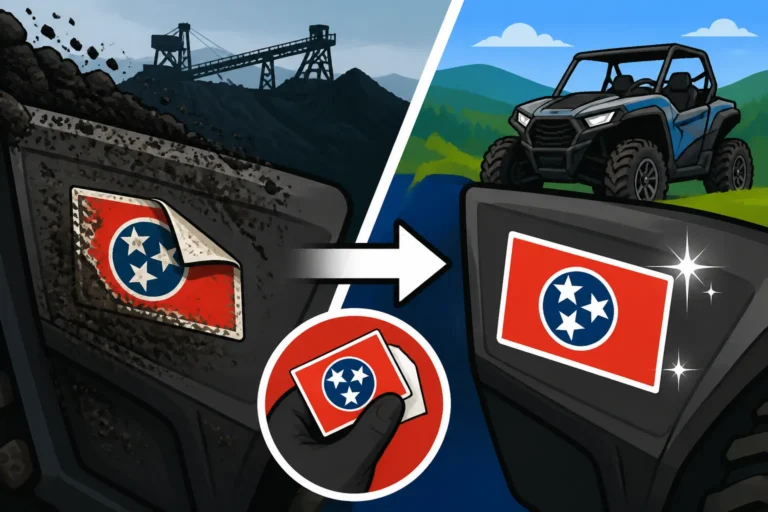
- Physically Remove and Destroy the Sticker: Since the TDR sticker is a physical representation of an active title for a functioning machine, and your machine is no longer functioning as a whole, the sticker should be removed. Peel it off and destroy it. This prevents any confusion if, say, someone finds the frame and tries to piece together a new machine using old identification.
- Handle the Title Document: This is where it gets a little nuanced. For regular automobiles, there's often a process to declare a vehicle "junked" or "salvage" with the state. For Tennessee OHVs, which are handled a bit differently under [Tennessee's Four Vehicle Categories], there isn't typically a formal "junking" process you initiate with the county clerk or the TDR.
- Keep the Title (Recommended): Even if the machine is gone, the title is a record of your ownership. If you're dismantling it for parts, keeping the title can serve as proof that you legitimately owned the original machine from which the parts came. This can be important if you later sell valuable components. You could write "SCRAPPED" or "DESTROYED" across the title, but check with your [Titling at a Tennessee County Clerk] first if you're unsure about defacing it. Just storing it away is often sufficient.
- No De-Registration Needed: Since OHVs aren't "registered" in the traditional sense, there's no complex "de-registration" form to fill out or specific agency to notify that you've scrapped it. The title record simply exists. The important part is that the sticker, which implies a current and valid use of the machine, is no longer applicable.
- Document Any Part Sales: If you're selling significant parts from the scrapped machine, it's wise to have a basic [A Tennessee Bill of Sale for an OHV] for these transactions. This protects both you and the buyer. LawDepot can be a useful resource for creating these types of documents quickly and easily, ensuring you have a record for any major components you might sell off. This prevents any ambiguity about where those parts came from.
Implications of a Voided Sticker and Scrapped Machine
Understanding that the TDR sticker is void and your machine is scrapped isn't just about following rules; it's about protecting yourself and ensuring clarity down the line.
Removing Your OHV from the System (If Applicable)
Unlike a car or truck where you might surrender license plates or formally notify the Department of Motor Vehicles of a total loss, the process for an OHV in Tennessee is simpler because of how they are titled versus registered. [Why a County Clerk Issues the Tennessee Sticker] is usually the extent of the state's direct involvement in your OHV's life cycle. Since there's no ongoing registration to cancel, there isn't a complex "de-registration" process to undertake.
The primary record of your OHV with the state is its title. When the machine is scrapped, the physical title remains a historical document of your past ownership. The key takeaway is that the validity of the TDR sticker that once adorned it is now effectively nil. It no longer signifies a currently titled, operational OHV under your ownership in the same way. The state isn't actively tracking that your specific machine has been scrapped, but the implications are that any TDR sticker connected to that now-defunct VIN no longer has legal standing for a whole, functioning vehicle. This aligns with the principle behind [Why a Tennessee Sticker Cannot Be Renewed] – it's tied to the initial titling, not ongoing validity.
Avoiding Future Headaches and Potential Liabilities
Properly handling the situation when you scrap an OHV is crucial for avoiding potential problems down the road.
First, imagine if you didn't remove or destroy the sticker, and someone found the frame with the VIN and sticker still attached. They might try to fraudulently represent it as a titled machine, or parts of it might be used in a way that could implicate you. By voiding the concept of the sticker and removing it, you prevent any such misunderstandings or illegal activities from being linked back to you.
Second, consider liability. If your machine is truly gone, you don't want any lingering legal or financial connection to it. While OHVs aren't subject to the same strict insurance requirements as street-legal vehicles in Tennessee, any accidental or intentional misuse of a machine still technically associated with you could become a headache. By ensuring the sticker is void and you have a record of the machine's end-of-life, you clearly sever your ties.
Ultimately, the process of scrapping a Tennessee ATV or UTV is less about intricate paperwork and more about acknowledging the definitive end of the machine's life as a whole unit. By understanding the true purpose of the TDR sticker and taking these simple, practical steps, you can ensure a clean break and ride off into the sunset knowing you've handled everything properly.
| Scenario | TDR Sticker Status | Tennessee Title Status | Key Action for Owner |
|---|---|---|---|
| Selling a Complete OHV | Void for the new owner (new owner gets new sticker) | Transfers to new owner via proper assignment | Provide signed title, [A Tennessee Bill of Sale for an OHV] |
| Scrapping/Dismantling for Parts | Void (machine no longer exists as a whole) | Retain for proof of parts ownership (optional); can mark "Scrapped" | Physically destroy sticker; retain title or clearly mark it as "Scrapped/Destroyed" |
| Total Loss (e.g., severe accident, fire) | Void (machine no longer exists as a whole) | Retain for insurance records / proof of loss (optional) | Physically destroy sticker; inform insurer; retain title for records |
Disclaimer
This article is for general informational purposes only and does not constitute professional advice. Laws, prices and regulations vary by location and change over time. Consult a qualified professional for guidance on your specific situation.