Where Tennessee Title Fees Go
When you finally decide to bite the bullet and head to your local county clerk’s office to title your new-to-you ATV or UTV, it’s not just a simple exchange of paperwork. You're going to encounter a few fees, and it’s completely natural to wonder where all that money actually goes. Nobody likes handing over hard-earned cash without understanding the purpose, especially when it feels like one more hoop to jump through in the world of off-road vehicle ownership. This guide is going to meticulously break down each fee you pay for your Tennessee OHV title, explaining exactly which pockets your money fills and what services those funds support, so you can walk into that clerk's office with a clearer picture and a lot less frustration.
Understanding the Core Title Fee: The State's Cut
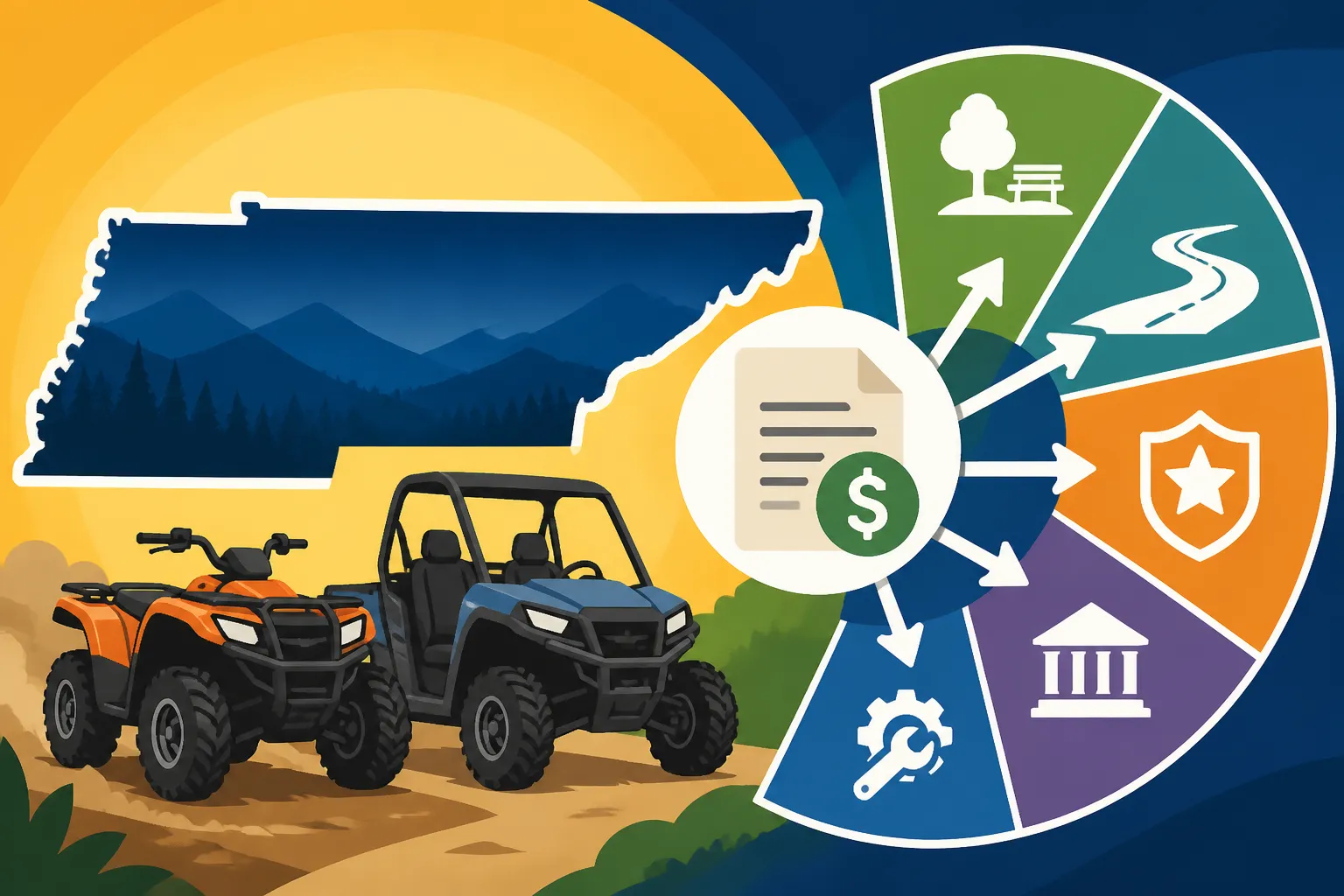
Let's start with the fundamental reason you're standing at the county clerk's counter in the first place: the state requires a title for your off-highway vehicle (OHV). This isn't just a suggestion; it's a legal mandate that comes with a specific fee. This core title fee is primarily directed to the Tennessee Department of Revenue (TDR), the state agency responsible for overseeing all vehicle titling and registration processes, including your beloved ATV or UTV.
The Department of Revenue's Share
When you pay the main titling fee for your ATV or UTV, a significant portion of that money goes straight into the coffers of the Tennessee Department of Revenue. Think of it as the administrative cost for the state to formally acknowledge your ownership of the machine. The TDR is the central record-keeper for all vehicle titles in Tennessee, whether it's your family sedan, your work truck, or your weekend trail warrior. They maintain the vast database that tracks ownership, liens, and other critical information about every titled vehicle in the state. This fee helps cover the operational costs of this massive statewide system, from the IT infrastructure to the personnel who process the mountains of paperwork that pass through their desks daily. It’s about maintaining a robust and verifiable record of who owns what, which is crucial for preventing fraud and ensuring proper vehicle identification.
Supporting State-Wide Off-Road Initiatives
While the bulk of the TDR's share directly supports the administrative overhead of titling, some of these funds, or at least the broader revenue generated by OHV titling and sales tax, indirectly contribute to state-wide initiatives. It's not always a direct earmark for "new trails" from your specific title fee, but rather part of the general fund or specific revenue streams that allow the state to allocate resources to various departments. For instance, the TDR works in conjunction with other state agencies like the Tennessee Wildlife Resources Agency (TWRA) on various programs. Maintaining clear title records helps with law enforcement efforts on public lands and ensures compliance with vehicle standards. The fees contribute to the overall legal and administrative framework that underpins the state's approach to OHVs, even if it's not a direct "trail fund" line item from this specific fee. It helps maintain the system that allows for legal OHV operation and accountability.
The TDR Sticker: Proof of State Revenue
Part of the titling process, which is funded by these fees, involves the issuance of the Tennessee Department of Revenue (TDR) sticker. This isn't just a fancy decal; it's a critical component of your OHV's legal identification. The sticker is physically affixed to your OHV's title certificate – not on the machine itself, which can sometimes confuse folks – and it serves as proof that your machine has gone through the official state titling process and that the appropriate state fees have been paid. It's a timestamp, too, showing that the title has been properly recorded and validated by the TDR. While you might wonder why you don't get a sticker for the machine, this system prevents the sticker from being easily removed or transferred, which helps maintain the integrity of the title record. When you sell your machine, this sticker becomes void, and the new owner must obtain a fresh title and sticker, ensuring the state continues to collect its due revenue and maintain accurate records with each ownership change. It's a small but mighty piece of paper that signifies compliance.
The County Clerk's Role: Local Fees for Local Service
Beyond the state's portion, your local county clerk's office also collects a fee. This is a common point of confusion or even frustration for many, as it might seem like you're paying twice. However, your county clerk's office isn't just a pass-through for state money; they provide a vital local service, and their fees reflect that.
The Clerk's Administrative Charge
When you visit your local county clerk's office—whether that's in Scott County, Anderson County, or any of the 95 counties across Tennessee—you're interacting with a frontline government agency. They are the ones who handle the direct customer service, verify your paperwork, process your application, and collect all the necessary fees on behalf of both the state and the county. This takes staff time, office space, utilities, and specific software to connect with the state's titling system. The clerk's administrative fee, often an $8.50 charge, goes directly to fund these local operations. It covers the cost of having a convenient, accessible office in your community where you can handle your vehicle titling needs without having to travel to a distant state capital building. They verify your identity, ensure your bill of sale is legitimate (perhaps even helping you create one using a service like LawDepot if you bought privately), and make sure all your ducks are in a row before forwarding the information to the state. This fee is truly about compensating the county for the essential service they provide in facilitating the titling process.
Funding Local Government Operations
The fees collected by the county clerk, including the administrative charge for titling an OHV, don't just disappear into a black hole. They are integrated into the county's general fund, which supports a wide array of local government operations. This can include everything from maintaining local roads, funding school systems, supporting public safety services like local sheriff's departments and fire departments, to maintaining parks and recreation facilities. While your specific OHV title fee isn't directly earmarked for, say, a new swing set at the local park, it's part of the broader revenue stream that allows your county government to function and provide essential services to its residents. So, in a roundabout way, paying that county clerk fee helps keep your community running smoothly. It’s the cost of local government accessibility and service delivery.
How Your Local Office Benefits
It's easy to overlook the direct benefits your local county clerk's office receives from these fees. These funds directly impact their ability to operate efficiently. This could mean upgrading computer systems to handle new state mandates, training staff to better assist constituents with complex titling scenarios like [Titling an Inherited Machine in Tennessee], or simply keeping the lights on. A well-funded county clerk's office can process requests faster, provide clearer guidance, and reduce wait times, which ultimately benefits you, the citizen. Without these local fees, the burden of titling would fall entirely to the state, likely leading to longer processing times and fewer convenient locations for you to complete these important transactions. The local fee ensures that your community has a dedicated resource for all things vehicle titling and registration.
Dealing with Liens: Additional Costs and Their Purpose
If you've financed your ATV or UTV, you're likely to encounter an additional fee related to recording a lien on your title. This isn't an arbitrary charge; it's a crucial part of the financial and legal framework that protects both you and your lender.
The Lien Notation Fee
When you take out a loan to purchase your OHV, the lender wants assurance that their investment is protected. This is where a lien comes into play. A lien is a legal claim against your property (in this case, your ATV or UTV) until the debt is paid off. To make this lien legally enforceable and publicly recorded, it must be noted on your vehicle's title. The county clerk's office charges a specific fee, typically around $11 in Tennessee, for this "lien notation." This fee covers the administrative cost for the clerk's office to add the lender's name and details to the official title record, ensuring that anyone looking up your vehicle's title will see that there's an outstanding financial interest on it. This simple act of recording protects both parties, especially if you were to try and sell the machine before paying off the loan. It ensures transparency in ownership and debt. You can get a clearer picture of this cost when looking at [Tennessee's $11 Lien Fee].
Protecting Lenders and Buyers
The lien notation fee plays a critical role in protecting all parties involved in a financed purchase. For the lender, it provides security. If you default on your loan, the lien allows the lender to repossess the OHV to recover their losses. Without a recorded lien, it would be much harder for them to assert their claim. For you, the buyer, it establishes a clear record of your financial obligation. And perhaps most importantly, for future potential buyers, it provides transparency. Imagine buying a used ATV from someone, only to find out later it has an undisclosed loan on it. The recorded lien prevents this kind of nasty surprise. By having the lien noted on the title, any diligent buyer performing a [Checking a VIN Before a Tennessee Purchase] will immediately see that there's a lienholder and that the machine cannot be fully transferred until that lien is satisfied. This system adds a layer of protection and clarity to vehicle transactions, which is well worth the small fee.
Releasing a Lien: Another Small Fee
Once you've made that final loan payment and your ATV or UTV is officially yours, free and clear, there's a follow-up step: releasing the lien. Your lender will send you a lien release document, confirming that you've fulfilled your financial obligation. You'll then need to take this document back to the county clerk's office to have the lien officially removed from your title record. Sometimes, there's another small administrative fee associated with this process, though it's often minimal. This fee covers the clerk's time and effort to update the state's title records, effectively removing the lender's name and issuing you a "clean" title that shows no outstanding financial claims. This is a crucial step to ensure that when you eventually decide to sell your machine, you can transfer it cleanly to the new owner without any lingering legal entanglements. It allows for a fresh start with your ownership, as detailed in guides like [Releasing a Lien on a Tennessee Title].
Beyond the Title: What Other Fees Might You Encounter?
While the core titling and lien fees are pretty standard, you might run into a few other charges depending on your specific situation. It’s good to be prepared for these possibilities, as they can add to the overall cost of getting your OHV properly documented.
Sales Tax: A Separate but Related Cost
One of the biggest "fees" you'll encounter when titling your ATV or UTV is sales tax. Now, this isn't strictly a "title fee," but it's collected at the same time and place—your county clerk's office—and often feels like part of the titling expense. In Tennessee, you are generally required to pay sales tax on the purchase price of your OHV, whether you bought it new from a dealer or used from a private seller. The clerk collects this tax on behalf of the state. The amount will depend on the purchase price of your machine and the current state sales tax rate. It’s a significant chunk of change that goes directly to the state's general fund, helping to support a vast array of public services. It’s a very common misconception that private sales are exempt from sales tax, but that's rarely the case for vehicles in Tennessee. So, when you're budgeting for your new machine, don't forget to factor in the sales tax, as discussed in [Tennessee Sales Tax at the Title Counter]. This tax is one of the primary ways the state generates revenue from consumer purchases.
Duplicate Titles and Corrections
Life happens, and sometimes titles get lost, damaged, or require corrections. If you ever find yourself needing a replacement for a lost or mutilated title, or if there's an error on your existing title that needs fixing, you'll incur additional fees. These administrative charges cover the cost of the clerk's office to process your request, verify your information, and issue a new or corrected title certificate. For example, if you misplace your title, a guide like [Replacing a Lost Tennessee OHV Title] will walk you through the process, which always involves a fee. Similarly, if a name is misspelled or a VIN is incorrect, correcting these details requires processing and therefore, a fee. These fees ensure that the state's records remain accurate and that the integrity of the titling system is maintained, even when individual circumstances require adjustments. They aren’t punitive; they simply cover the extra administrative work involved.
Out-of-State Purchases: Additional Scrutiny
Buying an OHV from another state and bringing it into Tennessee for titling can sometimes involve additional steps and, potentially, additional fees. While the core titling fees remain the same, the county clerk might need to perform extra verification steps to ensure the machine was legally owned and titled in its previous state. This could involve verifying out-of-state titles or bills of sale, especially if they look unfamiliar. In some cases, a VIN inspection might be required, which could come with a small fee if performed by an authorized third party. These extra measures are in place to prevent stolen vehicles from being illegally titled in Tennessee. It's all about ensuring the provenance of your machine and maintaining the security of the state's vehicle records. So, if you're bringing a machine from, say, Georgia to Tennessee, be prepared for a bit more scrutiny and potentially a few extra dollars to ensure everything is above board.
Why These Fees Matter: Funding and Enforcement
At first glance, all these individual fees might seem like a hassle, but they are absolutely essential for maintaining a functional and secure system for OHV ownership in Tennessee. These charges aren't just arbitrary taxes; they serve specific purposes that benefit everyone, from the individual owner to the broader public.
Supporting the Administrative Burden of Titling
Imagine a world without a proper titling system for vehicles. It would be chaos! These fees are critical because they directly fund the massive administrative machinery required to keep track of every ATV, UTV, car, truck, and motorcycle in the state. From the sophisticated databases at the Tennessee Department of Revenue to the dedicated staff at your local county clerk’s office, every aspect of the titling process costs money. The fees cover salaries, technology upgrades, printing of title certificates, and the secure storage of sensitive ownership data. Without these funds, the system would quickly break down, leading to inaccuracies, delays, and widespread frustration. When you pay your [Tennessee OHV Title Cost], you're literally helping to keep the lights on and the computers running for the entire state's titling infrastructure. It’s the invisible backbone of vehicle ownership.
Maintaining the State's Vehicle Registry
Beyond just processing individual titles, the collected fees contribute to the ongoing maintenance and improvement of the entire state vehicle registry. This comprehensive database is vital for law enforcement, insurance companies, and even other state agencies. For instance, if an OHV is involved in an accident or a crime, the registry allows authorities to quickly identify the legal owner. It helps insurance companies verify ownership before issuing policies or processing claims. The integrity and accuracy of this registry are paramount, and the fees you pay for your title are an investment in keeping that system robust, secure, and up-to-date. This isn't a static system; it requires continuous investment to adapt to new technologies, combat fraud, and meet the evolving needs of the state. It’s an ongoing project, funded by the very fees we’re discussing.
The Role in Combatting Theft and Fraud
Perhaps one of the most critical functions supported by these titling fees is the state's ability to combat vehicle theft and fraud. A strong, well-maintained titling system makes it significantly harder for criminals to steal an OHV, alter its identity, and then illegally sell it. The detailed records, lien notations, and the rigorous process of transferring titles provide a paper trail that is incredibly difficult to fake. When you transfer a title, the clerk is looking for consistency and legitimacy, often cross-referencing information with state databases. The fees help fund the systems and personnel who are trained to spot red flags and prevent fraudulent transactions. This protection extends to you, the consumer. If you're ever buying a used OHV, the existence of a clear, verifiable title (which these fees support) gives you peace of mind that you're not inadvertently purchasing a stolen machine. This protective function is a huge, often unseen, benefit of the entire titling process, which starts with paying the fees.
Navigating the Process: What to Expect When Paying
Knowing where your money goes is one thing, but understanding the actual process of paying these fees and what happens afterward can make your trip to the county clerk's office much smoother. It’s not just about handing over cash; it’s about engaging with a specific, systematic process.
The Step-by-Step Payment Process
When you arrive at the county clerk's office to title your OHV, you'll first need to present all your necessary documentation. This includes your bill of sale, the manufacturer's statement of origin (if new), or the previous owner's title (if used), proof of identity, and proof of residency. The clerk will review these documents thoroughly. Once everything is verified, they will calculate the total fees due. This total will include the state title fee, the county clerk's administrative fee ([Tennessee's $8.50 County Clerk Fee]), any applicable lien notation fees ([Tennessee's $11 Lien Fee]), and, of course, the sales tax. They will provide you with a detailed breakdown. You'll then make your payment, typically accepted via cash, check, or sometimes debit/credit card (though it's always wise to check payment options with your specific county clerk's office beforehand). Once paid, you'll receive a temporary registration or receipt, and the process of officially recording your title begins. You can learn more about this by reading [Titling at a Tennessee County Clerk].
Documents and Payment Methods
To ensure a smooth transaction, having all your paperwork in order is key. For a private sale, a clear and comprehensive bill of sale is crucial, and you might even use a template from a service like LawDepot to ensure it covers all legal bases. If you bought from a dealer, they'll usually provide you with the Manufacturer's Statement of Origin (MSO) or a properly assigned title. Don't forget your driver's license or state ID for identification, and often something like a utility bill for proof of Tennessee residency. When it comes to payment, cash is almost always accepted. Personal checks are generally okay, but again, it’s best to verify with your specific clerk's office about their check policy and any required ID. Many offices now accept debit or credit cards, but be aware that they might charge a small convenience fee for card transactions to cover their processing costs. Having multiple payment options ready can save you a second trip.
What Happens After Payment
Once you've paid all the fees, the county clerk's office will process your application. They will send the necessary information and state fees to the Tennessee Department of Revenue. Your official title certificate, complete with the TDR sticker, will then be mailed to you by the state, usually within a few weeks. It's important to remember that the county clerk's office facilitates the process, but the actual title document is issued by the state. While you're waiting for the official title to arrive, the receipt or temporary registration provided by the clerk serves as your proof of application and allows you to legally operate your OHV in the interim, respecting all other laws. Make sure to keep this temporary document safe! This entire process ensures that your machine is properly documented, your ownership is legally recognized, and all appropriate state and local revenues have been collected, contributing to the services that keep Tennessee running.
Where the Money Goes: A Summary Table
To help visualize where your hard-earned dollars go when you title an OHV in Tennessee, here’s a quick overview of the typical fees and their destinations. Remember that specific amounts can vary slightly or be subject to change, so always check with your local county clerk for the most current figures.
| Fee Type | Typical Amount (Approximate) | Recipient | Primary Purpose |
|---|---|---|---|
| State Title Fee | Check current TDR rates | Tennessee Dept. of Revenue | State vehicle registry, administration, record-keeping |
| County Clerk Fee | $8.50 | Local County Government | Local office operations, staff, customer service |
| Lien Notation Fee | $11.00 | Local County Government | Recording financial claims, protecting lenders |
| State Sales Tax | Percentage of purchase price | Tennessee Dept. of Revenue | State general fund, public services |
| Duplicate Title/Correction | Check current TDR rates | Tennessee Dept. of Revenue | Reissuing titles, updating records |
This table provides a clear snapshot of how each fee is allocated, solidifying your understanding of Where Tennessee Title Fees Go. It’s a good reference to keep in mind when you’re preparing for your visit to the county clerk's office for [Titling an OHV in Tennessee].
Disclaimer
This article is for general informational purposes only and does not constitute professional advice. Laws, prices and regulations vary by location and change over time. Consult a qualified professional for guidance on your specific situation.