Checking a VIN Before a Tennessee Purchase
Buying a used ATV or UTV in Tennessee can be an exciting prospect, especially with all the amazing trails and open country calling your name. But let's be honest, there's always that nagging worry in the back of your mind: "Am I buying someone else's headache?" This guide is all about equipping you with the essential knowledge and practical steps to perform a thorough Vehicle Identification Number (VIN) check, helping you dodge potential pitfalls and ensure your next off-road adventure starts on solid ground.
Why a VIN Check is Your Best Friend (Even in Tennessee)
I've heard countless stories from riders in East Tennessee and beyond who thought they snagged a great deal, only to discover a tangled web of problems down the line. A VIN check isn't just a suggestion; it's your first line of defense against hidden issues, unexpected fees, and even legal troubles when you're looking to purchase an ATV or UTV, especially when it's a private sale. It’s like getting a peek into the machine's entire life story before you commit.
Avoiding Nasty Surprises and Hidden Histories
Imagine buying a shiny side-by-side that looks perfect, only to find out it was salvaged after a flood, or worse, was reported stolen from a trailhead parking lot. Without a VIN check, you’re essentially buying blind. These machines can lead to expensive repairs, or worse, the machine being confiscated by law enforcement without compensation to you. It's a truly heartbreaking scenario that a simple VIN check could have prevented. You want to know if it's been in a major accident, if it has outstanding liens against it, or if it was ever reported as stolen. A VIN check peels back these layers of secrecy, giving you a clear picture of what you're actually investing in.
For example, I once knew a fella down near the Ocoee River who bought what he thought was a pristine ATV. He got it home, loaded it up for a weekend trip to [Windrock Park at Oliver Springs, Tennessee], and then found out when trying to title it that it had been reported as a total loss by an insurance company out of Georgia years ago. The cosmetic repairs looked good, but under the surface, it was a mess of patched-up frame damage. Had he done a VIN check, he would have seen that "salvage" brand on its history report and walked away from the deal.
Protecting Your Investment and Title Process
Beyond uncovering past damage or theft, a VIN check is crucial for a smooth titling process in Tennessee. Our state has specific requirements for off-highway vehicles (OHVs), and if the VIN doesn't match the title paperwork, or if there's any discrepancy, you could face significant delays or even be unable to legally title your new-to-you machine. Tennessee requires [Titling an OHV in Tennessee], and this process hinges entirely on a clean VIN and matching documentation.
Think about it: you hand over your hard-earned cash, you're excited to hit the trails, and then the county clerk's office tells you there's a problem with the VIN when you try to apply for your [Tennessee OHV Title Paperwork]. Maybe the VIN on the bill of sale doesn't match the actual machine, or perhaps there's an active lien from a previous owner that was never released. These are not minor inconveniences; they can mean your machine is effectively worthless until the issues are resolved, which often involves tracking down previous owners or dealing with banks. This is why paying attention to the details of [Buying a Used OHV in Tennessee] is so vital.
Decoding the VIN: What Those Characters Really Mean
A Vehicle Identification Number, or VIN, is a unique 17-character code that tells a machine's story, from its manufacturer and engine size to its production year and where it was assembled. It's like a machine's DNA, offering a wealth of information if you know how to read it. Understanding these codes empowers you to cross-reference what the seller tells you with the machine's actual specifications.
Breaking Down the 17-Character Code
Every single character in a VIN has a specific meaning, and together they form a comprehensive identifier for your ATV or UTV.
Here’s a general breakdown:
| VIN Position | What it Represents | Example |
|---|---|---|
| 1-3 | World Manufacturer Identifier (WMI) | 1GC (General Motors, USA), JF3 (Honda, Japan), 4X4 (Polaris, USA) |
| 4-8 | Vehicle Descriptor Section (VDS) | Model, engine type, body style, gross vehicle weight rating, etc. |
| 9 | Check Digit | A single digit used to verify the VIN's authenticity. |
| 10 | Model Year | P (2023), R (2024), S (2025) (letters skip I, O, Q, U, Z, 0) |
| 11 | Plant Code | The factory where the machine was assembled. |
| 12-17 | Vehicle Indicator Section (VIS) | Unique serial number for that specific machine. |
This standardized system, established by the National Highway Traffic Safety Administration (NHTSA), ensures that every vehicle, including OHVs, has a distinctive identifier. When you're Checking a VIN Before a Tennessee Purchase, knowing this breakdown helps you confirm basic facts about the machine, such as its year and manufacturer, before even diving into a history report. If a seller claims it's a 2024 model, but the VIN's 10th digit corresponds to a 2020 model year, that's an immediate red flag that warrants further investigation.
Key Information to Glean from the VIN Itself
Before you even pay for a VIN history report, just examining the VIN can give you valuable insights. The WMI (first three characters) will tell you who made the machine and where. This can be important for parts availability and common issues for specific brands. The VDS (characters 4-8) will detail the vehicle type, engine, and often the model. This is where you can confirm if the "Raptor 700" you're looking at is indeed a 700cc engine or something else entirely.
The 10th character, the model year, is particularly useful. Sellers sometimes misrepresent the year, intentionally or not, to get a better price. Cross-referencing this digit with an online VIN decoder or a chart can instantly verify the machine's true age. Finally, the plant code (11th character) and the sequential production number (last six digits) provide unique identifiers that tie the machine directly to its manufacturing origin and specific production run. Any inconsistencies between the VIN and the seller's description should prompt you to ask more questions and proceed with caution. It’s also important to make sure the VIN on the machine itself matches the VIN on the title and any other associated paperwork. Discrepancies here can signal major problems, from a simple clerical error to something far more nefarious.
Where to Find and How to Verify a VIN
Finding the VIN on an ATV or UTV is usually straightforward, but it’s critical that you locate it and confirm it yourself, rather than just taking the seller’s word for it. After all, this is the very number you’ll use to uncover its history. Once you have it, verifying its legitimacy and consistency across all documentation is your next crucial step.
Common Locations for the VIN on OHVs
Unlike cars, which have very standardized VIN locations, OHVs can vary a bit depending on the manufacturer and model. However, there are a few common places where you'll almost always find it.
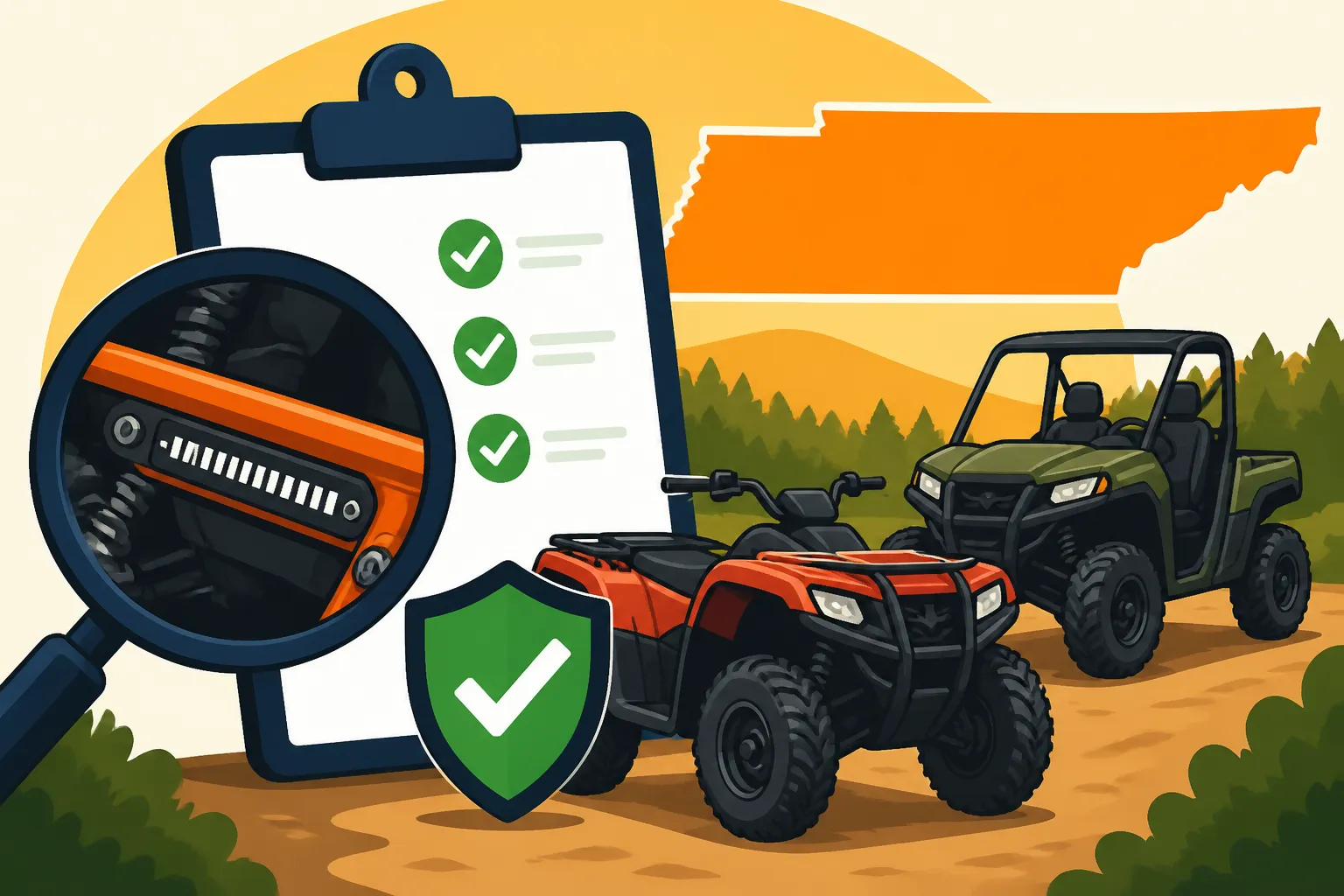
- Frame Rail: This is by far the most common location. Look on the left side of the machine, near the front wheel, often stamped into the steel frame itself. It might be near the footpeg or under the front fender.
- Steering Head: Sometimes, the VIN is stamped into the steering head tube, where the handlebars connect to the frame.
- Under the Seat/Plastics: On some models, especially utility-focused UTVs, the VIN plate might be affixed to a frame member under the seat or beneath some removable plastic bodywork.
- Engine Casing: Less common, but sometimes a partial VIN or engine serial number might be found on the engine block. However, always prioritize the frame VIN as it's the vehicle's primary identifier.
When inspecting the VIN, pay close attention to its condition. Is it clearly stamped, or does it look like it's been tampered with? Are there any signs of grinding, welding, or new paint covering the area? An altered VIN is a serious red flag, indicating potential theft or an attempt to conceal a vehicle's true identity. If you find one, walk away immediately. It's simply not worth the risk.
Cross-Referencing VINs on Paperwork
Once you’ve physically located the VIN on the machine, your next step is to compare it to every piece of documentation the seller provides. This includes the title, any previous registration documents, and especially a bill of sale if they have one already prepared. Every single character must match exactly.
Here’s what to look for:
- The Tennessee Title: This is the most important document. Ensure the VIN on the title is identical to the one on the frame. If the machine does not have a title (which can happen with older OHVs in some states, though Tennessee generally requires them), this is a major concern. Familiarize yourself with [Does Tennessee Register ATVs?] and [Do You Need a Title for an ATV in Tennessee?].
- Bill of Sale: If the seller has a generic bill of sale, ensure the VIN is correctly written on it. You can find reliable templates online through services like LawDepot, which can help ensure all necessary fields are included for your [Tennessee OHV Bill of Sale Requirements].
- Previous Registration/Insurance Cards: While not as legally binding as a title, these documents can provide additional layers of verification for the VIN and the owner's history with the machine.
Any discrepancy, even a single character, is a red flag. It could be an honest mistake, but it could also indicate a swapped VIN, a stolen machine, or an attempt to pass off a different vehicle. Don't let a seller rush you. Take your time, double-check everything, and if something feels off, trust your gut.
The Nitty-Gritty: What a VIN Check Reveals (and Conceals)
A comprehensive VIN check goes far beyond just verifying the manufacturer and model year. It delves into the machine's operational and ownership history, revealing critical details that can significantly impact its value, safety, and legality. While incredibly powerful, it's also important to understand what these reports cannot tell you.
Key Insights from a VIN History Report
When you run a VIN through a reputable service (like CarFax or VINCheck, which often have OHV-specific databases), you gain access to a treasure trove of information. This is where you uncover the real story of the machine you're considering.
- Accident History: This is a big one. The report can tell you if the machine has been involved in reported accidents, detailing dates, locations, and often the severity of the damage. For an off-road machine, a fender bender might be expected, but a major collision resulting in structural damage could be a deal-breaker. A history of multiple serious accidents suggests a machine that's been through a lot and might have underlying issues that aren't apparent from a quick visual inspection.
- Salvage or Flood Titles: These are absolute critical flags. A "salvage" title means an insurance company declared the machine a total loss, typically due to severe damage or theft. While it might be repaired, its value is significantly diminished, and its structural integrity could be compromised. Similarly, a "flood" title indicates the machine was submerged, which can lead to long-term electrical issues, rust, and engine problems that don't manifest until much later. Buying a machine with such a brand in its history for use on the trails of [Brimstone Recreation at Huntsville, Tennessee] or [Ride Royal Blue Resort in Tennessee] could lead to unexpected breakdowns in remote locations.
- Lien History: This is paramount for ensuring clear ownership. A VIN check will reveal any active liens against the machine, meaning someone else (usually a bank or finance company) still has a financial claim to it. If you buy a machine with an active lien, you could find yourself responsible for the previous owner's debt, or the machine could be repossessed. Always ensure that any liens are released before you finalize the purchase, and be aware of [Tennessee OHV Title With a Lien].
- Theft Records: Running the VIN against national databases can tell you if the machine has ever been reported stolen. This is non-negotiable. If it's stolen, you'll lose the machine and your money, as you cannot legally own stolen property. Local law enforcement or the Tennessee Department of Revenue might have records if it was reported within the state.
- Odometer Rollbacks: While less common on OHVs than cars, odometer fraud can occur. The report might show inconsistencies in recorded mileage over time, indicating a potential rollback, which would misrepresent the machine's actual wear and tear.
- Ownership History: You can often see the number of previous owners and sometimes the states where the machine was titled. Multiple owners in a short period could indicate a problematic machine that people are quick to get rid of.
Limitations: What a VIN Check Won't Tell You
While incredibly useful, a VIN check isn't a crystal ball and won't tell you everything. It's a tool, not the only step in your inspection process.
- Minor Accidents/Unreported Damage: If an accident was minor and not reported to an insurance company or law enforcement, it won't show up on a VIN report. This is why a thorough physical inspection is still vital. A cracked fender from a low-speed tip-over on a [Tennessee Trail] might not make it into the official records.
- Maintenance History: A VIN report typically won't detail routine maintenance like oil changes, tire rotations, or parts replacements. You'll need to ask the seller for service records or receipts for this information.
- Condition of Wear Parts: The report can't tell you the current condition of the tires, brakes, suspension components, or engine internals. These are things you need to inspect yourself or have a qualified mechanic review. A VIN check won't highlight a worn-out clutch or a leaky fork seal.
- Aftermarket Modifications: Many OHV owners customize their machines with lifts, performance upgrades, or accessories. These modifications won't be listed on a VIN report. While often a positive, ensure any modifications are done professionally and don't compromise safety or legality.
In essence, a VIN check provides the foundational history, but it's up to you (and perhaps a trusted mechanic) to evaluate the present condition of the machine.
Protecting Your Purchase: Next Steps After the VIN Check
So, you've done your due diligence, run the VIN check, and everything looks clean. That's fantastic! But your journey to a safe and legal purchase isn't over yet. There are several critical steps you need to take to finalize the deal, protect your investment, and ensure a smooth transition of ownership in Tennessee. These steps will prevent future headaches down the road.
The Importance of a Detailed Bill of Sale
A verbal agreement or a scribbled receipt simply won't cut it. A detailed, legally sound bill of sale is your proof of purchase and a crucial document for transferring ownership. It protects both you and the seller. Make sure it's comprehensive and includes specific details.
What to include on your bill of sale:
- Full Names and Addresses: Of both the buyer and the seller.
- Date of Sale: The exact day the transaction takes place.
- Purchase Price: Clearly state the amount paid.
- Full VIN: The complete 17-character Vehicle Identification Number. This is non-negotiable and must match the machine and title exactly.
- Make, Model, Year, Color: A clear description of the ATV or UTV.
- Odometer Reading: If applicable (some older OHVs may not have odometers, or they might not be working).
- "As-Is" Clause: Most private sales are "as-is," meaning you accept the machine in its current condition with no warranties. This should be clearly stated.
- Signatures: Both the buyer and seller must sign the document.
- Notarization: While not always legally required for an OHV bill of sale in Tennessee, having it notarized adds an extra layer of legal validity and can prevent disputes later. A notary can often be found at your local county clerk's office or a bank.
Using a reliable template, perhaps from resources like LawDepot, can ensure you don't miss any vital information. Always make two copies: one for you and one for the seller. This document, along with a properly signed-over title, forms the bedrock of your ownership. This is especially important for [Titling at a Tennessee County Clerk].
Proper Title Transfer Procedures in Tennessee
This is where the rubber meets the road (or the dirt, in our case!). In Tennessee, transferring the title for an OHV is handled through your local county clerk's office. This is a critical step that makes you the legal owner and allows you to apply for the necessary [Tennessee's TDR Sticker Explained] to ride in designated areas.
Here’s a general rundown of the process:
- Obtain the Original Title: The seller must provide you with the original, properly endorsed (signed over) title. Ensure their signature matches the name printed on the title, and that any lien release section is filled out if there was a lien. If the seller doesn't have the title, or if it's not in their name, stop the transaction and resolve those issues first. This is a red flag.
- Visit Your County Clerk's Office: Take the endorsed title, your bill of sale, and proof of identification (like your driver's license) to your local Tennessee county clerk's office.
- Pay Fees and Sales Tax: You'll be required to pay the state title fee, a county clerk fee, and applicable Tennessee sales tax at the time of titling. If you bought the machine from a private seller, you’ll pay the sales tax based on the purchase price listed on your bill of sale. Be prepared for [Tennessee Sales Tax at the Title Counter] and [Tennessee OHV Title Cost].
- Application for New Title and TDR Sticker: The clerk will process your application for a new title in your name and issue you a temporary registration. Your official Tennessee title and TDR sticker will then be mailed to you, usually within a few weeks. Remember, the [Tennessee TDR Sticker Requirements] means you need that sticker for riding on state-managed lands.
- Address Liens (If Applicable): If you're financing your purchase, your lender will typically hold the title and handle the lien recording, much like [Titling a Machine With a Lien in Tennessee]. If you pay off a lien, make sure you get a [Releasing a Lien on a Tennessee Title] form.
Final Inspection and Test Ride
Even after a clean VIN check and all the paperwork, nothing beats a final, thorough inspection and a test ride. This is your last chance to catch any physical issues that a report couldn't detect.
- Walk-Around Inspection: Look for fresh paint that might cover damage, check tire wear, brake function, suspension components, fluid levels, and overall condition. Start it up, listen to the engine, and check for smoke or unusual noises.
- Test Ride: If possible and safe, take it for a short test ride. Check the steering, brakes, throttle response, and transmission. Does it pull to one side? Are there any strange vibrations? Does it shift smoothly? Even a short ride can reveal a lot about the machine's true mechanical state. If you are inexperienced, consider bringing a knowledgeable friend or even a mechanic along for this step.
By meticulously following these steps, from the initial VIN check to the final test ride and title transfer, you significantly reduce your risk and increase your confidence that your new ATV or UTV will provide countless hours of enjoyment on Tennessee's incredible trails.
Disclaimer
This article is for general informational purposes only and does not constitute professional advice. Laws, prices and regulations vary by location and change over time. Consult a qualified professional for guidance on your specific situation.