One Adult per Vehicle With a Permit
Planning a ride on North Cumberland Wildlife Management Area and unsure whether one permit covers everyone in your group? The key is to count vehicles, not passengers: the permit requirement applies per vehicle, and an adult with a valid permit must be associated with each vehicle. Here’s how that works for families, groups, and visiting riders.
What “One Adult per Vehicle” Means
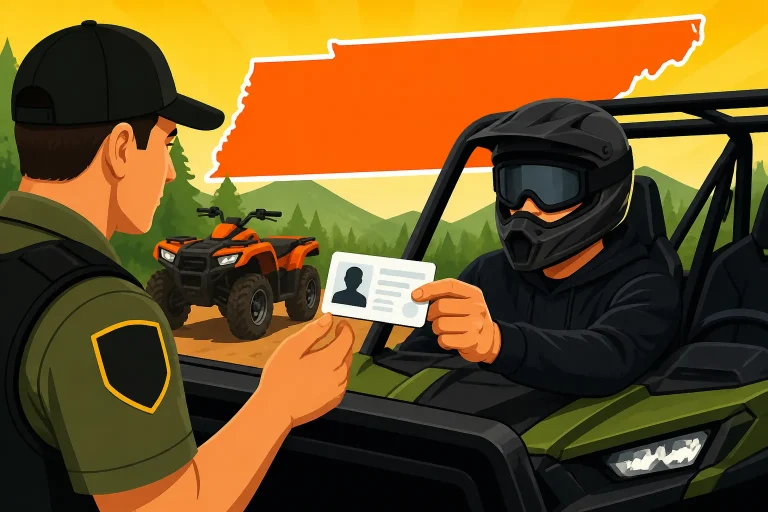
The North Cumberland Wildlife Management Area, often shortened to NCWMA, has a permit rule that is easy to misread. It does not mean one permit covers a whole group traveling together. According to the Tennessee Wildlife Resources Agency (TWRA), permits are required on a per-vehicle basis, and at least one adult per vehicle must possess a valid permit.
In practical terms, if your group takes several ATVs or UTVs, plan for a permit for each vehicle and an adult permit holder for each one. A single adult with a permit should not be treated as a permit for every machine in a convoy. The vehicle-based rule also matters when the group includes passengers: the number of people riding together does not change the number of vehicles that need permits.
The rule is about having a valid permit associated with each vehicle; it is not a blanket group permit. Before heading out, make sure your group has resolved who holds the permit for each machine. If the permit portal or current TWRA instructions specify how the permit must be displayed or carried, follow those instructions rather than assuming a receipt in one person’s phone covers the rest of the group.
This is separate from title paperwork and Tennessee’s Department of Revenue sticker. A vehicle’s title or sticker is not the NCWMA riding permit. The Department of Revenue says a Tennessee Department of Revenue sticker serves as evidence that a title has been issued when an OHV is not registered for road operation, and that the sticker must be affixed to an OHV or ATV used in many federal or state facilities. That document does not replace the riding permit required by TWRA. For the title distinction, see A Sticker That Proves a Tennessee Title Exists—or, if you need the exact listing, A Sticker That Proves a Tennessee Title Exists.
The permit requirement applies to highway-legal vehicles using the trails, too. TWRA says Jeeps and trucks also need the required NC OHV permit when they are on the trails. A road-legal plate or registration therefore should not be taken as a substitute for the area permit.
This difference between documents matters for visiting riders, too. An out-of-state registration may be relevant to the vehicle’s legal status, but it does not by itself answer whether the vehicle has the required NCWMA permit. See Does Tennessee Honor Out-of-State Registration? for the registration question, and Tennessee Rules for a Visiting Rider for the broader visitor context.
Adults, young riders, and the solo-rider exception
There is a specific exception for a young person operating alone. According to TWRA, an individual aged 17 or younger who operates an OHV alone does not need a permit, but must follow the manufacturer’s age limits. This exception is not a reason to assume every young rider in a family group is permit-exempt. It is specifically about a young person operating a vehicle alone.
If an adult is riding with a young person in a vehicle, the general per-vehicle permit rule remains relevant: TWRA requires at least one adult per vehicle to possess a valid permit. If a young rider is operating a separate machine alone, check how the solo-rider exception applies to that situation and make sure the machine is appropriate for the rider under its manufacturer’s limits.
TWRA also says that a special use permit is required for ATV riders at North Cumberland unless they are properly licensed hunters or under age 13. That exception and the rule for young people operating alone address different circumstances, so do not assume one cancels the other in every case. If your group includes a young rider, confirm the applicable permit requirement with TWRA before setting out.
A permit exception does not remove other safety requirements. TWRA requires all minors to wear a helmet while riding ATVs. Follow the manufacturer’s age limits and use properly fitting protective equipment; the permit question is only one part of preparing a young rider.
How to Plan Permits for a Group
The simplest approach is to make a vehicle list before anyone buys a permit. Write down each ATV, UTV, Jeep, or truck that will be used on the trails, then identify the adult permit holder for each vehicle. This prevents the common mistake of counting adults or passengers instead of machines.
Use this checklist:
- List every vehicle that will enter the riding area.
- Identify the adult who will possess a valid permit for each vehicle.
- Check whether any solo young rider qualifies for the TWRA exception.
- Confirm that the permit type and dates fit the planned trip.
- Make sure each rider knows which vehicle the permit is intended to cover.
- Check current area notices and rules before departure.
According to TWRA, permits are available through the GoOutdoorsTennessee.com customer portal beginning July 1, 2026. Buying online in advance can help a group catch a missing permit before reaching the trail area. Keep the confirmation or other proof of purchase accessible, and follow the current instructions for how to present it if asked.
A reservation or permit for one machine should not be treated as transferable to a second machine. The key point is that TWRA requires permits on a per-vehicle basis. If a vehicle is swapped, added, or replaced after the group has made its plan, review the permit details rather than assuming the original purchase automatically covers the change.
For groups renting machines, ask the rental provider which permit responsibilities are included and which belong to the renter. Do not assume a rental agreement or vehicle handover automatically includes the NCWMA permit. If the rental company says a permit is included, verify that the arrangement covers each vehicle in your group and that the permit will be valid for the planned riding area and dates. The general questions in Tennessee Rules for Riding a Rented Machine can help you prepare for that conversation.
Permit costs and picking a duration
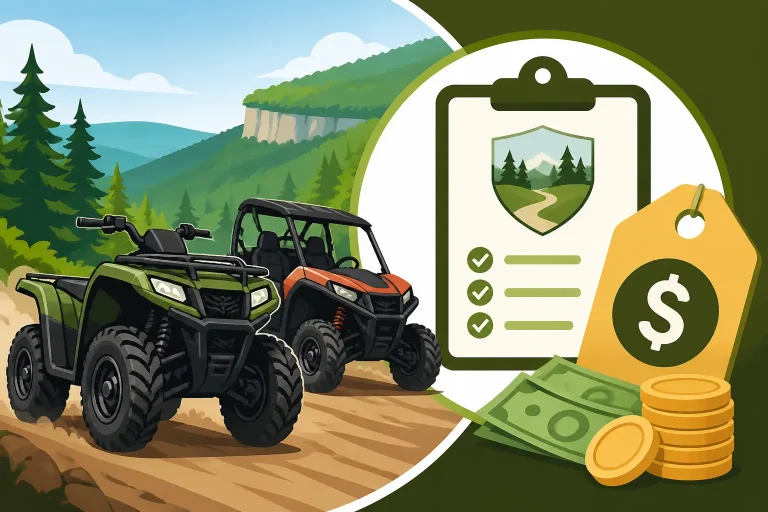
Permit costs depend on residency and the length of the permit. According to TWRA, as of November 2026, resident permits cost $20 for one day, $30 for three days, $100 for seven days, or $150 for an annual permit; nonresident permits cost $50 for one day, $125 for three days, $200 for seven days, or $300 for an annual permit. TWRA lists an annual Sportsman Supplemental NCWMA OHV Riding Permit at $40 for eligible Annual or Lifetime Sportsman license holders.
Since permits are required per vehicle, budget by machine rather than by group size. A group with several machines should not multiply the permit by the number of passengers; instead, account for the permit needed for each vehicle, then choose the duration that fits the trip. Check the portal for current prices and eligibility details before paying.
The Sportsman Supplemental permit has a specific eligibility condition. TWRA says individuals with a valid Annual or Lifetime Sportsman license may purchase it, and that the NCWMA OHV riding permit is not included in those licenses. Having a Sportsman license alone is therefore not the same as having the required riding permit.
A permit for North Cumberland also should not be assumed to cover other riding areas. TWRA says riders using other designated wildlife management areas outside NCWMA still need the High Impact Habitat Conservation Permit. Before combining riding areas in one trip, check each property’s requirements. For background, see Why One Permit Covers Every North Cumberland Unit?—or consult Does One Permit Cover Every North Cumberland Unit? for the unit-specific question.
What the Permit Does Not Replace
A valid permit is permission to meet the area’s riding requirement; it is not permission to ignore other rules or to ride anywhere in Tennessee. NCWMA has its own area rules, and different parks, wildlife areas, and private properties may have different requirements. Check the regulations for the place you plan to ride rather than relying on a permit from another property.
TWRA sets an area-wide speed limit of 25 mph on North Cumberland. The agency also says driving an ATV above 25 mph is considered reckless driving. Stay within the posted and applicable limits, and slow down for turns, uneven ground, dust, and other trail users.
The agency requires users to wear at least 500 square inches of daylight fluorescent orange during deer and elk gun seasons and muzzleloader seasons. If you need to replace high-visibility clothing or gear, a marketplace such as Amazon may offer options, but check the actual product description and color before buying; ordinary bright clothing is not necessarily the specified daylight fluorescent orange. The orange requirement is a separate preparation item, not something a permit satisfies.
TWRA also sets an 86 dB maximum noise limit for motorized vehicles, measured at 50 feet from the exhaust, as of November 2026. All OHVs must have mufflers that keep their noise output acceptable. A machine’s permit does not certify that it meets the noise rule, so check the exhaust system and applicable equipment requirements before riding.
For hunting-season trips, the rules can involve more than orange clothing. TWRA says riders must be properly licensed for the specific hunting season and carry only legal firearms or archery equipment. It also says firearms transported on ATVs must be unloaded, and shooting from a motorized vehicle on TWRA property is illegal. If the trip overlaps with a hunting season, review the rules for the specific property and activity instead of assuming the riding permit settles them.
Title and registration questions are separate again. The Tennessee Department of Revenue says OHV title and registration applications require proof of ownership, and applications for OHV registration plates should be made through the local county clerk. Those steps concern ownership and vehicle status, not the area-specific permit. If you are sorting out vehicle paperwork, Tennessee OHV Title Paperwork and Titling an OHV in Tennessee cover the separate process.
The same distinction applies to stickers. According to the Department of Revenue, TDR stickers are non-renewable and non-transferable, and become invalid when a vehicle is sold or dismantled. A TDR sticker is not a substitute for the TWRA permit, and a TWRA riding permit should not be confused with proof of title. Keeping those documents straight helps avoid arriving with the right paperwork for ownership but the wrong authorization for riding.
Before loading up, check the current TWRA information for NCWMA and the property rules that apply to your route. The agency’s annual Tennessee Hunting & Trapping Guide is also identified by TWRA as a useful source for regulations pertaining to individual properties. If permit terms, exceptions, or access conditions are unclear, ask TWRA rather than relying on another rider’s interpretation.
A Simple Final Check Before You Ride
Use a vehicle-by-vehicle check, not a headcount. For every machine entering the trails, confirm that its permit requirement is handled and that an adult with a valid permit is associated with it, unless the specific solo-youth exception applies. According to TWRA, the adult-per-vehicle rule applies at North Cumberland, while a person aged 17 or younger operating an OHV alone does not need a permit but must follow manufacturer age limits.
Then check the remaining trip details: permit validity, the rules for any other riding area, required safety gear, applicable seasonal clothing, and vehicle requirements. If a vehicle is added or the group changes its plan, revisit the permit arrangement for that machine. A little planning before departure is easier than discovering at the trail area that the group has a permit for the people but not for every vehicle.
Sources
- Tennessee Department of Revenue — Off Highway Vehicles (checked November 3, 2026)
- Tennessee Wildlife Resources Agency — North Cumberland OHV Riding Area (checked November 3, 2026)
- Tennessee Wildlife Resources Agency — New OHV Permit Requirements to Take Effect July 1, 2026 (checked November 3, 2026)
- Tennessee Wildlife Resources Agency — ATVs: Rules of the Off-road by Paul E. Moore (checked November 3, 2026)
Disclaimer
This article is for general informational purposes only and does not constitute professional advice. Laws, prices and regulations vary by location and change over time. Consult a qualified professional for guidance on your specific situation.