Tennessee’s Class II OHV Definition
It's incredibly frustrating when you're trying to figure out the rules for your off-road machine in Tennessee, only to be met with confusing categories and definitions that don't seem to quite fit what you own. Especially for those unique, custom, or larger machines that clearly aren't a standard ATV, the Class II OHV designation can feel like a mystery. This guide is here to unravel the specifics of Tennessee's Class II OHV definition, helping you understand exactly what it means for your machine, from titling to trail riding.
Decoding Tennessee's OHV Categories: A Quick Refresher
Before we dive headfirst into the specifics of Class II, it’s really helpful to get a handle on why Tennessee even bothers with these categories in the first place. You’d think an off-road machine is just an off-road machine, right? But the state sees things a bit differently, and these classifications are the foundation for everything from how you title your pride and joy to where you can actually ride it. Understanding this framework helps you see where your machine fits into the grand scheme of things and why certain rules apply.
The Big Picture: Why Categories Matter
Imagine pulling up to a trail entrance, or even trying to get your new-to-you machine titled at the county clerk's office, and being told "it depends on what kind of OHV it is." That's the reality for many riders in Tennessee. The state's system of classifying Off-Highway Vehicles (OHVs) into different categories isn't just bureaucratic red tape; it's a way for them to differentiate between machines based on their size, design, and intended use. This distinction then dictates everything from safety gear requirements on public roads to the specific paperwork you'll need when you head to the title counter. It impacts your ability to legally operate your machine, and often, what kind of insurance coverage you might need. It’s all about fitting your machine into a box, even if it feels like your machine is designed to break out of boxes!
For example, a small youth ATV designed for private land use will have different implications than a massive, custom-built rock crawler. The state needs a way to talk about these machines, and these categories, particularly Class I and Class II, are their chosen language. This is also why you'll find that Tennessee is pretty specific about what constitutes an OHV versus a regular motor vehicle for titling purposes, as laid out in details such as [Tennessee's Four Vehicle Categories]. These classifications aren't just for law enforcement; they're for you, the owner, to ensure you're in compliance.
Briefly Reacquainting with Class I OHVs (for context)
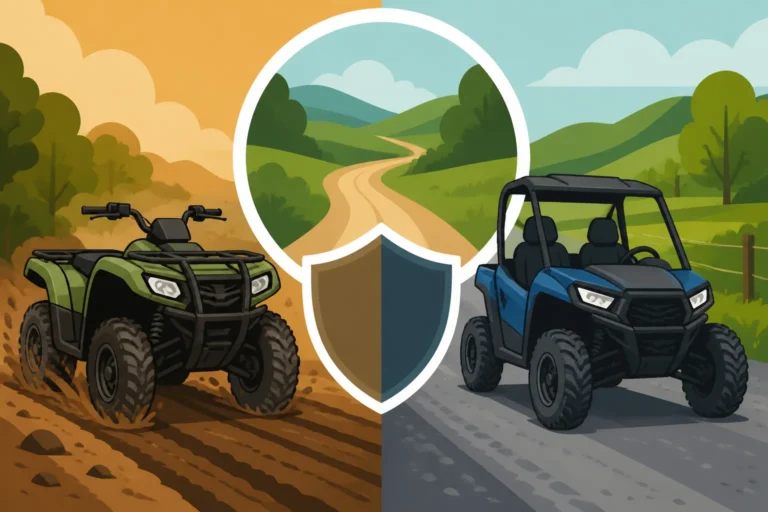
You can't really grasp Class II without a quick look at its counterpart, Class I. Most of the machines you see out on the trails — your typical four-wheelers (ATVs) and many of your side-by-sides (UTVs) — fall squarely into Tennessee's Class I OHV definition. These are generally designed for one or more occupants, have a steering wheel or handlebars, and run on low-pressure tires. The key distinguishing factors for Class I machines revolve around their weight (usually under 2,500 pounds) and width (typically under 80 inches). They're what most people picture when they think of an off-road vehicle.
The rules around Class I machines are often the default for many parks and regulations, making it seem like the "standard" category. However, as machines have evolved, gotten bigger, and more specialized, the Class I definition started to leave out a growing number of custom builds and larger, more robust utility vehicles. That's where Class II steps in, designed to capture those machines that are still very much off-highway, but exceed some of the more restrictive parameters of Class I. Think of Class I as the baseline, and Class II as the category for everything that goes beyond that baseline in certain key measurements. For a deeper dive into what makes a machine Class I, you can check out [Tennessee's Class I OHV Definition].
Unpacking Tennessee's Class II OHV Definition: The Core Components
So, what exactly pushes a machine out of Class I and into the Class II category? It's not just a gut feeling that your rig is "big." Tennessee law has some very specific criteria that draw that line in the sand, primarily focusing on physical dimensions and certain design elements. These are the details you'll need to know when you're buying a machine, building one, or trying to understand if your current setup is on the right side of the law. Ignoring these can lead to headaches at the titling office or even out on the trails.
Weight and Width: The "Over-Sized" Factor
The most significant factors differentiating a Class II OHV from a Class I machine in Tennessee are its weight and width. A Class II OHV is defined as any off-highway vehicle that exceeds either the weight or width limits of a Class I OHV. Specifically, this means a machine that weighs more than 2,500 pounds dry weight (that's without fuel, fluids, or passengers) or is wider than 80 inches from the widest point (excluding mirrors). These aren't arbitrary numbers; they reflect a recognition that larger, heavier machines behave differently, can cause more wear on certain trails, and potentially pose different safety considerations, especially if they were ever to interact with public roads.
Consider the practical implications: if you've got a beefed-up side-by-side with a lift kit, massive tires, and a full roll cage, you might easily exceed the 80-inch width. Or, if you're driving a custom rock bouncer built on a heavier chassis, you could easily blow past the 2,500-pound mark. These are the kinds of modifications and designs that specifically push a vehicle into Class II territory. It’s not just about what it looks like, but what the tape measure and the scale say. Many people get surprised by this, especially after adding accessories that push them over the limit. When buying a used machine, it's always a good idea to perform a [Checking a VIN Before a Tennessee Purchase] and confirm the official specs, or be prepared to measure and weigh it yourself.
Steering and Seating: Beyond the Handlebars
While weight and width are often the primary triggers for a Class II designation, the steering mechanism and seating arrangement also play a role, albeit usually in conjunction with the size parameters. A Class II OHV can be equipped with either handlebars or a steering wheel. This broad definition means that traditional ATVs with handlebars, as well as side-by-sides and other vehicles with steering wheels, can both potentially be Class II if they meet the weight or width criteria. This is important because it acknowledges the diversity of off-road vehicle designs.
The definition also specifies that a Class II OHV is "designed for use by a driver and any passengers." This isn't a restrictive clause as much as it is an inclusive one, ensuring that multi-passenger machines, like larger custom UTVs or dune buggies, are captured. Unlike some Class I machines which might have specific limits on passenger numbers relative to seating [Four Passengers on a Tennessee Class I], the Class II definition is more about the overall design and capacity rather than a strict numerical cap. The key takeaway here is that if your machine is oversized, the type of steering or number of seats won't generally save it from being a Class II; those factors simply clarify that it can be an OHV regardless of steering, assuming it meets the size thresholds.
Passenger Capacity: More Than Just a Driver
The general wording for Class II OHVs includes being "designed for use by a driver and any passengers." While this isn't as explicitly restrictive as some other vehicle classifications, it's worth noting that the physical capacity of these larger machines often allows for more than just a driver. Many vehicles that naturally fall into Class II, such as custom-built rigs or specific utility vehicles, are designed to carry multiple occupants or significant loads. This inherent design for multiple passengers often contributes to their increased weight and sometimes their width.
Think about those sprawling sand rails you see dominating the dunes. They're often built to carry a whole family or a group of friends, with several bucket seats and substantial roll cages. This design contributes to their overall footprint and mass, easily pushing them beyond Class I thresholds. So, while the "any passengers" clause itself doesn't define Class II, the reality of these larger, multi-occupant vehicles is that their passenger capacity is often a consequence of their larger build, which in turn makes them Class II. This means that if you're building or buying a machine with the intent of carrying a larger group, you're almost certainly looking at a Class II vehicle due to its necessary size and structure.
Real-World Examples: What Kinds of Machines Become Class II?
Understanding the legal definition is one thing, but picturing it in the real world is another. When you hear "Class II OHV," your mind might jump to certain types of machines. It’s helpful to go through some common examples that riders encounter in Tennessee that typically fall into this category. These aren't necessarily exotic vehicles, but they are often bigger, more specialized, or custom-built to handle extreme terrain or specific tasks, pushing them beyond the standard ATV or smaller side-by-side.
The Iconic Sand Rails and Dune Buggies
When people talk about Class II OHVs, sand rails and dune buggies are almost always the first machines that come to mind. These vehicles are purpose-built for high-speed desert or sand dune recreation, but they also find their way to Tennessee's wider trails. They often feature an open-frame chassis, powerful engines, long-travel suspension, and large, paddle-style tires in the rear. Their very design, focused on performance and durability, inherently pushes them past the Class I limits. For instance, their wide stance, necessary for stability at speed or during turns, frequently exceeds the 80-inch width rule.
Similarly, the robust construction, often using heavier gauge tubing for the roll cage and chassis, combined with bigger engines and transmissions, means they usually tip the scales well over 2,500 pounds. So, if you're looking at a sleek, fast sand rail or a rugged, go-anywhere dune buggy, it's a safe bet you're dealing with a Class II OHV in Tennessee. This is a common point of discussion, and if you want to know more about how these specific machines are handled, you can often find details in guides like [Sand Rails Under Tennessee Class II]. You'll need to be prepared for the titling and operational rules that come with this classification.
Custom Builds and Modified Machines
This is where the Class II definition truly casts a wide net. Many OHV enthusiasts love to customize their machines, adding lift kits, larger tires, heavy-duty bumpers, winches, sound systems, and elaborate roll cages. While these modifications might make your machine more capable or comfortable, they can also inadvertently push a Class I machine into Class II territory. For instance, a side-by-side that started life as a Class I machine could, after a significant lift and tire upgrade, easily exceed 80 inches in width. Or, adding a heavy-duty bed, a full accessory package, and substantial armor could add enough weight to surpass the 2,500-pound limit.
This is a key area where riders can get caught off guard. You might have titled your machine originally as a Class I, but after a few years of upgrades, its physical characteristics might now align with Class II. It's crucial to be aware that the classification is based on the machine's current state, not its factory specifications if it's been heavily modified. If you're undertaking a significant custom build from scratch, using a larger engine or heavier chassis components, you're almost certainly creating a Class II OHV. You'll want to document your build carefully and be prepared for the titling process that comes with it.
Unique Utility and Recreational Vehicles
Beyond the obvious sand rails and heavily modified rigs, there are other, less common vehicles that can end up being classified as Class II. This might include certain specialized utility vehicles used in industries like mining or logging that are designed to traverse off-road terrain but are simply larger and heavier than typical UTVs. Some custom-built rock crawlers, designed for extreme articulation and powerful climbs, often incorporate components that make them both wider and heavier than standard OHVs.
You might also encounter some unique recreational vehicles, perhaps imported or built from obscure kits, that don't neatly fit into either the street-legal vehicle categories or the standard Class I OHV definition. If it's too big or too heavy for Class I, but clearly still an off-highway machine, Class II is where it lands. The beauty and challenge of Class II is its flexibility to encompass these diverse, often purpose-driven machines that push the boundaries of conventional off-road design. It's essentially the category for everything else that's big, beefy, and built for the dirt, but doesn't quite fit the narrow parameters of Class I.
The Ramifications of a Class II Designation: What It Means for You
So, your beloved machine, whether a custom build or a factory-designed behemoth, has been identified as a Class II OHV. What now? This designation isn't just a label; it carries real-world implications for how you interact with your machine, the state, and the places you want to ride. From the paperwork you handle to the trails you can legally access, understanding these ramifications is crucial to being a responsible and compliant off-road enthusiast in Tennessee.
Titling vs. Registration: Understanding the Sticker
One of the most common points of confusion for any OHV owner in Tennessee is the distinction between titling and registration. For Class II OHVs, just like Class I, Tennessee requires you to title your machine, but it generally does not require traditional registration in the same way it does for a car or truck with annual renewal. When you title your Class II OHV, you'll receive a physical title document from the Tennessee Department of Revenue (TDR), which serves as proof of ownership. This process also typically involves paying sales tax and various fees.
However, a key part of the titling process for OHVs in Tennessee is the issuance of a special TDR sticker. This sticker is essentially proof that your machine has been properly titled in the state. It's not an annual registration decal that you renew every year. Instead, it's a one-time sticker issued with the original title. If you sell the machine, the sticker becomes void, and the new owner must title it in their name and receive a new sticker. This unique system means you don't have to worry about yearly renewals, but it's vital to understand that the sticker is tied to the title and ownership. For more on this, you can look into [Tennessee's TDR Sticker Explained] and [Why Tennessee Does Not Register Off-Road Machines].
Road Use Limitations and Opportunities
This is perhaps one of the most significant implications of your machine being classified as a Class II OHV. Generally speaking, off-highway vehicles in Tennessee, whether Class I or Class II, are designed for off-road use and are not street legal on most public roads. However, Tennessee law has made some specific provisions for certain counties and districts to designate certain roads for OHV use, typically within "Adventure Tourism Districts." Even then, specific rules apply regarding speed, time of day, and safety equipment.
For Class II machines, their larger size and weight often make them less suitable for road use even on designated roads. While the law often applies broadly to "OHVs," the practical realities of operating a very wide or very heavy machine on a public road, even a low-speed one, can present additional challenges. It’s crucial to understand that simply having a title and a TDR sticker does not grant you unlimited road access. You'll need to research specific county ordinances and state regulations for road use. The penalties for illegal road use can be significant, so understanding [Why Your Class Decides Your Road Rights] is paramount.
Trail Access and Park Rules
When it comes to hitting the trails, the Class II designation can also have an impact, though often less restrictive than road use. Most major off-road parks and trail systems in Tennessee, like Windrock Park or Brimstone Recreation, welcome both Class I and Class II OHVs. These parks are designed to accommodate a wide range of machines, from dirt bikes to massive rock crawlers. However, it's always, always a good idea to check the specific rules of any park or trail system you plan to visit.
Some parks might have width restrictions on certain trails (though usually wider than 80 inches for most full-size machines), or they might have specific recommendations for heavier machines on challenging terrain. If you're planning to ride on Tennessee Wildlife Management Areas (WMAs) or other state-managed lands, you'll need to check their specific OHV policies, as these can vary. While many parks are quite accommodating, knowing your machine is Class II means you should proactively verify that it meets any park-specific requirements, especially if you're venturing to a new location or a lesser-known trail.
Titling Your Tennessee Class II OHV: The Official Process
Getting your Class II OHV legally titled in Tennessee might seem daunting, especially if your machine is a custom build or an unusual import. But rest assured, the process is well-established, and thousands of riders go through it every year. It primarily involves a trip to your local county clerk's office with the right paperwork and fees. Being prepared can save you a lot of time and frustration, ensuring you walk out with that coveted Tennessee title in hand.
Gathering Your Paperwork and Proof of Ownership
The absolute first step in titling any OHV in Tennessee, including a Class II, is to gather all your documentation. This is where many people hit snags, so double-check everything before you leave the house. You'll need proof of ownership, which could be an existing out-of-state title (if you bought it used from another state), a Manufacturer's Statement of Origin (MSO) or Manufacturer's Certificate of Origin (MCO) if it's new, or a bill of sale if purchased privately. If you bought it used, a properly filled-out [A Tennessee Bill of Sale for an OHV] is critical, detailing the buyer, seller, purchase price, VIN, and date of sale. Ensure all names match, and if there are multiple owners, all parties are accounted for.
If you purchased your machine from a dealer, they might handle some of the initial paperwork for you, but you'll still need to provide certain information. For custom builds or machines without traditional MSOs (perhaps an imported chassis or engine), you might need to prove the origin of major components, and potentially even undergo a VIN inspection to assign a new VIN if one isn't present or legally recognized. It’s a good idea to confirm with your specific county clerk what they require for unique situations. Additionally, be prepared to pay Tennessee sales tax on the purchase price if it hasn't already been paid. This is often calculated at the time of titling. Services like LawDepot can be incredibly helpful for creating legally sound bills of sale if you're selling or buying privately, ensuring all the necessary fields are present for the county clerk.
Your Trip to the County Clerk's Office
Once your paperwork is meticulously assembled, your next stop is your local county clerk's office. This is where the magic happens, or at least, where the official records are updated. Be prepared for a bit of a wait, especially during peak hours. When your turn comes, present all your documents, including your proof of ownership, bill of sale (if applicable), and any other supporting paperwork. The clerk will review everything, verify the VIN, and process your application. They will calculate any sales tax due, as well as the standard titling fees.
In Tennessee, you'll typically pay a state title fee, plus an additional county clerk fee. If you're financing your Class II OHV, there will also be a lien fee added to cover the recording of the lienholder on your title. It's a good idea to call your county clerk's office beforehand to ask about specific fees and acceptable payment methods, as these can sometimes vary slightly. Remember that the county clerk issues the title and the TDR sticker, not the Tennessee Department of Revenue directly, making the county office your primary point of contact for this process. This means your [Titling at a Tennessee County Clerk] experience will be a bit different than titling a regular car.
Receiving Your Title and TDR Sticker
After all the paperwork is submitted and fees are paid, the county clerk's office will process your application. You won't typically walk out with your official title in hand the same day. The title itself is usually mailed to you directly from the Tennessee Department of Revenue, which can take several weeks. However, the clerk will issue you a temporary registration or receipt that serves as proof you've initiated the titling process. More importantly, they will also issue you that critical TDR sticker. This sticker is proof that your Class II OHV has been officially titled in Tennessee.
The TDR sticker is usually a small, adhesive decal with a unique identification number. You'll need to affix this sticker to your Class II OHV in a conspicuous location, as specified by the clerk (often on the left rear fender or a visible frame component). This sticker is incredibly important because it's the state's way of verifying that your machine is legally recognized. Remember, this isn't an annual renewal sticker; it's issued once with the title. If the sticker is ever damaged or lost, you'll need to contact your county clerk about obtaining a replacement, but it won't be a "renewal" in the traditional sense. Understanding [What the TDR Sticker on Your Title Means] is key to compliance.
Living with a Class II OHV: Practical Considerations
Owning a Class II OHV is a fantastic experience, opening up new levels of adventure and capability. However, the unique characteristics that define these machines also bring a few practical considerations you'll need to keep in mind. From making sure you're properly covered in case of an incident to simply getting your massive rig to the trails, thinking ahead about these aspects can save you a lot of headaches down the line.
Insurance and Liability Considerations
Just like any vehicle, securing proper insurance for your Class II OHV is a smart move, and in some situations (like road use on designated roads), it might even be legally required. Because Class II machines are often larger, more powerful, and potentially more expensive, their insurance premiums might differ from those of smaller Class I ATVs. It's crucial to find an insurance provider that understands OHV coverage, especially for custom builds or more unique vehicles. You'll want to ensure you have coverage for collision, comprehensive, and liability.
Think about the potential scenarios: an accident on a public trail, damage incurred while transporting it, or even theft. Having adequate liability coverage is particularly important given the size and potential impact of a Class II machine. Some trail parks might also require proof of insurance to enter. When discussing your policy, be very clear with your agent about your machine's Class II designation and its specific characteristics (weight, width, modifications) to ensure you're getting appropriate coverage. Don't assume your existing auto or home insurance policy automatically covers your off-road machine; dedicated OHV insurance is usually the way to go.
Transporting Your Larger Machine
Getting your Class II OHV to and from the trails is a significant consideration. Due to their increased width and weight, a standard utility trailer or even some smaller ATV trailers might not be sufficient or safe. You'll likely need a larger, wider, and heavier-duty trailer specifically designed to handle the dimensions and mass of your Class II machine. This might mean an open-deck car hauler, a specialized UTV trailer, or even a custom-built trailer.
Ensure your tow vehicle is capable of safely pulling the combined weight of your trailer and Class II OHV. Overloading your tow vehicle or using an undersized trailer is not only dangerous but also illegal. Pay close attention to trailer tongue weight, proper tie-down techniques, and lighting. The larger footprint of a Class II machine means you'll also need more space for loading, unloading, and maneuvering, both at home and at the trailhead. Always measure your machine's width and length accurately before purchasing or using a trailer, making sure you account for any oversized tires or accessories that extend beyond the main chassis.
Staying Up-to-Date on Regulations
The world of OHV laws and regulations, especially concerning road use and specific definitions, can evolve. What might be legal one year could change the next, particularly in Tennessee as local counties and state laws adapt to the growing popularity of OHVs. With a Class II OHV, it’s especially important to stay informed because these machines often push the boundaries of existing regulations. For instance, laws regarding [Tennessee Road Use Rules for ATVs] and UTVs have seen recent updates, and understanding how these apply to your specific Class II machine is crucial.
Keep an eye on announcements from the Tennessee Department of Revenue, the Tennessee Wildlife Resources Agency (TWRA), and your local county government. Join local OHV clubs or online forums where riders share information about regulatory changes. Before planning a trip, always check the current rules for the specific area you intend to ride, especially if you're crossing county lines or visiting a new park. Ignorance of the law is never an excuse, and a little proactive research can prevent fines, citations, or the disappointment of being turned away from a trail. Being a responsible Class II OHV owner means not just knowing your machine, but also knowing the rules that govern its operation.
Disclaimer
This article is for general informational purposes only and does not constitute professional advice. Laws, prices and regulations vary by location and change over time. Consult a qualified professional for guidance on your specific situation.