Tennessee Minimum Age to Ride a Trail
A child’s age alone does not tell you whether they can ride every ATV or UTV trail in Tennessee. The answer depends on where you ride, whether the machine is suitable for the rider, and whether an adult must supervise. Here’s how to check the rules before buying a permit, loading up, or handing over the keys.
There Is No Single Age Rule for Every Tennessee Trail
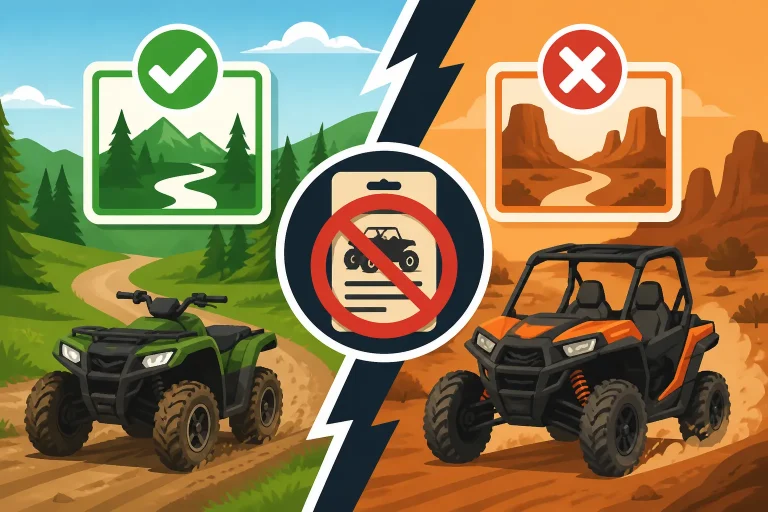
Tennessee trail riding takes place on different kinds of land, and the rules are not interchangeable. A state wildlife management area, a private riding park, and a privately owned trail system may each set different age, supervision, permit, and equipment requirements.
That means “What is the minimum age in Tennessee?” is often too broad a question to get a useful answer. Start with the exact place you plan to ride. Then check whether its rules apply to the young person as an operator, a passenger, or both.
The distinction matters because permission to enter a trail system is not necessarily permission for every rider in your group to operate a machine. A permit or park pass generally addresses access requirements; it does not automatically override age limits, supervision rules, or restrictions on the vehicle itself. For a broader overview of how access permits differ, see Tennessee Trail Permits Explained.
State-managed trails and private parks can differ
Rules for riding on state-managed land may be set by the agency responsible for that property. Private parks and resorts can establish their own conditions for access and operation. Even when the same family visits two Tennessee riding areas, it should not assume that an age rule from one applies at the other.
Before your trip, confirm the requirements for the specific riding area and the specific trail or unit you intend to use. Ask about the rider’s age, the type of machine, supervision, passenger eligibility, and permit requirements. If the property has separate rules for rental vehicles or organized rides, check those too.
| Where you plan to ride | What to verify before going |
|---|---|
| State wildlife management area | Current youth age and supervision rules, permit requirements, allowed vehicles, and any unit-specific restrictions |
| Private riding park or resort | The park’s minimum operator age, adult supervision policy, passenger rules, and any rental conditions |
| Private property | The owner’s permission and any applicable safety or access conditions |
| Public road or road crossing | Road-use rules, which are separate from trail rules |
For state wildlife management areas, use the current rules for the particular area rather than relying on a friend’s recollection or an old permit page. Tennessee Rules for Riding a WMA explains why the land designation matters. A rule for one wildlife management area may not describe the policy at a private park, and a trail map alone may not show every age or supervision condition.
Riding a trail is different from riding a road
A machine that is permitted on an off-road trail does not automatically qualify for public-road use. Road access involves a different set of requirements, and a trail park’s age policy does not establish who may operate a vehicle on a public road.
Treat any proposed road segment, town street, or highway crossing as a separate question. Check the road-use rules for the place and route, not just the trail system’s admission requirements. The distinction is especially important if your ride plan includes leaving private property or crossing a public roadway.
Check Age, Supervision, and the Machine Together
Age is only one part of whether a young person can ride safely and lawfully. A park may set a minimum operator age, require an adult to accompany younger riders, or have different rules for passengers. The machine’s design and the way it is used also matter.
When a policy mentions “accompanied” or “supervised,” ask what that means in practice. Does the adult need to ride in the same vehicle, ride in a separate vehicle, or remain with the youth at the facility? Is the adult required to meet a minimum age? Does the rule apply to every trail or only certain areas? Do not assume that an adult being somewhere on the property satisfies a supervision requirement.
For more detail on how age-specific conditions fit together, see Tennessee Rules for Riders Under 16 and Tennessee Supervision Rules for Young Riders. If the rider is under 13, check the applicable property rules particularly carefully; Riders Under 13 on a North Cumberland Trail addresses that age group in the North Cumberland context. Do not apply a rule for North Cumberland to a private park unless that park confirms it uses the same rule.
Operator age and passenger age are not the same
A young person who cannot operate a machine at a particular location may still be allowed as a passenger, or the location may restrict both roles. Passenger eligibility can depend on the vehicle’s seating, the park’s policy, and whether the rider can sit securely and use the required safety equipment.
Before bringing a child as a passenger, confirm that the vehicle is designed to carry one and that the trail operator permits it. Never treat a second seat as automatic permission to carry a child. Ask whether the passenger needs a separate permit or waiver, and whether an adult must ride in the same vehicle.
The same questions apply to rental machines. A rental company may have age conditions that are stricter than the trail’s general access policy. If you are renting, check both the rental provider’s operator requirements and the park’s rules. [Tennessee Rules for Riding a Rented Machine] covers the separate considerations involved.
Choose a machine that fits the rider
Even when a young rider meets the location’s age rules, the machine should suit their size, strength, judgment, and experience. A vehicle that is too large or difficult for the rider to control can make a permitted ride unsafe.
Check the manufacturer’s operating guidance, the machine’s seating arrangement, and whether the rider can reach and operate the controls properly. Consider the trail conditions as well. A narrow, rocky route with steep sections demands more control and attention than an easy, wide trail. A machine that feels manageable in a flat staging area may be harder to handle on a slope, in mud, or around other vehicles.
A parent or guardian should make a separate decision about readiness, even if the park allows the rider. Legal eligibility is a minimum condition, not proof that a particular child is prepared for a particular machine or route. Start conservatively, keep the group together, and choose a route that matches the least experienced rider.
Safety equipment still matters
Age does not replace equipment rules. Check the requirements for helmets and any other required gear at the location you plan to visit. Tennessee’s rules for off-road riding and a private park’s own safety policy may both be relevant. Tennessee Helmet Rules at a Trail Park provides more background on helmet requirements.
Fit matters as much as having the equipment. A helmet should fit the rider properly and be worn as directed; a helmet that is loose or uncomfortable may not provide dependable protection. Make sure the young rider understands how to use the machine’s controls and how to respond if the group stops or separates.
Permits Do Not Settle Every Age Question
A permit is important, but it answers a specific access question. It should not be treated as a general age waiver or as confirmation that the rider can operate any machine on any trail.
For a state-managed riding area, determine which permit the rider or adult needs, who must carry it, and whether a young rider has a separate permit or supervision requirement. The details may depend on the program and property. Why One Adult per Vehicle Needs a Tennessee Permit is useful for understanding why an adult’s permit obligation should not be confused with a youth’s eligibility to ride.
For private parks, check whether the park pass covers every person in the vehicle or whether individual riders need their own access documentation. A rental package may or may not include the trail permit. Confirm this before arrival instead of assuming that the vehicle’s permit covers all occupants.
Tennessee does not have one statewide trail sticker that grants access to every riding area. A permit issued for one location may not be accepted at another. Why Tennessee Has No Statewide Trail Sticker explains why a rider may need to meet separate access requirements at different properties.
A quick pre-trip process
Use this sequence before taking a young rider to a Tennessee trail:
- Name the exact riding area. Identify the park, wildlife management area, or private property, including the unit or trail section if applicable.
- Check its current youth rules. Confirm the minimum operator age, any supervision requirement, and whether the policy differs for passengers.
- Confirm the machine is allowed. Ask about vehicle type, size, passenger capacity, and any restrictions that affect the rider.
- Check permit and waiver requirements. Find out who needs a permit, whether it must be purchased in advance, and whether a rental includes it.
- Ask about equipment. Confirm helmet and protective-gear requirements, then make sure the gear fits the rider.
- Plan a suitable route. Choose terrain that matches the young rider’s ability and the group’s experience.
- Recheck before departure. Trail status, access conditions, and park policies can change. Confirm the information close to the ride date.
When a rule is unclear, contact the land manager or park directly and describe the situation plainly: the rider’s age, whether they will operate or ride as a passenger, the machine type, and the planned trail. A general answer about “kids” may not cover the exact case.
Common Mistakes When Bringing a Young Rider
A few assumptions cause avoidable problems at the gate. The most common is relying on a rule from another park. A friend’s experience may be accurate for one location and still be wrong for the place you are visiting.
Another mistake is treating a permit as proof of age eligibility. A permit can meet an access requirement without changing who may operate a vehicle. Likewise, a parent’s presence does not automatically satisfy a supervision rule if the policy requires a particular form of accompaniment.
Families can also overlook the difference between a passenger and an operator. If a young person will ride in a UTV, ask about passenger rules specifically. If they will drive their own machine, ask about operator age, supervision, and machine restrictions. Do not rely on a general “children are allowed” statement without clarifying the role.
Finally, do not assume that rules remain unchanged from one visit to the next. Trail access policies and permit instructions can be revised. Check the official information for the relevant land manager or park, especially before a first visit or a trip involving a rental vehicle.
A practical answer is therefore location-specific: confirm the particular trail’s current operator and passenger rules, meet its permit requirements, and choose a machine and route appropriate for the young rider. If the plan includes a public road, verify road-use rules separately from the off-road policy.
Disclaimer
This article is for general informational purposes only and does not constitute professional advice. Laws, prices and regulations vary by location and change over time. Consult a qualified professional for guidance on your specific situation.