Blaze Orange on a Tennessee Trail
A fall ride through Tennessee’s Cumberland hills can put ATV and UTV riders on trails shared with hunters, where dark jackets and tree cover make people hard to see. Blaze orange can improve visibility, but the rules depend on where you ride and what is in season. This guide explains how to check requirements, choose practical gear, and plan a safer trip.
When blaze orange matters on Tennessee trails
Public hunting land and private trail parks are not the same
A key distinction is who manages the land. A privately operated riding area such as Windrock Park or Brimstone Recreation sets its own access rules, while a Wildlife Management Area may have seasonal conditions tied to hunting activity. A rule that applies on one kind of property does not automatically apply everywhere in Tennessee.
On a WMA, trail access, closures, and clothing requirements can change with the hunting season and the specific unit. Don’t assume that riding an established OHV trail means every hunting-related rule is irrelevant. Before unloading, review the land manager’s notices and the rules for that area. [Tennessee Rules for Riding a WMA] explains why the land designation matters, and Sharing a WMA With Deer Hunters covers the practical reality of sharing public land during hunting seasons.
Private parks can have their own requirements too. Check the park’s current notices before you leave home, especially if your plan is to ride near a public-land boundary or travel between separate properties. A trail map may show where a route goes, but it may not tell you whether a seasonal closure or clothing rule is in effect.
Orange requirements depend on the activity and season
The phrase “blaze orange rule” can make it sound as though every rider must wear the same amount of orange on every Tennessee trail. That is not a safe assumption. Requirements can depend on the land, the season, and whether a person is hunting or simply riding through an area where hunting is taking place. Tennessee’s 500 Square Inch Orange Rule is a useful starting point for understanding the hunting-related requirement, but riders should check whether and how it applies to their specific trip.
Look for official notices that identify the unit, dates, and activity covered. If a notice is unclear, contact the land manager or park office before riding rather than trying to interpret a general rule from a social media post or an old trip report. The reference Tennessee Orange Requirements for Riders is also relevant when you are checking what applies to people riding rather than hunting.
Even when a particular rider is not required to wear orange, it may still be a sensible visibility choice when hunters are active nearby. That is especially true on narrow wooded trails, at trail junctions, and where a road or access route passes through hunting land. A legal minimum and a practical safety decision are not always the same thing.
Choosing blaze orange gear that works on an ATV or UTV
Wear orange where people can actually see it
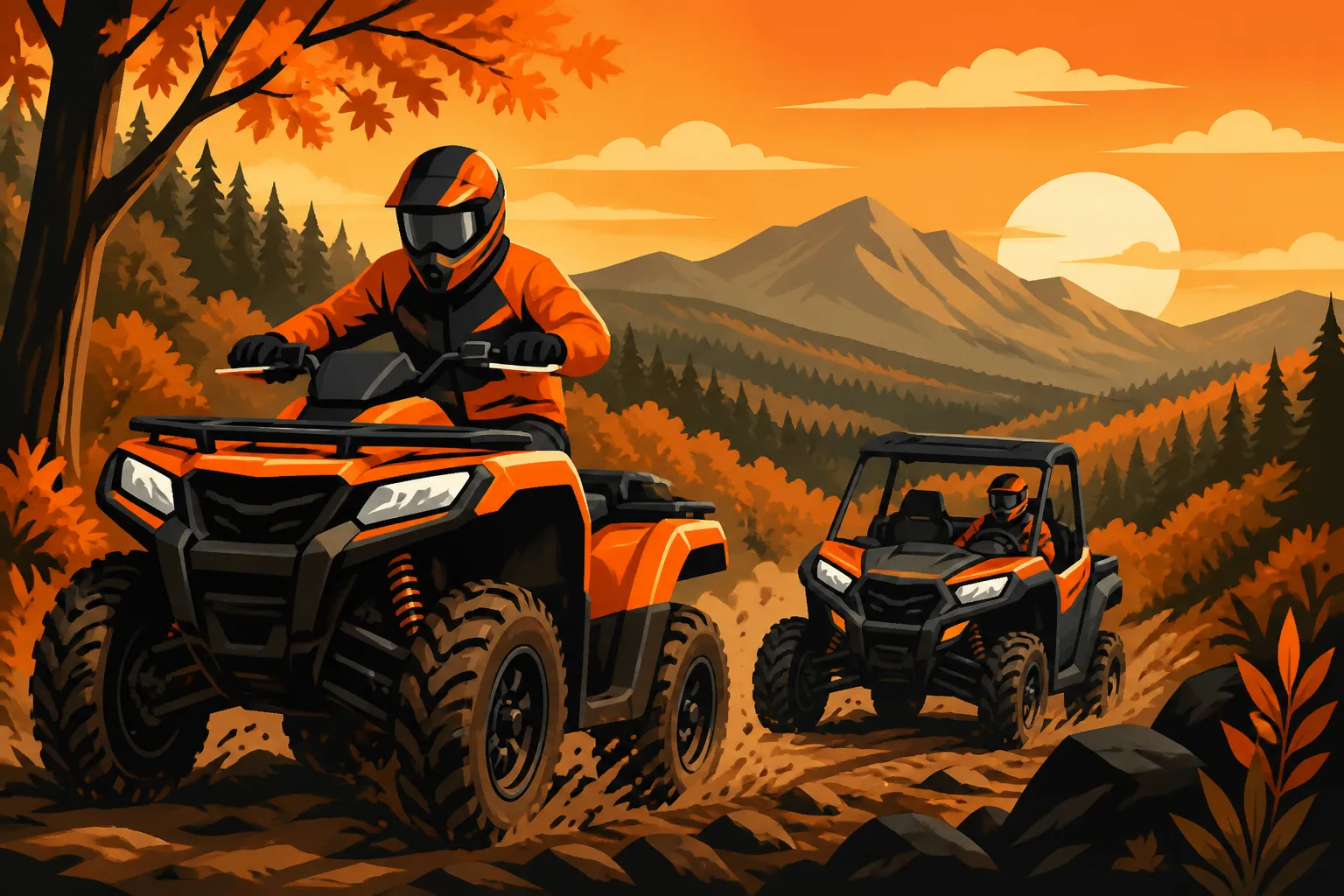
A blaze-orange vest or jacket is often more useful than a small patch hidden under a dark riding coat. Choose clothing that stays visible when you are seated, standing on the footrests, or leaning to negotiate a turn. A bright outer layer should not restrict your movement or interfere with protective gear.
Think about how a rider appears from different angles. A passenger seated behind the driver may be hidden from view, and a UTV’s roof, doors, windshield, or roll cage can block parts of a person’s clothing. If you are riding with a group, have everyone check that orange remains visible while seated in the machine, not just while standing beside it.
Orange should complement, not replace, protective equipment. Keep your helmet, eye protection, gloves, and other riding gear appropriate for the terrain. A high-visibility vest that catches on controls or flaps into a moving part is not a good solution. Try the combination at home and make sure it fits securely before setting out.
Make the whole group easier to spot
A common problem on a group ride is assuming the lead rider’s visibility is enough. It isn’t. Every rider and passenger should be easy to distinguish, particularly when machines are separated by dust, trees, or a bend in the trail. If one person wears bright orange while the rest of the group is dressed in dark colors, the group can become difficult to track as it stretches out.
| Situation | Visibility concern | Practical approach |
|---|---|---|
| Dense woods | Tree cover and shadows can hide dark clothing | Use a visible orange outer layer and keep it unobstructed |
| UTV with a roof or doors | The vehicle may conceal a seated passenger | Check visibility from outside the UTV before leaving |
| Dusty trail or close group spacing | Dust can make riders disappear from view | Leave enough following distance and keep group communication clear |
| Hunting activity nearby | Other land users may not expect a machine around a bend | Slow down at junctions and use visible clothing |
| Changing weather | A rain shell or extra layer can cover orange gear | Recheck visibility after adding or removing layers |
Do not rely on a small orange item attached to the machine as a substitute for visible clothing. A vehicle-mounted flag or sticker may help identify the machine in some settings, but it does not make a rider visible when they step away, walk around a disabled vehicle, or help someone in the group.
For children and passengers, check fit carefully. Oversized clothing can snag, while a loose vest may shift behind a seat or under a pack. Make visibility part of the group’s pre-ride check, just like helmets and secured cargo.
Planning a ride during hunting season
Confirm land status, closures, and current notices
Before a trip, identify whether your route crosses a WMA, private property, a public trail system, or more than one land type. Boundaries are easy to overlook when a trail network stretches across a large area. If you are unfamiliar with the route, review the access rules and seasonal information for every unit you expect to enter. Tennessee Trail Closures to Check First can help you build that habit.
Mapping apps can make route planning easier, but a mapped trail is not proof that it is open or that a particular rule does not apply. onX Offroad can help you review route details and understand where your planned ride is headed; still, compare your route with official land-manager notices before riding. Treat the app as a planning aid, not as the final authority on closures or legal requirements.
This matters when a route runs near a boundary or when a group is following a track someone saved months earlier. A trail that was open on a summer visit might be subject to a seasonal restriction later. Check Tennessee Trail Maps Worth Carrying and Tennessee Trail Conditions Before You Ride as part of a broader pre-trip routine, then verify the latest information directly with the property manager.
Adjust how you ride when hunters may be nearby
Visibility is only one part of sharing a trail. Slow down at blind corners and intersections, pay attention to signs, and avoid assuming that a hunter can hear your machine before you arrive. Engine noise can travel oddly through hollers and wooded ridges; a person may hear you without knowing which direction you are coming from.
If you see a hunter, a parked vehicle, or a posted notice, give the area space and follow the instructions on the sign. Do not ride off the marked route to get around a gathering or a blocked trail. On public land, a detour that looks harmless can cross into a closed area, private property, or sensitive habitat.
onX Offroad can also help you keep a group oriented when trails branch or visibility is poor. Agree on a route and regrouping points before leaving the staging area. If the group becomes separated, stop somewhere safe rather than sending riders in several directions to search. A clear plan matters more when the trail is shared and people may be moving through the woods for different reasons.
A simple pre-ride checklist for blaze orange
Check rules before you load the machine
A quick check at home can prevent a frustrating turn-around at the trailhead. Confirm the land manager, planned route, access status, and any seasonal notices. If the route includes a WMA, identify the specific unit rather than relying on a broad description like “North Cumberland” or “near Windrock.” Different areas and access points can have different conditions.
Use this checklist before departure:
- Identify every property or management unit on the planned route.
- Check for seasonal closures and hunting-related notices.
- Confirm whether orange is required for riders, recommended, or not specified.
- Pack visible orange clothing for each rider and passenger.
- Make sure outer layers, packs, and seat positions will not hide it.
- Review a current map and agree on a route and regrouping points.
- Save the relevant land manager’s contact details in case a sign or boundary is unclear.
If you are riding with someone who knows the area, ask what has changed since their last visit, but verify important details yourself. Conditions and notices can change, and a friend’s experience from a previous season is not a substitute for current rules.
Keep a backup plan for uncertainty
If the posted information is missing, confusing, or inconsistent, pause before riding into the area. Call the park or land manager, or choose a route whose access rules are clear. That may feel inconvenient after you have already trailered to the staging area, but it is better than discovering a restriction after the group has spread across a trail system.
Carry a spare orange layer in a dry bag, particularly if the forecast calls for rain or a long day on the trail. If a rider’s gear becomes wet, muddy, or covered by another layer, a replacement can restore visibility without forcing the group to end the trip. Keep the spare accessible rather than buried under tools and recovery equipment.
Most importantly, do not treat blaze orange as permission to ride anywhere during hunting season. It improves visibility; it does not override closures, landowner restrictions, trail permits, or other access rules. A little preparation—checking the route, wearing visible clothing, and giving other land users room—helps make a Tennessee ride safer and less stressful for everyone sharing the woods.
Disclaimer
This article is for general informational purposes only and does not constitute professional advice. Laws, prices and regulations vary by location and change over time. Consult a qualified professional for guidance on your specific situation.