86 Decibels Measured at 50 Feet
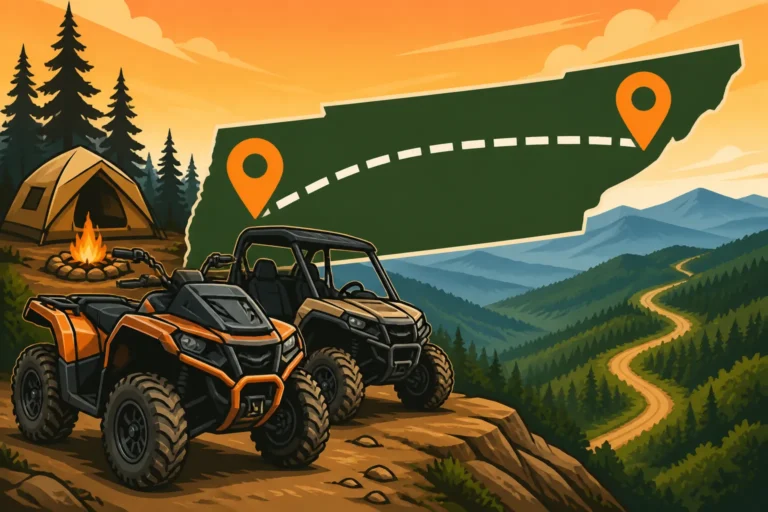
A loud ATV can turn a peaceful ride into a noise complaint, a damaged relationship with nearby landowners, or a problem at a trail gate. Tennessee riders may encounter an 86-decibel sound limit measured at 50 feet, especially on wildlife management areas. This guide explains what that measurement means, what affects it, and how to reduce exhaust noise before riding.
What the 86-decibel limit means for Tennessee riders
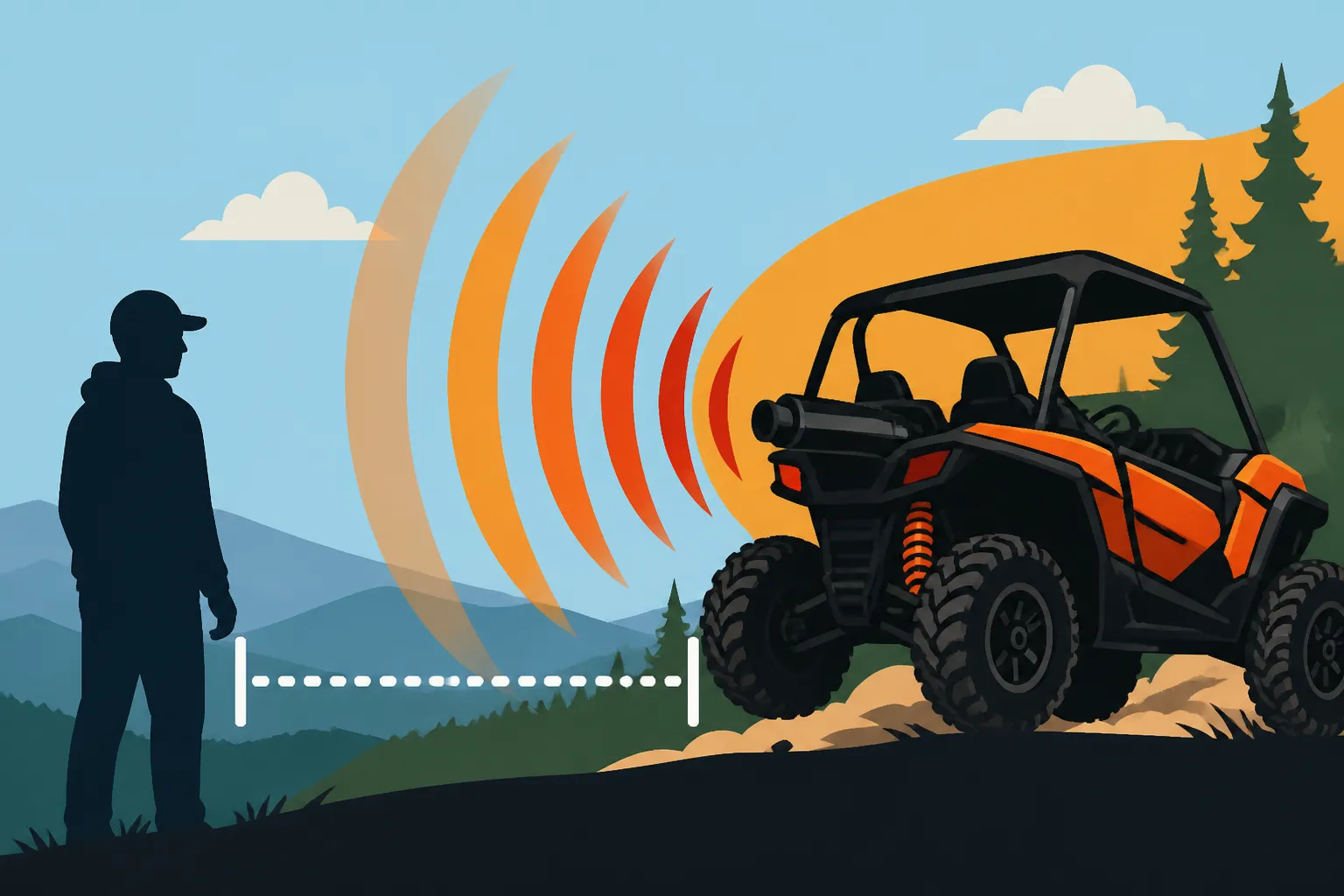
An 86-decibel reading at 50 feet is a sound limit, not a promise that every machine making less noise nearby will be considered compliant. The specified distance matters: a reading taken beside the exhaust cannot be compared directly with one taken 50 feet away. Terrain, engine speed, and the way sound travels can all affect what a meter records.
The limit is also not a target to aim for right at the boundary. A machine that measures close to the limit under one set of conditions may produce a higher reading in another. If you ride on a Tennessee wildlife management area, or WMA, review the applicable rules and any posted instructions before unloading. Start with [Tennessee Sound Limits on a WMA] and [Tennessee Rules for Riding a WMA].
Decibels are not an ordinary volume scale
Decibels are measured on a logarithmic scale, so a small numerical change does not always correspond to a small change in perceived sound. A difference of a few decibels can be noticeable, particularly when several machines are riding together or when the sound carries across a quiet hollow.
That is why “it doesn’t sound that loud from the driver’s seat” is not a reliable test. The rider is close to the engine and surrounded by helmet, wind, and tire noise. Someone standing along a trail or at a nearby home may hear a very different mix of sounds. A machine’s exhaust note may also seem less harsh to the person who has grown used to it over time.
The 86-decibel figure is tied to a measurement distance of 50 feet. Moving the meter closer or farther away changes the reading, and a phone held at an arbitrary distance is not a substitute for a prescribed measurement. If a regulation or land manager specifies how the test is conducted, follow those instructions rather than treating an informal estimate as proof.
Where riders may encounter the limit
Tennessee’s managed riding areas do not all operate under identical rules. A state WMA, a private off-road park, and a public road can have different requirements. A machine that meets one area’s sound standard is not automatically approved everywhere, and permission to ride on one trail system does not mean the same conditions apply at another.
Before a trip, identify who manages the land and check the rules for that specific place. If your plans include North Cumberland, for example, read the applicable area guidance and check for notices about closures or other restrictions. The [Tennessee Trail Conditions Before You Ride] guide can help you build that check into your pre-trip routine.
Also pay attention to posted signs and instructions at the trailhead. A park or land manager may address equipment, operating hours, or trail access separately from a general sound rule. If you are unsure whether a particular exhaust setup is allowed, ask the area manager before riding rather than assuming that a previous trip settles the question.
Why an ATV or UTV may be louder than expected
A machine’s sound comes from more than the muffler. Exhaust condition, engine load, throttle use, loose body panels, tires, and riding behavior can all contribute. Two machines with similar engines may sound very different because one has a worn or altered exhaust system, while the other is properly maintained and ridden more gently.
Noise can also travel farther than riders expect. A narrow valley or steep hillside may reflect or channel sound. On a quiet morning, engine noise may carry across a ridge or down toward a campground, even when the machine seems ordinary to the operator.
Exhaust changes and worn parts
A damaged muffler, loose exhaust joint, missing component, or poorly fitted aftermarket part can make a machine noticeably louder. Exhaust modifications that remove or bypass sound-control parts may create problems even if the machine still runs normally. A rougher or sharper exhaust note is a good reason to inspect the system before heading to a managed riding area.
Look for obvious signs such as exhaust leaks, loose clamps, damaged packing where applicable, or hardware that rattles when the machine is running. If you are not comfortable diagnosing the system, have a qualified mechanic inspect it. Do not assume that a part marketed as a performance upgrade meets the sound requirements for a particular Tennessee riding area.
A spark arrester and a muffler do different jobs, even when they are part of the same exhaust assembly. A spark arrester helps limit the escape of hot particles; it does not, by itself, establish that the machine meets a sound limit. For the related equipment issue, see [Tennessee Spark Arrester Rules].
Throttle, terrain, and group riding
A machine can become much louder under heavy throttle, especially while climbing a steep grade, accelerating out of a turn, or pulling through mud. Repeated high-revving can make a group ride disruptive even if each machine is individually in good repair. Smooth throttle input reduces unnecessary noise and often makes the ride easier on the machine, too.
Spacing matters as well. When riders bunch together and accelerate at the same time, the combined sound can be much more intrusive than one machine passing by. Avoid revving at staging areas, near homes, or while waiting for a group to gather. If a rider needs to troubleshoot, move to a suitable stopping place and shut the engine off when it is safe to do so.
The landscape can change the experience. Sound may carry along a creek bed, bounce off rock faces, or linger in a hollow. If a trail passes near a residence, campground, or other quiet-use area, slow down and keep the throttle controlled. Respectful riding is not just about a meter reading; it also helps maintain access and goodwill.
How to check and reduce your machine’s noise
A practical inspection before a ride can catch obvious problems, but it cannot replace a formal measurement when one is required. Treat a sound meter as a screening tool unless the land manager’s rules specify an approved testing procedure. A casual reading may help you notice a change in your machine, but it does not necessarily establish regulatory compliance.
| Check | What to look for | Why it matters |
|---|---|---|
| Muffler and exhaust | Cracks, loose joints, missing parts, or unusual rattles | Damage or missing components can increase noise |
| Exhaust modifications | Parts that remove or bypass sound-control components | A louder setup may violate area rules |
| Engine behavior | Unusual revving, backfiring, or a new harsh tone | A change can point to a maintenance problem |
| Riding style | Repeated revving, hard acceleration, or close group spacing | Rider behavior can amplify the noise impact |
| Area rules | Posted restrictions and manager instructions | Requirements vary by place |
Inspect before loading the trailer
Start with the exhaust system when the engine is cool. Check for loose fasteners, visible damage, and signs of leakage. Listen for a change in sound compared with what is normal for your machine. A new metallic rattle or sharper exhaust note should be investigated before the next ride, rather than dismissed because the machine still starts and moves.
If you recently installed an exhaust component, confirm that it is suitable for the area where you plan to ride. Keep documentation for replacement parts if it helps you identify the model later, but do not treat a product label or seller’s description as a guarantee that it meets every land manager’s sound rule.
A sound meter can help you spot a meaningful change between one inspection and another, but use it carefully. Distance, background noise, nearby walls or slopes, wind, and engine speed can all affect the reading. Smartphone sound-measuring apps can be useful for rough comparisons, but they are not necessarily accurate enough to establish compliance. Follow the official test method when a formal check is involved.
Ride in a way that keeps noise down
Once on the trail, use steady throttle and avoid unnecessary revving. Let a group leave staging areas without everyone blipping the throttle at once. Keep a sensible gap between machines, especially when climbing, so riders are not repeatedly accelerating hard to close the distance.
When you stop, choose a safe spot that does not block the trail. Turn the engine off during longer waits rather than leaving it idling beside other riders or nearby visitors. These small habits can make a noticeable difference at trailheads and campsites, where people are stationary and the sound has fewer competing noises to mask it.
Plan the route and staging details before you arrive. A map app such as onX Offroad can help you organize a route and understand where you intend to ride; it does not determine whether a machine meets a sound limit or replace a land manager’s rules. Use onX Offroad as one planning aid alongside posted notices and official area information. If the route crosses different management areas, check each one separately rather than assuming the same requirements continue throughout the ride.
Avoiding common mistakes at the trailhead
Noise issues often start with a reasonable but mistaken assumption: a rider hears no complaints at home, so the machine must be quiet enough for a public riding area. Home testing may happen in a different setting, at a different distance, and under different conditions. A trail gate or a land manager’s test is a separate matter.
Another common mistake is treating a quiet ride as proof that every rule has been satisfied. A rider may use gentle throttle and still have an exhaust system that does not meet a specific requirement. Conversely, a loud moment under hard acceleration does not tell you the exact formal reading. Keep the distinction clear: riding courteously helps reduce disturbance, while equipment rules and official testing determine compliance.
Do not rely on a phone reading alone
A phone app can provide a rough indication that one setup is louder than another, but the microphone, phone case, wind, and surrounding noise can affect the result. A reading taken at arm’s length is not comparable to one measured at 50 feet. If you are comparing your machine with the 86-decibel limit, use the method specified by the relevant authority instead of improvising a test.
Do not crowd a trail or block access while attempting a home-style measurement at a busy staging area. If a machine needs attention, move it to an appropriate place and follow the area manager’s directions. When the rules are unclear, ask before riding. That is easier than arguing at the gate after a preventable problem.
Keep the wider trail rules in view, too. Noise is only one part of responsible riding. Stay on routes that are open, respect closures, and follow the rules for the specific land you are using. See [Tennessee Rules for Riding a Closed Trail] for why checking access matters, and [Tennessee Trail Closures to Check First] for a related pre-ride planning topic.
Make noise part of your pre-ride routine
A useful routine is simple: inspect the exhaust, check the destination’s rules, and agree on considerate group behavior before engines start. If a friend has recently changed their exhaust or reports a new rattle, encourage them to investigate it before the trip. It is much easier to address a maintenance issue at home than at a crowded trailhead.
When planning a longer ride, use onX Offroad or another map resource to organize the route, then verify access and local requirements with the managing authority. A mapped route does not guarantee that a trail is open or that a machine is allowed there. For the same reason, a permit or approval for one location should not be assumed to cover another.
If you ride regularly, make a note of any changes in how your machine sounds. A gradual increase can be easy to overlook, especially when you ride with the same group. Regular checks, controlled throttle, and attention to posted requirements help protect both your riding experience and the places that make it possible.
Disclaimer
This article is for general informational purposes only and does not constitute professional advice. Laws, prices and regulations vary by location and change over time. Consult a qualified professional for guidance on your specific situation.