Riding the Highcliff Unit
Riding the Highcliff Unit can be a rewarding way to explore Tennessee’s North Cumberland riding area, but unfamiliar access points, changing trail conditions, and permit rules can make planning feel harder than it should. This guide explains how to prepare, navigate responsibly, and avoid assuming that a map or permit for one part of the WMA automatically covers every ride.
What to Know About the Highcliff Unit
How Highcliff fits into North Cumberland
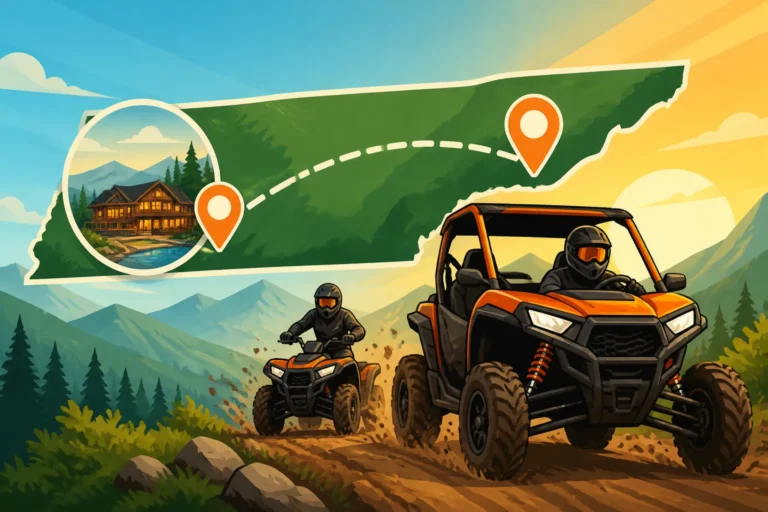
Highcliff is one of the riding areas within Tennessee’s North Cumberland Wildlife Management Area. The WMA is divided into distinct units, so it helps to think of Highcliff as its own place to plan for—not simply a trail extension you can automatically reach from another area. The six-unit layout is outlined in The Six Units of Tennessee's North Cumberland.
That distinction matters when you are choosing a trailhead, arranging a meeting point, or setting a turnaround time. A route that looks close on a broad map may involve a different access road, a longer drive between staging areas, or a boundary you should not cross. Before loading up, identify the unit you intend to ride and check that your planned entrance and route are actually within Highcliff.
Highcliff may suit riders who want to spend a day exploring a less familiar part of the larger North Cumberland system. But don’t assume it has the same terrain, trail character, facilities, or access conditions as Royal Blue or another unit. Build your plans around the information available for Highcliff itself, and leave room to change course if a gate, closure, or trail condition affects your intended route.
Confirm access before setting out
A reliable riding plan starts with the day’s access information, not just a destination typed into your phone. Check the applicable WMA notices and maps before you leave, and pay attention to posted signs once you arrive. A route shown on an older map may not reflect a temporary closure, a changed gate, or a restriction on a particular road.
It is also worth confirming exactly where you will park and unload. If your group is arriving in several trucks or towing trailers, agree on the same staging point in advance. A vague plan such as “meet near Highcliff” can lead to missed calls and vehicles waiting at different entrances, especially when cell service is unreliable.
Keep [Tennessee Rules for Riding a WMA] handy as a general starting point for understanding the rules that apply to WMA riding. Then verify any Highcliff-specific notices before you go. General rules help set expectations, but they do not replace a posted restriction or an official update for the area you plan to visit.
Plan Your Route and Navigation
Use maps as planning tools, not permission
A trail map can help you understand the general layout, compare possible loops, and spot where a route might take longer than expected. Digital tools such as onX Offroad can be useful for studying terrain and planning a route before you leave home. Save the information you need in advance, because phone coverage may be limited in parts of a large riding area.
Still, a line on a digital map is not proof that a route is open or that riding is allowed there. Maps can differ in age, detail, and purpose. Use them alongside official WMA information and on-the-ground signs rather than treating any single map as the final authority. Tennessee Trail Maps Worth Carrying offers a useful reminder that a paper backup can be valuable when a screen becomes hard to use.
Before your group starts, make sure every rider understands the planned route and what to do if the group gets separated. Set a turnaround time, identify a place to regroup, and avoid improvising a longer loop late in the day just because the next trail appears to connect. A route that seems manageable on a screen can take much longer when you factor in stops, difficult terrain, or a slower rider.
Choose a ride that fits your group
The best Highcliff route is not necessarily the longest one. Consider the least experienced rider, the machine with the most limitations, and the amount of daylight you have. If someone is new to off-road riding, plan a conservative outing and let the group build confidence before committing to a longer route.
Machine width and capability also matter. A route that feels comfortable on a smaller ATV may be stressful for a wide side-by-side, particularly where trees, rocks, or narrow trail edges leave little room to maneuver. Check your machine’s dimensions and turning needs against the route information available, and don’t force a large vehicle onto a trail that does not appear appropriate for it.
A useful planning comparison:
| Planning question | Why it matters | Safer approach |
|---|---|---|
| Is the route confirmed open? | Closures and access conditions can change | Check current notices and posted signs |
| Does the route suit the widest machine? | Narrow sections can make turning or passing difficult | Plan for the largest vehicle in your group |
| Can everyone complete the loop before dark? | Delays are common when trails are unfamiliar | Set a conservative turnaround time |
| Will navigation work without signal? | Mobile coverage may be limited | Save maps and carry a backup |
| Does the group have a regroup plan? | Riders can become separated at junctions | Agree on meeting points before moving |
onX Offroad can help you review a proposed route and keep a group oriented, but use it as one layer of preparation. Check its map details against official information, download what you need before coverage drops, and carry a backup way to navigate. Tennessee Trail Conditions Before You Ride is another helpful topic to review when conditions may affect your route choice.
Permits, Rules, and Responsible Riding
Check the permit that applies to your trip
Do not assume that an ATV or UTV registration, a permit from a private riding park, or a pass for another destination automatically authorizes riding in Highcliff. North Cumberland WMA riding has its own permit requirements. Confirm what you need for your specific trip and make sure each rider who is required to hold a permit has one before entering the riding area.
The question is not only whether you have a permit, but whether it applies to the place and period you plan to ride. If you are visiting from out of state, traveling with a mixed group, or combining Highcliff with another destination, verify the details for each part of the trip. [Does One Permit Cover Every North Cumberland Unit?] can help frame why it is unwise to assume that one area’s permit arrangements automatically settle every question.
Keep proof of your permit accessible, rather than buried under riding gear or left back at camp. The same goes for identification and any other documents required for your situation. A quick check before unloading can prevent a frustrating search at the trailhead or an avoidable problem during a roadside or gate check.
Follow posted limits and seasonal notices
Rules and conditions affect more than the route you choose. Pay attention to speed limits, trail boundaries, closures, and seasonal restrictions. A familiar trail can have different conditions on a later visit, and a route that appears open on a saved map may be subject to a newer notice. Check Tennessee Trail Closures to Check First before you leave and again when you arrive.
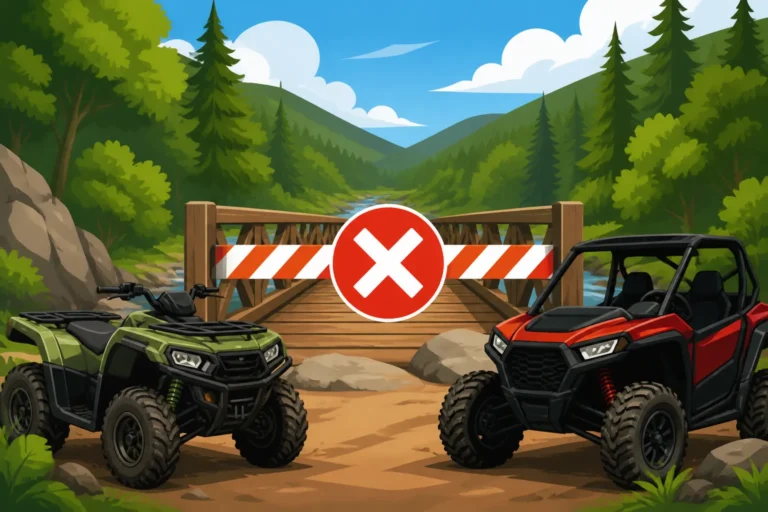
Stay on routes where riding is allowed. Cutting around a closed gate or creating a bypass can damage the area and put other riders at risk. If a trail is blocked or marked closed, turn back and choose another route rather than trying to get around the restriction. Keep noise and speed under control, especially when visibility is limited or you encounter other users.
Seasonal hunting activity can affect how you prepare. Review the current requirements for visibility clothing and any relevant notices before your ride; Orange During Gun and Muzzleloader Seasons is a useful topic to check. A small planning step—packing required orange before leaving home—is much easier than discovering a requirement after you reach the staging area.
A Practical Highcliff Ride-Day Checklist
Prepare for changing trail conditions
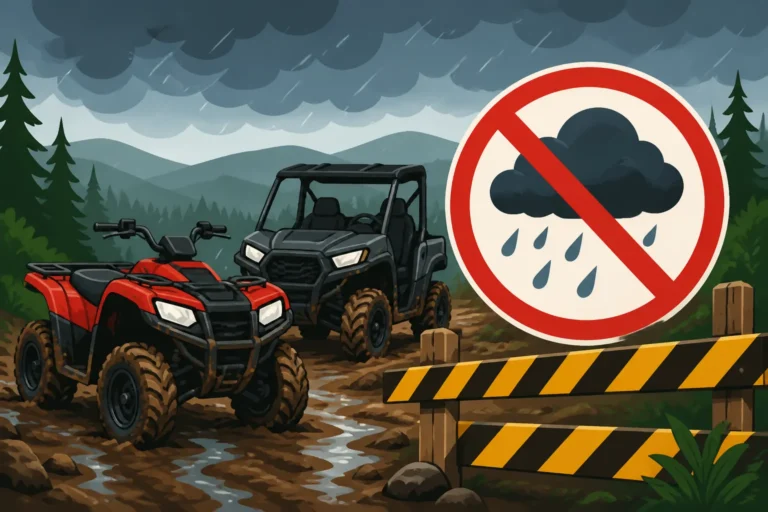
Weather can change a ride quickly. Rain may make a climb slick, obscure rocks beneath mud, or leave water across a route. Dry conditions can create dust that reduces visibility between machines. Check the forecast, but also be ready to adjust once you see the trail for yourself. If conditions are worse than your group can handle safely, shorten the ride or turn back.
Bring more than the bare minimum for a short outing. Water, food, basic first-aid supplies, a charged phone, a suitable recovery plan, and the tools needed for common problems can make a long delay more manageable. Carrying extra fuel may also be sensible for a route whose distance or pace is uncertain. Pack gear so that essential items are available without unloading the entire machine.
Before leaving, let someone outside the riding group know where you expect to ride and when you plan to check in. This is especially helpful if you are unfamiliar with Highcliff or expect limited cell service. If your plans change substantially, update that person when you regain a signal.
Keep the group together and finish with daylight to spare
At the trailhead, agree on a simple group routine. Choose a lead rider and a sweep rider, decide how the group will handle junctions, and establish what happens if someone stops. Riders should wait at turns when needed rather than assuming the person behind them will find the correct route.
Ride at a pace that leaves room to react. Keep enough distance to see the trail ahead instead of riding in the dust cloud of the machine in front of you. On unfamiliar terrain, a slower pace is not a sign that the ride is going badly; it is often what keeps a small obstacle from becoming a damaged machine or an injured rider.
Set a firm time to head back. It is easy to underestimate how long the return trip will take, especially when the group pauses to check a map or deal with a minor mechanical issue. North Cumberland's Speed Limit in Tennessee is worth reviewing alongside the rest of the applicable rules. A well-planned Highcliff day should leave enough time to return, load safely, and reach your destination before darkness creates another set of hazards.
Disclaimer
This article is for general informational purposes only and does not constitute professional advice. Laws, prices and regulations vary by location and change over time. Consult a qualified professional for guidance on your specific situation.