Tennessee Trails With a Staging Lot
Finding a Tennessee ATV trail is only half the planning; finding somewhere safe to unload a trailer, park a truck, and start riding can be the harder part. A good staging lot saves time and helps prevent an awkward turnaround on a narrow mountain road. This guide explains where to look, what to confirm before you go, and how to choose a practical launch point.
What a Tennessee trail staging lot should offer
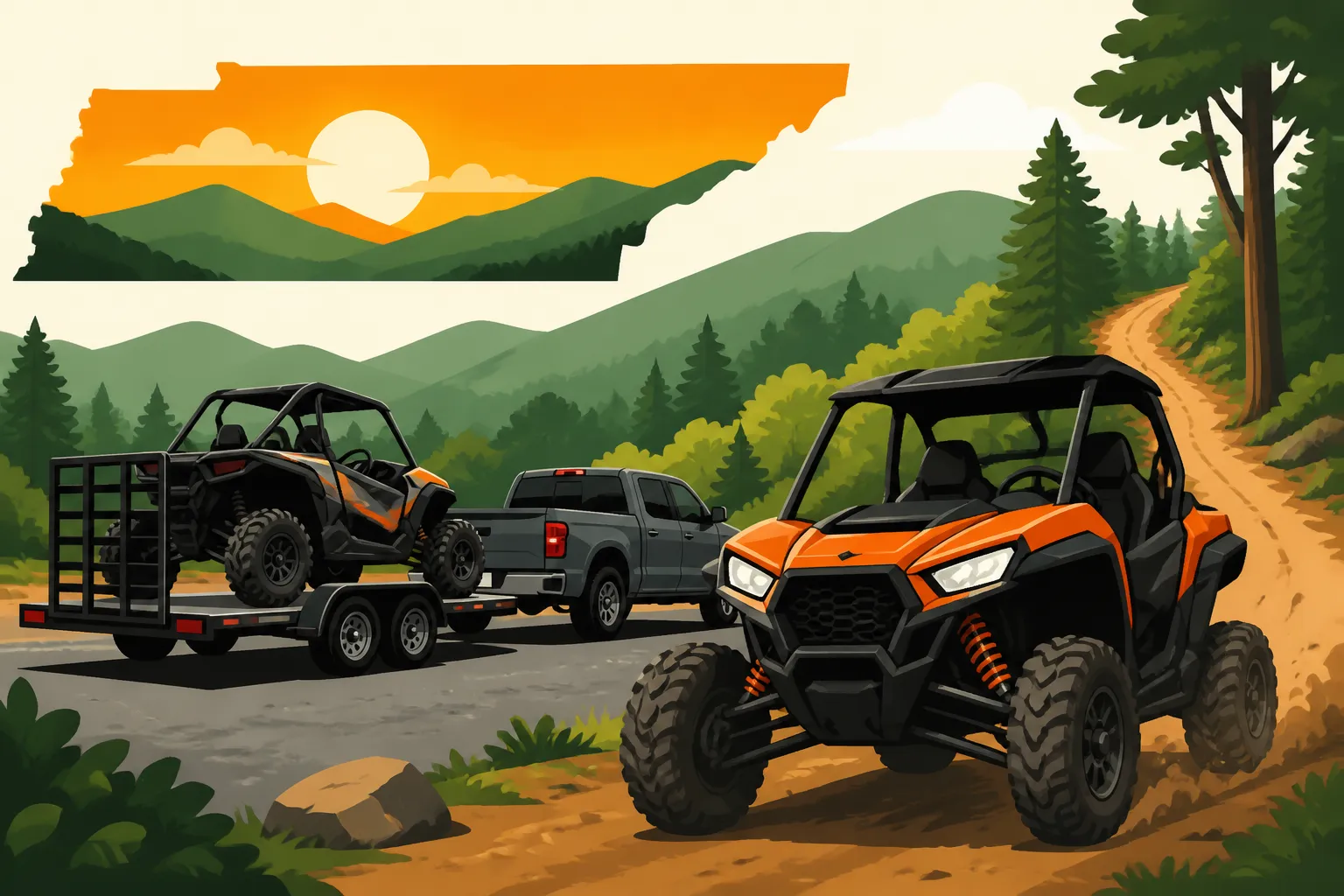
A staging lot is more than a place to leave your truck. For a riding trip, it should give you enough room to unload your ATV or UTV, secure your trailer, check your permits and gear, and reach trails you are allowed to ride. The details vary by destination, so a lot that works well for one park may not be suitable for another.
Parking, unloading, and access
Start with the basics: Is there room for your truck and trailer? Can you unload without blocking traffic or another rider? Is the lot near an authorized trail entrance, or will you need to ride on a public road to reach the trail system? These questions matter especially when you are bringing a long trailer, traveling with several machines, or arriving during a busy weekend.
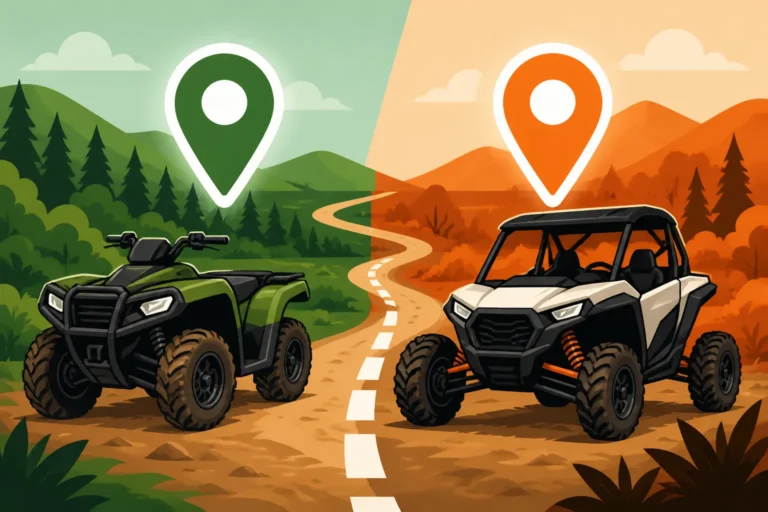
A location shown as a parking area on a map is not automatically an approved staging area. It could be a roadside pull-off, a private driveway, a closed gate, or a lot meant for a different activity. Confirm that riders may park and unload there, and check whether parking is limited to a specific park, land manager, or permit holder.
It also helps to consider the return trip. A narrow mountain road can feel very different after a long ride, especially if you are towing a trailer in fading light. Choose a staging point you can find again, save its location offline, and agree on a meetup spot if your group gets separated.
Permits, boundaries, and the correct entrance
Tennessee riding areas do not all use the same access rules. A private riding park may have its own land-use permit, while riding on a wildlife management area can involve different requirements. A permit for one riding area should not be assumed to cover another. Review [Tennessee Trail Permits Explained] before leaving home, and check the specific rules for the property where you plan to ride.
A staging lot can also sit close to a boundary without giving you permission to cross it. This is an easy mistake to make when trails, roads, and property lines meet in a wooded or mountainous area. Ask which trail entrance to use, whether the route from the lot is open to your machine, and whether there are seasonal or temporary closures.
For trip planning, a mapping app such as onX Offroad can help you save a planned route and keep important waypoints available while riding. Treat any digital map as a planning aid, not proof that a road or trail is open. Compare it with the park’s own map and posted notices, and follow signs at gates and trail junctions.
Tennessee riding areas to investigate for staging
Some well-known riding destinations are natural places to begin your search for parking and unloading options. The important distinction is that a destination may have several access points, and the most convenient lot for your group depends on where you are staying, what you are riding, and which trails are open.
Windrock Park near Oliver Springs
Windrock Park, near Oliver Springs, is a major destination for riders exploring East Tennessee. If you are hauling your own machine, contact the park or check its official information before choosing a place to unload. Confirm where visitors may park, whether your chosen access point serves the trails you want, and what permit or entry steps apply.
Do not assume that a map pin near a trail entrance is a public staging lot. A pin might mark a business, a gate, or a point along a road rather than a place where a truck and trailer can safely park. If you are staying nearby, ask your campground or lodging host whether guests can stage machines on-site and how to reach the permitted trail access from there.
Windrock’s terrain can make a clear return plan especially useful. Save the lot, your lodging, and a backup meeting point before your group spreads out. If you use onX Offroad or another navigation tool, download the information you need while you have a reliable connection, then compare your planned route with Windrock’s current trail guidance. For a broader look at the destination, see [Windrock Park at Oliver Springs, Tennessee] and [Parking a Trailer at a Tennessee Trailhead].
Brimstone Recreation near Huntsville
Brimstone Recreation, near Huntsville, is another place to investigate when you want a riding destination with a planned starting point. Before towing in, confirm the current parking and staging instructions directly with the park. Ask whether your group should arrive at a particular entrance, where trailers may be left, and whether a lodging or campground reservation includes any parking privileges.
The route to the trail system matters as much as the lot itself. If you are unfamiliar with the area, avoid relying on a casual map search for directions to a gate. A road that appears to connect to the riding area may not be open to riders or may not be the correct access route. Follow the park’s directions and posted signs, and ask staff if anything is unclear when you arrive.
For a multi-day visit, plan where the machine will stay overnight and whether you need to move the truck or trailer between riding days. Keep the park’s contact details and access instructions saved with your trip notes. You can also read [Brimstone Recreation at Huntsville, Tennessee] and [Brimstone's Baker Highway Headquarters] for related planning context.
Ride Royal Blue and North Cumberland
Ride Royal Blue, in the Pioneer area, and the broader North Cumberland riding region are also worth researching for a staging plan. Because access points and rules can differ across units and properties, identify the exact place you intend to ride rather than treating the whole region as one continuous park. Confirm where you may park and unload, which permit applies, and whether your intended route stays within the area you are authorized to use.
The North Cumberland units include varied terrain and access conditions. A location that looks close on a map may still involve a long drive, a different gate, or a route that is not appropriate for your machine. Check the land manager’s directions and current notices before setting out. If you are visiting for the first time, choosing a clearly identified, official access point is generally less stressful than improvising at a roadside pull-off.
A digital map can help you keep track of your staging point and planned route, but cell service may be limited in some areas. Save offline map information where available, tell someone where you expect to ride, and agree on a return time. For more context, see [Ride Royal Blue Resort in Tennessee] and [Tennessee's North Cumberland WMA].
How to choose the right staging point
The best staging lot is not always the closest one to the trail on a map. A slightly longer drive to an official, roomy access point may be safer and simpler than trying to unload beside a narrow road or at an uncertain entrance. Compare your options based on your machine, trailer, group, and destination rules.
Compare your options before you commit
Use the table below as a checklist when comparing potential staging locations. If you cannot confirm an important detail, contact the park or land manager before you tow.
| What to check | Why it matters | What to confirm |
|---|---|---|
| Permission to park | A visible pull-off may not be approved for riders | Is parking allowed for trail users and trailers? |
| Unloading space | Tight areas make unloading stressful and can block others | Can you safely unload without occupying the travel lane? |
| Trail access | The nearest entrance may not be open to your vehicle | Which gate or trail connection should you use? |
| Permit requirements | Rules differ among parks and public riding areas | What permit is needed, and where should it be purchased? |
| Trailer security | A ride may last several hours or span multiple days | Is overnight parking allowed, and are there posted restrictions? |
| Road conditions | Tow vehicles may face steep, narrow, or rough approaches | Is the access road suitable for your truck and trailer? |
| Services nearby | Fuel, food, and repair supplies may not be close | Where can you refuel or get help before and after riding? |
| Cell coverage | You may not be able to call or load a map on the trail | Can you save directions and contact information offline? |
When using onX Offroad to compare locations, mark the parking point separately from the trailhead and your lodging. That small step can prevent a common end-of-day mix-up: remembering the trail route but not the exact place where the truck was left. Keep a written or saved backup, too, so your plan does not depend on one phone or one app.
Match the lot to your group and machine
A solo rider on a small ATV has different needs from a family towing two UTVs behind a long pickup. If you are traveling with a group, check how many vehicles can fit and whether everyone can unload without taking over the available space. Set a meeting point and arrival time before departure, especially if some riders are driving separately.
Machine size matters as well. A wide UTV or long-wheelbase side-by-side can be awkward to maneuver in a small gravel area. Ask whether there are width or access restrictions and check that the route from the staging area is suitable for your vehicle. If your group includes children or less-experienced riders, a clearly marked, easy-to-find start point can make the day feel more manageable.
Weather can change the practical value of a lot. After heavy rain, a soft shoulder or steep unpaved access road may be difficult for a tow vehicle. Before leaving, check the destination’s trail notices and ask whether the staging area or approach road has changed. For additional trip preparation, explore [Tennessee Trail Conditions Before You Ride] and [Tennessee Trail Closures to Check First].
A practical pre-ride staging checklist
A little preparation at home can save a lot of frustration at the trailhead. Confirm the essentials before you load, then repeat a shorter check when you arrive. That way, you are less likely to discover a missing permit, an unsuitable parking area, or a closed entrance after towing a long distance.
Before leaving home
- Choose the exact riding area. Identify the park, land manager, and intended access point rather than searching only for a nearby town or trail name.
- Confirm parking and unloading rules. Ask whether trucks and trailers may use the location and whether overnight parking is permitted.
- Check permits and operating rules. Confirm what applies to your group, machine, and chosen property. Review [Why Tennessee Has No Statewide Trail Sticker] if you are comparing access requirements.
- Save directions and waypoints. Mark the lot, trail access, fuel stops, lodging, and a backup meeting point. Download maps for offline use when possible.
- Plan for your trailer. Make sure your truck, trailer, and machines fit the access route and have a workable place to turn around.
- Share the plan. Tell someone where you are riding and when you expect to return, especially if cell coverage may be limited.
When you arrive
Pause before unloading and read posted signs. Check that you are at the correct entrance, that parking is allowed, and that you have not blocked a gate, road, or emergency access route. If the area looks different from the directions you received, do not assume it is fine to proceed; call the park or land manager if possible.
Do a quick group check before riding: permits, helmets, water, communication plan, and the location of the truck and trailer. Take a photo of the parking area or save its waypoint so everyone can find it again. If you are using onX Offroad, verify that your saved location matches the real-world signs and access point rather than relying on the map alone.
Finally, agree on a return plan. Set a time to regroup, decide what to do if a rider has a mechanical problem, and make sure nobody leaves a phone or keys in a different vehicle. A staging lot is the beginning and end of the ride, so treating it as part of the route—not just a place to park—makes the whole day easier.
Disclaimer
This article is for general informational purposes only and does not constitute professional advice. Laws, prices and regulations vary by location and change over time. Consult a qualified professional for guidance on your specific situation.