Tennessee Trails Closed After Rain
Rain can turn a Tennessee ATV or UTV ride from a fun day on the trail into a muddy, risky recovery—or lead to a closed gate after you’ve already hauled your machine to the trailhead. This guide explains why trails close after rain, how to check before leaving, and what to do when conditions change during your ride.
Why Tennessee trails close after rain
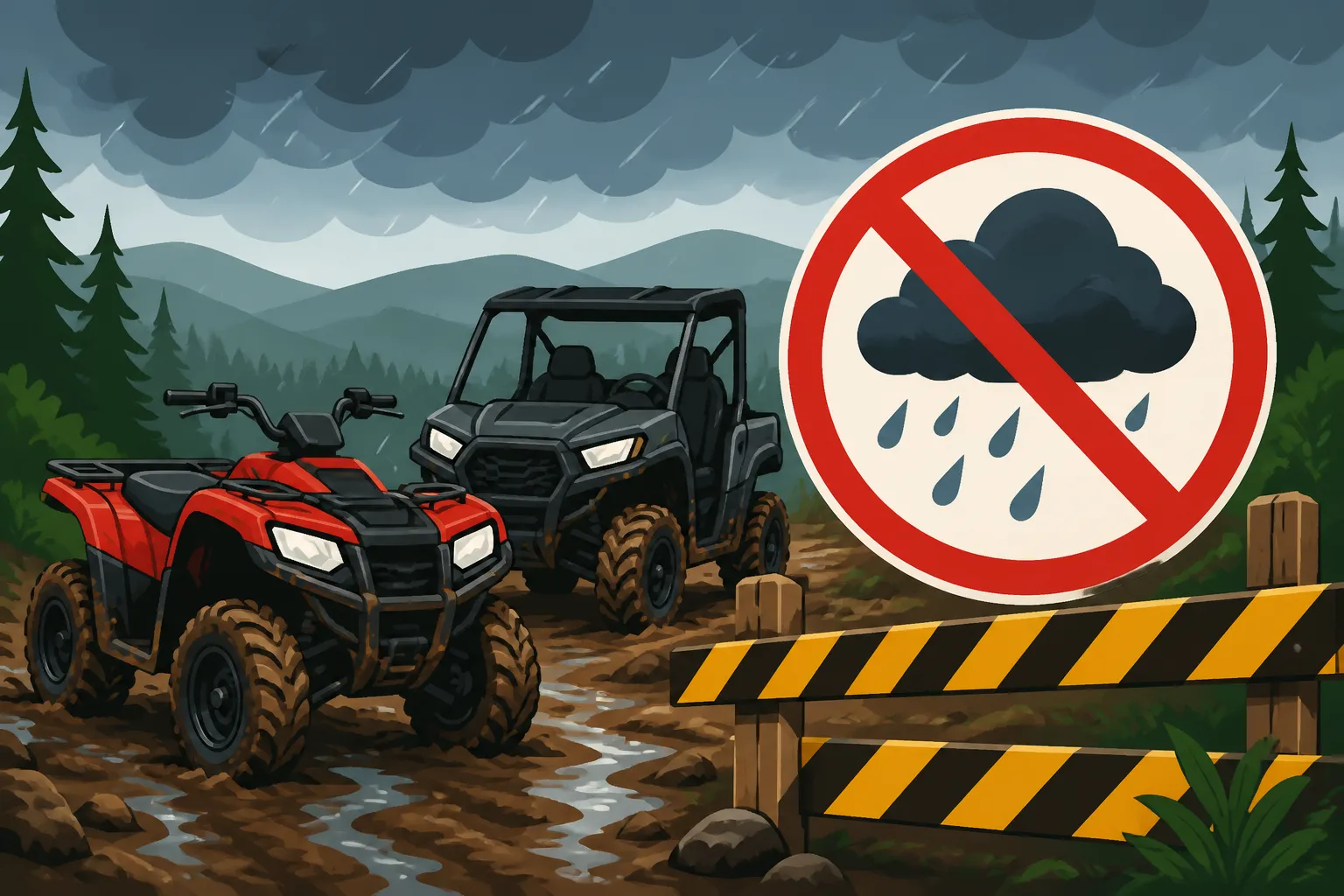
Rain does more than make a trail slippery. It can soften the ground, send water across the route, damage trail surfaces, and make it harder for riders and emergency crews to travel safely. Closures may be temporary, and decisions can differ between parks, land managers, and trail systems.
Soft ground and trail damage
A trail that looks rideable from the parking area may be much softer farther uphill. When tires spin or dig in, they can deepen ruts, loosen soil, and push mud into nearby drainage areas. Repeated traffic can turn a manageable muddy section into a trench that remains difficult long after the rain stops.
This is especially frustrating when you’ve planned a weekend around riding. You may be thinking, “It only rained yesterday—surely the trails have dried.” But shaded hollows, wooded sections, and north-facing slopes can stay wet while exposed areas look dry. A route can also have a mix of surfaces, so conditions may change quickly from firm gravel to slick clay or mud.
The damage is not just cosmetic. Deep ruts can redirect runoff, wash out the trail surface, or expose rocks and roots. In some places, a trail manager may close a route to give it time to dry or to prevent additional erosion. Respecting that closure helps protect the trail for the next ride, too.
If you’re hoping to ride in muddy conditions, check the park’s rules first rather than assuming every open-looking route is fair game. Some riding areas designate routes for different uses or close specific sections when conditions are poor. For trip planning and realistic expectations, see [Tennessee Trails With Mud](Tennessee Trails With Mud).
Runoff, creek crossings, and washouts
Heavy or sustained rain can change drainage features in ways that are hard to judge from a distance. A shallow creek crossing may carry more water than usual, while runoff can cover rocks, deepen a channel, or sweep loose debris across the trail. A route that was easy to cross last weekend may not be safe today.
The risk can continue after the rain stops. Water moving down a steep road or trail can loosen gravel and soil, leaving a slick surface or a sudden drop where the trail has washed away. On a narrow bench road, a damaged edge may leave less room to pass another machine or turn around safely.
Don’t use another rider’s successful crossing as proof that it is safe for your machine. Water depth, current, footing, and vehicle clearance can vary, and the person ahead may have taken a different line. If you cannot see the crossing surface or judge the water confidently, turn around. A fun ride is not worth risking a rollover, a stranded machine, or an injury.
Closures are managed locally
There is no single rainfall amount that automatically tells riders whether every Tennessee trail is open. A private park, a public riding area, and a trail on managed wildlife land may have different closure procedures. Even within one riding area, individual routes may be closed while others remain available.
For example, a privately operated destination such as Windrock Park or Brimstone Recreation may communicate closures through its own channels. Public land has its own rules and notices, and access can depend on the unit, route, or land manager. Always check the place where you intend to ride rather than relying on a general statement that “Tennessee trails are open.”
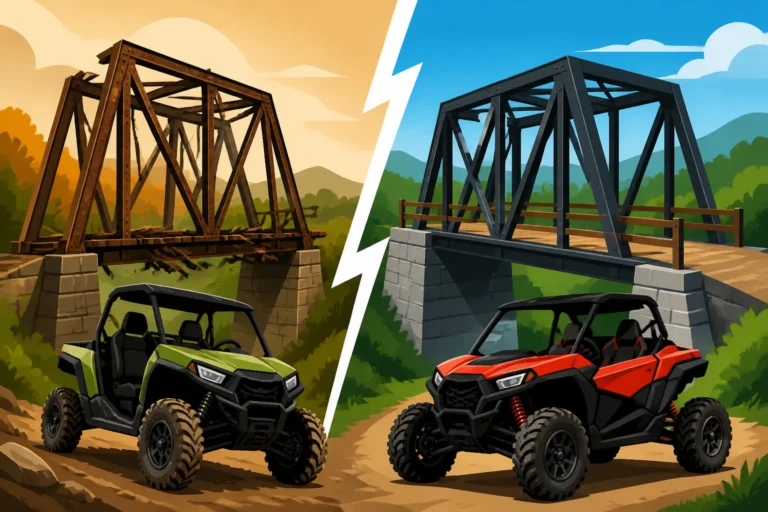
A closure can also be about more than mud. Managers may close a route because of a washout, maintenance work, a damaged bridge, unsafe access, or another condition that needs attention. The reason may not be visible from the entrance, so an open-looking trail is not permission to ride past a posted barrier.
How to check trail status before you haul
The most useful check happens before you load your ATV or UTV—not after you reach a crowded staging area. Conditions can change overnight, and a map that shows a route does not necessarily confirm that the route is open today.
Check the land manager’s current notices
Start with the official website, social media page, phone line, or visitor information channel for the specific riding area. Look for notices about rain, trail closures, maintenance, gate access, and operating conditions. If the notice is unclear, call before you leave and ask which sections are open and whether the information applies to your planned route.
This extra step can save a long, disappointing drive. A rider heading toward Oliver Springs for Windrock, for instance, should check Windrock’s own trail updates rather than assuming conditions at a different East Tennessee riding area will match. A rider planning a Brimstone trip should check Brimstone’s notices and access information separately.
A map or app can be helpful for planning, but it should not override a closure notice or instruction from the land manager. Tools such as onX Offroad can help you review routes and orient yourself, but use the park or land manager as the authority on current access. A digital route line does not confirm that a trail is safe or open.
For a broader pre-trip checklist, read [Tennessee Trail Conditions Before You Ride] and [Tennessee Trail Closures to Check First]. If the ride includes public wildlife management land, review [Tennessee Rules for Riding a WMA] as well. Different land types can have different access rules, so it’s worth confirming which rules apply to the route you plan to use.
Ask useful questions when conditions are uncertain
A vague question like “Is it muddy?” may not get you the information you need. Ask whether the area is open, whether particular trails or units are closed, and whether access has changed since the last rain. If you’re towing a wide or heavy machine, ask about the condition of the staging area and access road, not just the riding routes.
You can also explain your plans. For example: “We’re bringing a side-by-side and want an easy loop with no creek crossings. Is there an open route that fits those conditions?” Staff may not be able to guarantee the condition of every stretch, but a specific question can help you make a more informed decision.
If nobody can confirm that the route is open, consider delaying the trip or choosing a different activity. It is better to make that call from home than to arrive, discover a closed entrance, and feel pressured to ride somewhere you shouldn’t.
Pack for a change of plan
Even a well-checked trip can change once you arrive. Bring a paper or downloaded map, enough fuel for a shorter approved route, and a charged phone. Cell service can be limited in wooded and remote areas, so don’t assume you’ll be able to search for information or call someone from every trail.
Carry the essentials for your machine and group, but remember that recovery gear does not make a closed trail open. A winch, tow strap, or experienced driver cannot solve a route closure by making it acceptable to pass a barrier. For map preparation, see [Tennessee Trail Maps Worth Carrying]. If you’re planning a multi-day trip, [Riding Windrock for a Weekend] offers another helpful angle on organizing time and logistics around a riding destination.
| What to check | Why it matters | What to do if unclear |
|---|---|---|
| Official closure notices | Shows whether access has changed | Call the park or land manager |
| Specific route or unit status | Some sections may close while others remain open | Ask which routes are open today |
| Staging and access roads | Wet access areas can be difficult for trailers and tow vehicles | Ask about parking and turning space |
| Creek crossings and washouts | Rain can change water levels and trail surfaces | Avoid a crossing you cannot assess |
| Permit and land-use rules | Access requirements vary by riding area | Confirm the rules for your destination |
What to do when rain starts during your ride
Weather can shift after you’ve checked in. If rain begins, slow down, reassess the route, and be prepared to head back rather than trying to complete the original plan at all costs.
Turn around before a small problem becomes a recovery
Pay attention to signs that conditions are deteriorating: tires spinning on modest climbs, water running across the trail, ruts getting deeper, or the machine sliding more than usual. If a section is becoming hard to control, do not keep pushing just because the parking area feels close on the map. A difficult climb can be much harder to descend once the surface becomes slick.
Stay on the designated trail and turn around at a safe, permitted spot. Do not cut a new route around a muddy section or ride through vegetation to bypass a barrier. Those shortcuts can damage the area and create new hazards. If the route is narrow, take turns backing or repositioning only where there is enough room to do so safely.
Riders traveling in a group should agree on a turnaround plan before they spread out. A lead rider who reaches a difficult section should communicate clearly with the rest of the group, rather than trying to get everyone through one at a time. If someone is stuck or injured, contact park staff or emergency services as appropriate and follow their directions.
Follow signs, gates, and staff instructions
A closed gate or posted notice is not a suggestion. Do not move a barrier, follow a tire track around it, or assume a route is open because another rider has gone through. Closures are there to manage access, protect the route, or reduce risk. Riding past one may create problems for you and for the people responsible for the area.
This matters particularly on land with specific route limits or seasonal access rules. If you are on public land, check current requirements for that area and stay on authorized routes. If you are at a private riding destination, follow the operator’s instructions and ask staff where to go if conditions change. For land-use details at Brimstone, see [Brimstone's Land Use Permits].
If a trail closes while you are already riding, follow the directions provided by staff or posted notices. Don’t treat the closure as an invitation to find an unmarked alternative. If you are unsure how to return safely, stop in a safe location and contact the appropriate park or land manager.
Make the return trip part of your decision
A route may be manageable on the way out and much less comfortable on the way back. Rain can intensify, water can rise, and a slope that was easy going downhill may be challenging when you need to climb it in reverse. Keep enough time and fuel in reserve to turn around early.
Before starting a longer ride, consider where you could safely shorten the loop. Note major junctions and routes back to the staging area, and make sure everyone in the group knows the plan. This is particularly helpful when people are riding at different speeds or when a passenger, child, or newer rider is part of the group.
If the weather becomes severe, prioritize getting to a safe location and contacting help if needed. Don’t split up without a clear plan, and don’t ride into standing or moving water that you cannot assess. For additional considerations after a storm, see [Tennessee Riding After Heavy Rain].
Planning a ride after the rain passes
A sunny morning does not always mean trails have recovered. How quickly a route dries depends on the amount of rain, soil, shade, slope, drainage, and traffic. Some routes may be ready before others, and the person responsible for the riding area may need time to inspect and reopen them.
Give the land manager time to inspect
A trail can remain closed after the skies clear while staff assess erosion, drainage, bridges, or access points. That may feel inconvenient when you have limited time off, but reopening a route is a safety and maintenance decision—not simply a response to whether the ground looks dry.
Avoid judging a closure by the appearance of the entrance road or a nearby parking lot. Those areas may drain differently from a shaded trail or steep route. Wait for confirmation from the park or land manager before assuming a closed section has reopened.
If only part of the area is available, ask whether the open routes suit your machine and riding experience. A short, legal ride on an appropriate open route is usually a better choice than trying to reach a closed trail or forcing a difficult loop.
Choose a backup plan
If the trail system you planned to visit is closed, you may be able to shift to another destination—but check that destination’s current status and requirements before driving there. Don’t assume a park nearby has the same weather, closure rules, permits, or trail conditions. A backup should be a real plan, not a guess made at the entrance.
You might also turn the trip into a shorter ride, postpone the machine day, or use the time to check gear and prepare for the next outing. If you’re towing, confirm where you can park and turn around before committing to a new destination. [Parking a Trailer at a Tennessee Trailhead] can help you think through that part of the plan.
The most reliable rule is simple: check the specific trail system, obey its current notices, and be willing to change plans. Rain closures can be frustrating, especially after a long drive, but staying off a closed or unsafe route helps protect riders, machines, and the trails people want to return to.
Disclaimer
This article is for general informational purposes only and does not constitute professional advice. Laws, prices and regulations vary by location and change over time. Consult a qualified professional for guidance on your specific situation.