Huntsville’s Sunrise to Sunset Streets
Riding your ATV or UTV through the heart of a charming Tennessee town like Huntsville might sound like a dream for many off-road enthusiasts. However, the reality of navigating local ordinances and state laws can quickly turn that dream into a confusing headache, leaving you wondering where you can legally ride and when. This comprehensive guide is here to untangle the complexities of Huntsville's specific "sunrise to sunset" street access for ATVs and UTVs, providing clarity on what you need to know before you hit the pavement.
Understanding Huntsville's Unique OHV Road Access
Huntsville, Tennessee, isn't just a gateway to some incredible trail systems; it's also a community that has grappled with how to integrate off-highway vehicles (OHVs) into its daily streetscape. Unlike some wide-open rural areas, towns like Huntsville have very specific rules designed to balance rider enjoyment with resident safety and peace.
The Specifics of "Sunrise to Sunset" Operation
When you hear "sunrise to sunset," it sounds straightforward, but for OHV riders in Huntsville, it dictates the entire rhythm of your day if you plan to use town streets. This isn't just a suggestion; it's a hard legal cutoff. You are permitted to operate your ATV or UTV on designated streets only during the period between civil twilight in the morning and civil twilight in the evening. This means no pre-dawn coffee runs on your side-by-side and no late-night cruises back from dinner.
The core reason for these time restrictions is multi-faceted. Primarily, it's about safety. Operating OHVs, which often have different handling characteristics and lighting profiles than traditional passenger vehicles, in low-light or dark conditions increases the risk of accidents, especially with pedestrians or other drivers who might not expect them. Secondly, noise is a significant factor. Many OHVs, particularly those with aftermarket exhaust systems, can be quite loud, and operating them during nighttime hours would undoubtedly lead to disturbances for residents trying to enjoy the peace and quiet of their homes. Imagine the frustration of a family being woken up by a roaring engine at 11 PM on a Tuesday. Finally, these restrictions address general residential concerns, maintaining a certain quality of life and preventing the perception that OHVs have unfettered access at all hours. Planning your rides around daylight means you'll need to be diligent about checking local sunrise and sunset times, especially as they shift throughout the year. What's perfectly legal at 7 PM in July might get you a citation in December.
Designated vs. Restricted Streets
It's crucial to understand that "Huntsville's streets" isn't a blanket permission. Only specific, designated streets within the town limits are open to OHV traffic during those sunrise-to-sunset hours. This is a critical distinction, as attempting to ride on a non-designated street could land you in trouble, even if you're within the approved timeframe. These designated streets are typically established through local ordinances, which are formal laws passed by the town's governing body. The rationale behind this selective access often includes traffic volume, road design, proximity to schools or hospitals, and overall safety assessments.
To ensure you're always on the right side of the law, you'll need to consult the official list or map of designated streets published by Huntsville. Don't rely on hearsay or simply following other riders, as rules can change, and ignorance is rarely a valid defense. Many communities, once they designate OHV routes, will often post signage indicating where OHV access begins and ends, but it's always best to cross-reference with an official, up-to-date document. This might mean visiting the town hall website or physically stopping by a municipal office. Think of it like a puzzle: you need to find the pieces that fit together to create a legal route, rather than assuming the entire board is open territory. The specificity of these designated roads means riders must be proactive in their research, ensuring they stick to the approved path to avoid fines and potential legal issues. It’s not just about knowing the time; it’s about knowing the place.
Why Certain State Routes Remain Closed
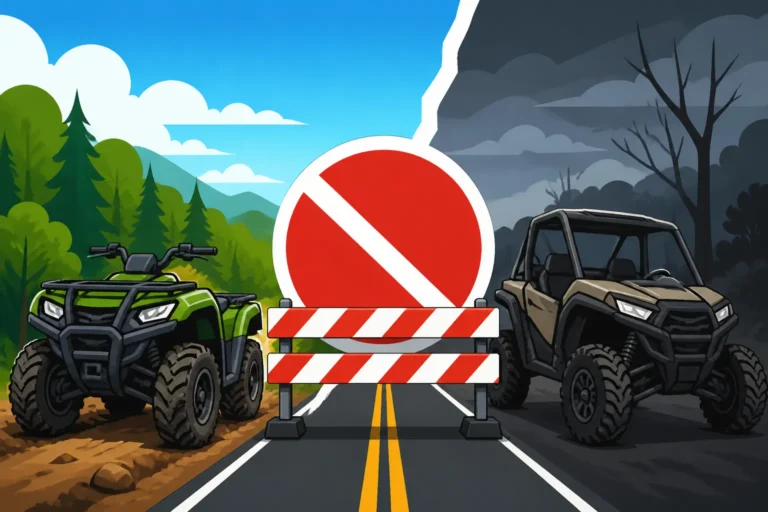
One of the most common questions riders have, especially those traveling through Huntsville to reach popular trailheads, is why major thoroughfares like SR 63 and US 27 remain off-limits to OHVs. After all, if some town streets are open, why not these crucial connectors? The answer lies in jurisdiction and the fundamental differences between local roads and state highways.
State Routes (like SR 63) and US Highways (like US 27) fall under the primary authority of the Tennessee Department of Transportation (TDOT), not the local municipality of Huntsville. While local governments can open their own roads for OHV use under certain conditions, they generally cannot unilaterally dictate terms for state or federal highways. These state-controlled roads typically have higher speed limits, much greater traffic volume, and are designed for conventional motor vehicles. Integrating OHVs, which generally have lower top speeds and different safety features, onto these high-traffic arteries presents significant safety concerns for TDOT. The speed differential alone can be incredibly dangerous, leading to increased risk of rear-end collisions or other severe accidents. Furthermore, state laws often explicitly prohibit OHV use on state highways unless specific exemptions are granted by TDOT, which are rare and usually tied to very limited, special circumstances, such as [SR 63's Two Open Weekends a Year]. For instance, while you might find a short section of a county road open that connects two trails, a major state route designed for through-traffic will almost certainly remain off-limits to your side-by-side or quad.
This difference in authority means riders must be extremely careful. Even if you're legally riding on a designated Huntsville street, that access can abruptly end where the city road intersects with a state route. You cannot simply cross or continue onto the state highway unless explicitly permitted by specific signage or a very rare, clearly defined exception. Always be on the lookout for signs indicating "No OHV Access" or simply the transition to a state route, where you must either turn around, find an alternative legal route, or trailer your machine. Ignoring these rules on state roads carries stiff penalties, often more severe than those for local street violations, and can pose significant danger to yourself and others. This separation of authority is a critical piece of the puzzle when navigating the road rules in Tennessee.
Navigating the Legal Framework for OHVs in Huntsville
Understanding the "why" behind Huntsville's rules is one thing, but knowing the exact "what" and "how" of the legal framework is essential for any rider. Tennessee has made some strides in clarifying OHV road use, but local interpretations and specific requirements can still be a minefield.
What Tennessee Law Allows and Limits in Cities
For years, the rules for riding ATVs and UTVs on public roads in Tennessee were a confusing patchwork, often left entirely up to individual counties and municipalities. This created a frustrating inconsistency where what was legal in one county might be strictly prohibited just across the line. However, recent legislative changes, notably what [What House Bill 810 Changed in 2025], have provided a statewide framework that gives local governments clearer guidelines and authority to open their roads.
Tennessee state law now generally permits counties and municipalities to allow UTVs on public roads with a posted speed limit of 45 mph or less, provided certain conditions are met. This is a crucial distinction: the state allows local governments to open roads; it does not mandate it. Huntsville, like other communities, then has the power to enact its own ordinances within these state guidelines. This means that while the state sets the maximum speed limit for roads that can be opened, a town like Huntsville can choose to open only roads with even lower speed limits or impose additional restrictions, such as the "sunrise to sunset" rule. For example, a street might be posted at 40 mph, technically allowable by state law, but Huntsville's local ordinance might still limit OHV access to specific, designated sections or only during daylight hours. Riders need to be aware that simply because a road is 45 mph or under, it doesn't automatically mean it's open for OHV use in every town. The state law provides the outer bounds, but the local ordinance fills in the specific details for that community. This multi-layered legal structure requires riders to look beyond just state statutes and dig into the specifics of municipal codes for places like Huntsville.
Equipment Requirements for Road Use in Huntsville
Even on the designated "sunrise to sunset" streets in Huntsville, your ATV or UTV isn't just a trail machine; it's considered a vehicle operating on public roads, and as such, it must meet certain equipment standards. These requirements are largely consistent with what Tennessee generally mandates for any OHV operating on a public road, regardless of whether it's in an [Adventure Tourism District] or a city.
To be considered street-legal for even limited use, your machine must typically be outfitted with:
- Headlights: Functional, illuminated headlights are a must, especially given the "sunrise to sunset" window, which means you could be riding during periods of low light at dawn or dusk.
- Taillights and Brake Lights: These are non-negotiable for safety, ensuring that you are visible from the rear and that other drivers know when you are slowing or stopping.
- Turn Signals: Essential for indicating your intentions to other motorists, just like any car or truck.
- Horn: A working horn is necessary for signaling warnings.
- Rearview Mirrors: At least one, but often two (one on each side), are required to provide adequate visibility of traffic behind you.
- Windshield: While not always a state requirement for off-road use, it often becomes one for road use, providing protection from debris.
- Seatbelts: If your machine is designed with seatbelts, they must be worn by all occupants.
Many riders find that their stock machines lack some of these features. This is where aftermarket companies like SuperATV come into play. They offer comprehensive street-legal kits that include turn signal lights, horn kits, and mirrors, making it much easier to bring a trail machine up to road-legal standards. For instance, you might need a complete turn signal kit that integrates front and rear signals, a dashboard indicator, and a horn button. Checking the specific local ordinance for Huntsville, alongside the general state requirements for [Tennessee UTV Road Requirements], is essential to ensure every box is ticked. Missing even one small piece of equipment could result in a citation and force you to trailer your machine, cutting your riding day short.
Driver and Passenger Rules in Huntsville
Beyond the machine itself, the people operating and riding in it also have specific rules to follow when on Huntsville's designated streets. These regulations focus on safety, accountability, and ensuring that those operating OHVs on public ways have the necessary qualifications.
First and foremost, the operator of the ATV or UTV must be at least 16 years old and possess a valid driver's license. This isn't just a recommendation; it's a legal requirement, just as it would be for driving a car. You cannot operate an OHV on Huntsville's streets with only a learner's permit or without any license at all. This ensures that the person behind the wheel has demonstrated a basic level of driving competency and understands traffic laws. Think of it as driving any other motorized vehicle on a public road; the same standards apply to the driver. When it comes to passengers, Tennessee's helmet laws are particularly important. While the state has specific regulations about helmets for all riders under 18, when on a public road, the rules can become even stricter. It's generally safest, and often legally mandated for those under 18, that both the operator and any passengers wear a DOT-approved helmet. Always confirm the current [Tennessee Helmet Law for ATV Riders] and [Tennessee Helmet Law for Passengers] as they apply to public road use, as this can often be a point of confusion for riders moving between trail and street.
Finally, just like a car, your OHV must be insured when operating on public roads in Tennessee. The state mandates minimum liability insurance coverage for all motor vehicles. Carrying proof of this insurance is crucial, as law enforcement may request it during a roadside check. Riding without insurance can lead to significant fines and penalties, and it leaves you financially vulnerable in the event of an accident. While on private trails, insurance might be optional depending on the park, on Huntsville's public streets, it's a must. These rules collectively aim to create a safer environment for everyone sharing the road, ensuring that drivers are qualified, protected, and financially responsible.
Practical Considerations for Riding in Huntsville
Knowing the laws is one thing, but successfully and safely riding your OHV on Huntsville's "sunrise to sunset" streets also requires some thoughtful planning and respectful conduct. It's about more than just avoiding a ticket; it's about being a good ambassador for the OHV community.
Planning Your Ride Around Daylight Hours
The "sunrise to sunset" restriction in Huntsville means that your riding schedule will be dictated by the sun's rhythm. This requires a different approach to planning than if you were simply hitting the trails where hours might be more flexible or even 24/7. First, make it a habit to check accurate sunrise and sunset times for Huntsville on the day you plan to ride. Weather apps and online search engines are excellent tools for this. Remember that these times shift significantly throughout the year, especially with daylight saving time changes. What's a generous window in June can be a very short one in December.
Once you have those times, plan your routes and activities accordingly. If you're heading out for a longer loop that might take you to a trailhead and back, factor in travel time to ensure you're off the designated city streets before the sun dips below the horizon. It's always better to err on the side of caution and be back well before sunset. Consider carrying a GPS device or a smartphone with a reliable mapping application that clearly shows the designated OHV routes within Huntsville. Pre-loading your intended path can prevent accidental deviations onto restricted streets. For instance, if you're trying to grab supplies or fuel at a local store, ensure the store is located on an approved street and that you have ample time to get there and back within the daylight window. This meticulous planning isn't just about legality; it's about making your ride enjoyable and stress-free, without the constant worry of running out of legal time.
Parking and Staging Your OHV in Huntsville
One of the logistical challenges for many OHV riders planning to use Huntsville's streets is figuring out where to park their truck and trailer, then how to safely transition to their OHV. Unlike dedicated trailheads with large staging lots, a small town like Huntsville may not have abundant, obvious parking for large rigs.
Your first step should be to research available parking options. Look for public parking lots that can accommodate truck and trailer combinations. These might be municipal lots, designated areas near public parks, or sometimes even commercial parking lots (with permission). Avoid parking in residential areas if possible, as this can quickly lead to neighbor complaints and potential citations for blocking driveways or excessive noise. If you're staying at a local campground or lodging, inquire if they offer suitable truck and trailer parking and if there's a designated route from their property to the open OHV streets. The goal is to find a staging area that is both legal and convenient, minimizing the distance you need to travel on non-designated roads to reach your starting point. You want to make sure your staging area is safe and secure, particularly if you're leaving your truck and trailer unattended for several hours. This might mean choosing a well-lit, visible area, or one that has some level of surveillance. Planning this aspect ahead of time can save you a lot of frustration on the day of your ride, ensuring a smooth start and finish to your Huntsville adventure.
Respecting Local Residents and Businesses
Operating an OHV, even legally, in a residential or commercial area comes with a responsibility to be a good neighbor and a respectful visitor. The "sunrise to sunset" rule itself is partly a response to community concerns, so maintaining positive relations is key to ensuring continued OHV access in Huntsville.
One of the biggest areas of concern is noise. Many OHVs, especially those with modified exhaust systems, can be quite loud. While you might love the roar of your engine on the trails, that sound can be intrusive in a quiet neighborhood or bustling commercial district. Be mindful of your throttle usage, especially when starting up, idling, or passing through residential areas. Keep speeds appropriate for the street, far below any posted limit if necessary, and avoid any aggressive driving that might kick up dust or gravel, or simply alarm residents. Remember that people are going about their daily lives, and your OHV is likely a novel, and potentially noisy, presence for them. When passing homes, schools, or businesses, be particularly courteous. Additionally, patronize local businesses on the designated routes if you can. Stopping for a meal, gas, or supplies not only helps the local economy but also shows that OHV riders can be responsible tourists and customers. If you're making modifications to your machine, consider quieter exhaust options or ensuring your setup remains within legal sound limits to avoid issues. Maintaining a positive image for OHV riders will go a long way in preserving and potentially expanding access to town streets in the future.
Comparisons and Contrasts with Other Tennessee Locations
Huntsville's specific rules for OHV road use are a product of its unique status as a municipality within a state that has a varied approach to OHV access. It's helpful to compare Huntsville's system with other frameworks found across Tennessee to highlight its distinct characteristics.
Huntsville vs. Adventure Tourism Districts
Tennessee has designated certain areas as [Tennessee's Adventure Tourism Districts], which include counties like Scott, Anderson, and Campbell. These districts have a broader mandate to connect trails and communities through legal OHV road access, often with more extensive networks of open county roads. The primary difference between Huntsville's "sunrise to sunset" streets and these Adventure Tourism Districts lies in their fundamental purpose and scope.
In Adventure Tourism Districts, the goal is often to facilitate direct travel between trailheads, campgrounds, and local businesses spread across a larger, more rural geographic area. While specific rules still apply (like being under 45 mph, insurance, and equipment), the sheer mileage of open roads tends to be greater, and the emphasis is on connecting a sprawling trail system. For example, in Scott County, you might be able to ride your UTV for miles on designated county roads, using routes like [The O and W Road Reopening in Tennessee] or roads connecting to Windrock or Brimstone. Huntsville, on the other hand, is a specific town, and its designated streets are primarily for local access within the town itself, not necessarily for connecting vast trail networks or even linking the town to distant trailheads. The "sunrise to sunset" rule is a perfect example of a local restriction often not found on broader county road networks within an Adventure Tourism District, where some roads might have 24/7 access (though always check local ordinances). While Adventure Tourism Districts aim for expansive connectivity, Huntsville's focus is on controlled, daylight-only access within its specific municipal boundaries, balancing local needs with rider enjoyment. This distinction means that if you're riding through an Adventure Tourism District, you might have more freedom and longer hours, whereas in Huntsville, your access is far more concentrated and time-sensitive.
Huntsville vs. Unincorporated County Roads
Another important comparison can be made between Huntsville's city rules and those governing unincorporated county roads in other parts of Tennessee. While Huntsville operates under its own municipal ordinances, many Tennessee counties have their own systems for allowing OHVs on roads, particularly unpaved or rural ones.
For example, Tennessee state law allows county legislative bodies (like the county commission) to open unpaved county roads to OHV traffic through a two-thirds majority vote. This provision allows rural counties to grant OHV access on gravel or dirt roads that are less trafficked and often serve as connectors for farming communities or access to more remote areas. This is a very different mechanism than a city like Huntsville creating designated street lists. In these unincorporated county areas, while the same state-level equipment and licensing requirements generally apply, the "sunrise to sunset" time restriction might not be in place, or the designated roads might be less clearly signed, relying more on local knowledge or published county maps. For instance, a farmer might use an ATV on a gravel county road to access fields, operating under the [Tennessee Rules for Agricultural Road Use], which often has different exemptions. When you move from these more rural, unincorporated county roads into a municipality like Huntsville, the rules immediately shift to the more stringent city ordinances. This highlights the "patchwork" nature of Tennessee's OHV road access: one minute you might be on a county road with relatively flexible rules, and the next you've crossed into a town like Huntsville, where specific hours and designated routes apply. Always be aware of municipal boundary lines, as they often mark a distinct change in OHV regulations.
What to Expect from Law Enforcement in Huntsville
No one wants their fun day of riding to end with a blue light in their rearview mirror, but understanding what to expect from law enforcement in Huntsville can help you remain calm and compliant. Police officers and county deputies are tasked with enforcing both state traffic laws and Huntsville's specific OHV ordinances.
Roadside Checks and Documentation
If you are stopped by a law enforcement officer while operating your ATV or UTV on a Huntsville street, the encounter will likely resemble a standard traffic stop for a car. The officer will typically approach, explain the reason for the stop (if it's not immediately obvious), and request your documentation.
You should be prepared to present:
- Valid Driver's License: As previously mentioned, you must be 16 and hold a full, valid driver's license. No permits.
- Proof of Insurance: Tennessee requires minimum liability insurance for any vehicle on public roads. Carry your insurance card.
- Proof of Ownership: This usually means your vehicle's title or, if recently purchased, a bill of sale proving you are the rightful owner. While Tennessee does not [Does Tennessee Register ATVs?] or UTVs in the traditional sense, having proof of ownership is still vital. Many riders also have a [A Sticker That Proves a Tennessee Title Exists] (TDR sticker) on their machine, which shows the machine has been titled in the state.
- OHV Equipment Check: The officer will also likely conduct a visual inspection of your machine to ensure it meets all the mandated equipment requirements for road use. This includes checking for functional headlights, taillights, brake lights, turn signals, horn, mirrors, and ensuring any designed seatbelts are present and used. If you've invested in a street-legal kit, like those from SuperATV, make sure all components are working correctly.
Remaining polite and cooperative during a roadside stop is always the best approach. Have your documents readily accessible and answer questions clearly. If you are unsure about any local rules, this can also be an opportunity to respectfully ask for clarification, though it's important to remember that the officer's primary role is enforcement. This proactive preparation of documents and equipment checks can make a potentially stressful situation much smoother.
Fines and Penalties for Non-Compliance
Operating an ATV or UTV illegally on Huntsville's streets can lead to a range of fines and penalties, which can quickly turn an enjoyable ride into a costly mistake. The specific consequences will depend on the nature and severity of the violation, as well as whether it's a first offense or a repeat.
Common violations and their potential penalties include:
- Riding on a Restricted Street: If you're caught on a street not designated for OHV use, even within daylight hours, you could face a significant fine. This is a direct violation of Huntsville's local ordinances.
- Operating Outside "Sunrise to Sunset" Hours: Being on designated streets after sunset or before sunrise is a clear violation and will likely result in a citation.
- Lack of Required Equipment: Failing to have functioning headlights, taillights, turn signals, a horn, mirrors, or other mandated road-legal equipment can lead to a fine. The officer might even deem your vehicle unsafe for road use and require you to trailer it immediately.
- No Driver's License or Insurance: These are serious violations, similar to operating any other motor vehicle without proper credentials. Penalties can include substantial fines, points on your driving record, and even the impoundment of your OHV.
- Minor Age Operator or Unhelmeted Passengers (especially under 18): Violations related to age restrictions or helmet laws for minors on public roads are taken very seriously and can result in fines for the operator.
In some cases, especially for repeat offenses or very egregious violations, your OHV could be impounded, requiring you to pay towing and storage fees on top of any fines to retrieve it. While the specific fine amounts can vary, they are typically designed to be a deterrent, making it far more economical to comply with the rules than to risk non-compliance. It's always a good idea to remember that operating an OHV on a public road, even if designated, is a privilege, and law enforcement is there to ensure that privilege is exercised safely and legally. Being aware of the [Tennessee Fines for Illegal UTV Road Use] can certainly add a layer of caution to your riding plans.
| Rule Category | Huntsville's "Sunrise to Sunset" Streets | General Tennessee Road Rules (Where Permitted) |
|---|---|---|
| Operating Hours | Sunrise to Sunset Only | Varies by local ordinance; often daylight only |
| Designated Roads | Specific designated city streets | Roads 45 mph or less (local choice) |
| State Routes | SR 63 and US 27 typically closed | Generally closed; few specific exceptions |
| Driver Age | 16+ with valid driver's license | 16+ with valid driver's license |
| Insurance | Required | Required |
| Helmet (Under 18) | Often required | Often required for public road use |
| Headlights/Taillights | Required | Required |
| Turn Signals | Required | Required |
| Horn | Required | Required |
| Mirrors | Required (at least one) | Required (at least one) |
| Windshield | Often required | Varies, often recommended |
Disclaimer
This article is for general informational purposes only and does not constitute professional advice. Laws, prices and regulations vary by location and change over time. Consult a qualified professional for guidance on your specific situation.