When the County Clerk Wants the Original Title
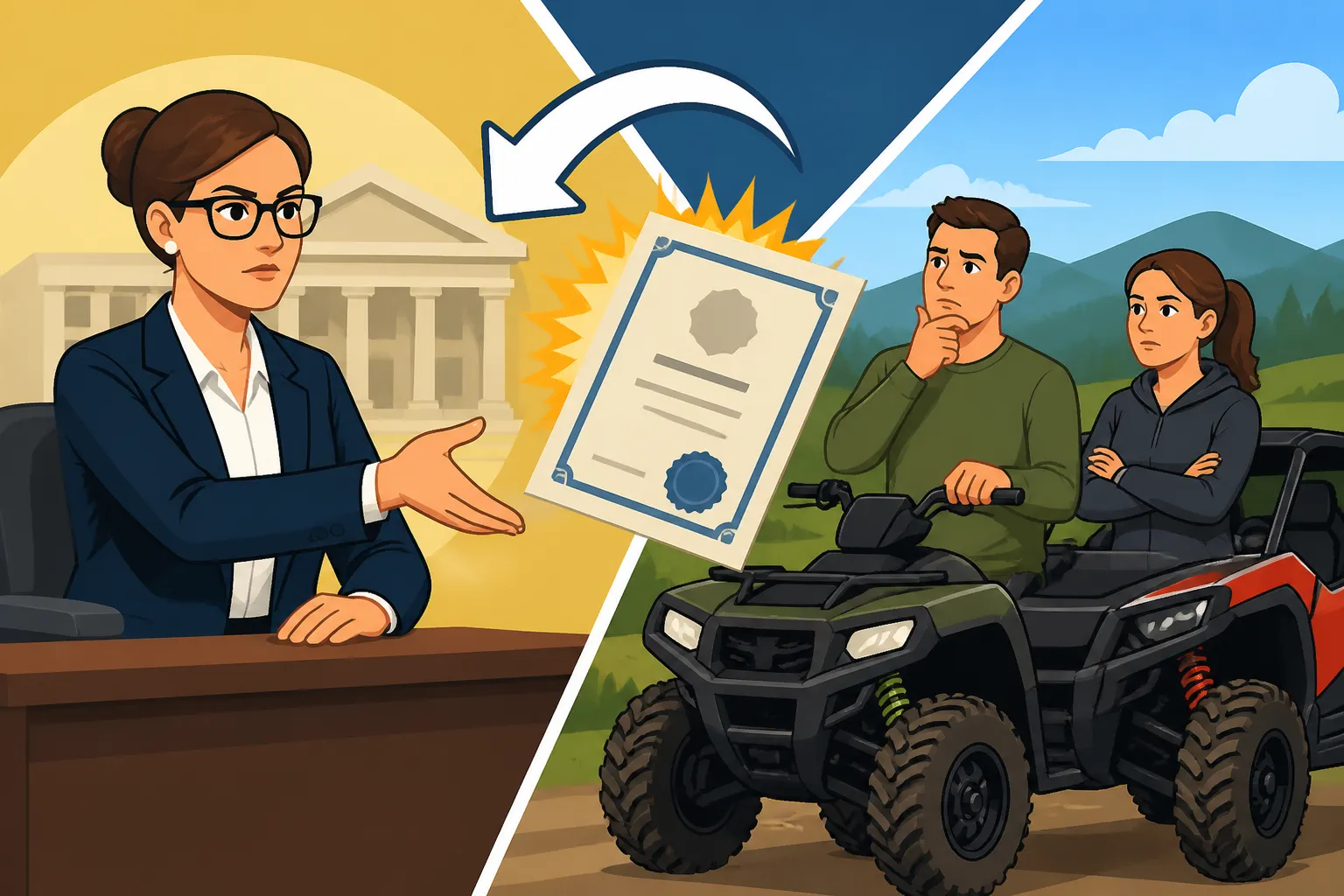
It’s a scenario many of us have faced: you’ve finally found that perfect ATV or UTV, signed the bill of sale, and now you’re ready to head to the county clerk’s office to get it officially titled in your name. You gather all your paperwork, feeling organized and prepared, only to be met with a firm, "We need the original title, not a copy." This can be incredibly frustrating, especially if you were handed a photocopy or if the original seems to have vanished into thin air. This guide will walk you through exactly why Tennessee county clerks insist on seeing, and often keeping, original documents for titling, what to do if you don't have yours, and how to make sure your next titling experience goes smoothly.
Why Original Documents Are the Gold Standard for Tennessee Titling
When you visit your local county clerk's office in Tennessee to title an ATV or UTV, they're not just being difficult by asking for original documents. They're actually upholding strict legal and procedural requirements designed to protect you, the state, and future owners from potential fraud and ownership disputes. It's all about establishing a clear and undeniable chain of ownership for your off-highway vehicle (OHV).
Establishing a Clear Chain of Ownership
Think of an OHV title like a deed to a house. It’s a legal document that formally proves who owns the machine. Every time an OHV changes hands, this change needs to be recorded on the original title or a new original title needs to be issued. The county clerk's office is the gatekeeper for this process. They need to see the physical, original document to verify its authenticity, check for alterations, and ensure that the previous owner's signature for transfer is legitimate. A photocopy, no matter how good, simply doesn't carry the same legal weight or provide the same level of security against tampering. It's much easier to forge a copy than an original, especially when it comes to subtle security features or the feel of the paper itself.
Imagine you bought a used quad from someone, and they only gave you a photocopy of the title. How would the clerk know if that photocopy was accurate, or if the original had been signed over to someone else already? Or worse, if the machine was stolen? The integrity of the titling system relies on these original documents to prevent such scenarios. This is why when you're [Titling at a Tennessee County Clerk], they'll be very particular.
Preventing Fraud and Protecting Buyers
One of the primary reasons for requiring original titles is to prevent fraud. Unfortunately, there are individuals who try to sell stolen machines or machines with undisclosed liens. An original title often has specific security features – watermarks, special paper, or unique numbering – that are difficult to replicate on a photocopy. By physically inspecting the original, the county clerk can look for signs of alteration or forgery.
Furthermore, the original title is where any existing liens are typically recorded or, crucially, where the lien release is endorsed. If you're buying a machine that still has a lien against it, the lienholder will likely have possession of the original title. When the loan is paid off, they should then release the lien on the original title, or send a separate lien release document that you then present with the title. Without the original title, or a proper [Tennessee OHV Lien Release] document, the county clerk cannot confirm that the machine is free and clear of debt, and therefore cannot issue a new, clean title in your name. This is a critical step in [Buying a Used OHV in Tennessee] – always ensure you're getting the original, clear title.
When a Copy Might Seem Like Enough (But Usually Isn't)
It’s easy to get confused about when a copy is acceptable and when only the original will do. After all, for many administrative tasks, a photocopy or even a digital scan of a document is perfectly sufficient. However, when it comes to the legal act of transferring vehicle ownership, the rules are much stricter.
Distinguishing Between Verification and Surrender
It's important to understand the difference between verifying information and surrendering a legal document. Sometimes, you might need to show proof of ownership for a minor issue, like an insurance inquiry or proving residency. In these cases, a photocopy might be acceptable for mere verification—the clerk or agent just needs to see the document exists and confirms its details.
However, when you are actually completing a transaction that changes the legal ownership of the vehicle, such as a [Tennessee OHV Title Transfer], the county clerk needs to take possession of the original title. They will typically stamp it, mark it as transferred, or use it as the basis to issue a completely new title in your name. This process irrevocably ties the physical document to the legal action, and a copy simply cannot fulfill that role. The original serves as the official record that is then processed and archived by the state, documenting the transaction for posterity and legal challenges.
Everyday Scenarios Where Copies Fall Short
Let's consider a few common situations where people might mistakenly think a copy is adequate:
- Personal Records: Many of us are diligent about keeping copies of all our important documents, and that’s a smart move! Having a scan or photocopy of your OHV title in your personal files, perhaps stored digitally or in a home safe, is excellent for your own reference or in case the original is lost. For example, a [A Photographed Tennessee Title] is perfect for your records. However, when you go to sell the machine or make any official changes, that personal copy won't cut it at the clerk's counter.
- Insurance Purposes: If your OHV is involved in an accident or is stolen, your insurance company might ask for proof of ownership. Often, a clear photocopy or a digital image of your title will suffice for their claims processing. They are not transferring ownership; they are simply verifying that you held title to the machine when the incident occurred.
- Estate Planning: You might include your OHV in your will or trust, and while your attorney might make copies of your title for their files, the actual process of [Titling an Inherited Machine in Tennessee] will require the original document to be submitted to the county clerk. Legal processes around estates are complex, and the clarity provided by an original title is paramount.
In every scenario where legal ownership is being established, transferred, or officially modified, the original title is the non-negotiable requirement.
Navigating Challenges When You Don't Have the Original Title
So, you're at the county clerk's office, and they've asked for the original, but you don't have it. Don't panic! This is a common situation, and there are established procedures to follow, although they can sometimes take a little extra time and effort.
What if the Original Title is Lost or Destroyed?
This is perhaps the most frequent reason people don't have an original title. Maybe it got misplaced during a move, damaged in a flood, or simply disappeared. If your Tennessee OHV title is lost, stolen, or destroyed, your first step is to apply for a duplicate title. This process is handled by the county clerk's office, and you'll typically need to:
- Fill out an application for a duplicate title: This form will require information about you and your OHV, including the VIN.
- Provide identification: You'll need to show a valid photo ID.
- Pay the required fees: There will be a fee for issuing a duplicate title.
- Wait for processing: It can take some time for the duplicate title to be issued and mailed to you.
Once you receive the duplicate, that becomes your new original title, and you can then proceed with your intended transaction, whether that's selling the machine or titling it in your name. For more detailed steps, check out [Replacing a Lost Tennessee OHV Title].
Dealing with Lienholders and Unreleased Liens
As mentioned earlier, if you financed your OHV, the lender (lienholder) usually holds the original title until the loan is paid in full. Once your loan is satisfied, the lienholder is legally obligated to release the lien. This usually means they will either:
- Mail you the original title with their signature releasing the lien.
- Send you a separate "lien release" document that you then present to the county clerk along with the original title (if you had it).
If you’ve paid off your loan but haven't received the original title or a lien release, you need to contact your lender immediately. Keep meticulous records of your payments and any correspondence with the lender. Without a clear lien release on the original title, the county clerk cannot issue a new title in your name without the lien on it. This is crucial for [Titling a Machine With a Lien in Tennessee].
When You Bought an OHV Without a Title
This is a tricky situation and one that can lead to significant headaches. Sometimes, people buy an older machine, a project OHV, or even a gifted one, and the previous owner simply never had a title or lost it long ago. Tennessee does require titles for most OHVs, so this isn't a situation to take lightly.
If you find yourself in this predicament, you'll likely need to:
- Attempt to track down the previous owner(s): This can be difficult, but if you can get in touch, they might be able to help you apply for a duplicate title in their name, which they can then sign over to you.
- Obtain a comprehensive Bill of Sale: Even if there's no title, a detailed bill of sale is crucial. It should include the seller's information, buyer's information, OHV description (make, model, VIN), purchase price, and date. You can find excellent templates and generate professional-looking documents using online services like LawDepot, which can help strengthen your claim of ownership if you need to go through an alternative titling process.
- Consult your county clerk's office: Explain your situation. They may have specific procedures for titling vehicles without a prior title, which could involve a bond, an affidavit, or a VIN inspection. Be prepared for a more involved process.
- Consider a bonded title: In some cases, if you meet specific criteria and cannot obtain a regular title, you might be able to apply for a bonded title, which provides financial protection to previous owners or lienholders if a claim arises.
It's always best to resolve title issues before you finalize a purchase. A robust [A Tennessee Bill of Sale for an OHV], especially one created using a reputable service like LawDepot, can be a lifesaver in these scenarios, proving the transaction even if the title itself is missing.
Best Practices for Keeping Your OHV Documents Secure
Preventing future title headaches starts with good document management now. Taking a few proactive steps can save you a lot of grief down the line when you decide to sell your machine or need to prove ownership.
Secure Storage for Your Original Title
Your OHV title is a vital legal document, so treat it with the same care you would your car title or house deed. Here are some tips for secure storage:
- Fireproof safe: A home safe that is fire-rated is an excellent place to store original titles, along with other critical documents like birth certificates, passports, and insurance policies.
- Safe deposit box: For ultimate security, consider storing your original title in a bank safe deposit box. This offers protection against theft, fire, and flood. However, remember that you won't have immediate access if you need it quickly.
- Avoid the OHV itself: Never store the original title on or in the OHV itself. If the machine is stolen, the thief would then have the title, making it much easier for them to sell it. If your machine is stored outside, moisture and extreme temperatures can also damage the paper.
The Importance of Digital Backups (For Reference Only)
While a digital copy won't replace your original title at the county clerk's office, it's invaluable for personal records and emergencies.
- Scan or photograph your title: Take clear, high-resolution scans or photos of both the front and back of your original title. Make sure all information, especially the VIN and any lien details, is legible.
- Store digitally and in the cloud: Keep these digital copies in a secure cloud storage service (like Google Drive, Dropbox, or iCloud) and on an external hard drive. This way, if anything happens to your physical documents, you still have a record of the information.
- Access on the go: Having a digital copy on your phone can be useful for quick reference, such as when you're discussing your machine with an insurance agent or need to quickly recall your VIN. Just remember, it's not a substitute for the original when it's time for an official transfer.
Proactive Communication with the County Clerk
When in doubt, call ahead! Before you make a trip to the county clerk's office, especially if you have an unusual titling situation (like a gifted machine, an out-of-state purchase, or a missing title), call their office. Explain your specific circumstances and ask exactly what documents they will require. This simple step can save you a wasted trip and a lot of frustration. They can guide you on specific forms, fees, and requirements that apply to your situation, whether you're dealing with [Buying an Out-of-State Machine for Tennessee] or [Titling a Homebuilt Machine in Tennessee].
Remember, having all your ducks in a row – an original title, a clear bill of sale (perhaps generated from LawDepot), and any necessary lien releases – will make your experience at the county clerk's office as smooth as possible.
What the County Clerk Needs for Titling Your OHV
To summarize, here's a quick look at common documents and their typical acceptance status at the Tennessee County Clerk for titling.
| Document Type | Purpose | Acceptability for Titling | Notes |
|---|---|---|---|
| Original Title | Transfer of Ownership | Required | Most crucial document for proving ownership and transferring it. Will be surrendered. |
| Certified Copy of Title | Replacing Lost Title | Required | A certified duplicate title issued by the state becomes the new original. |
| Photocopy of Title | Personal Record, Insurance Inquiry | Not Accepted | For official titling, a photocopy lacks legal weight and security features. |
| Bill of Sale (Original) | Proof of Purchase, Support for Title | Recommended/Required | Crucial, especially if no prior title or for proving sales tax. [A Tennessee Bill of Sale for an OHV] |
| Lien Release Document | Proving Lien is Satisfied | Required (if applicable) | Must be an original document from the lienholder, often attached to or endorsed on the original title. |
| Photo ID | Applicant Identification | Required | To verify your identity as the person applying for the title. |
| OHV VIN Verification | Confirming Machine's Identity | Sometimes Required | For out-of-state or unusual machines, a physical inspection may be needed to verify the [Tennessee OHV VIN Requirements]. |
Disclaimer
This article is for general informational purposes only and does not constitute professional advice. Laws, prices and regulations vary by location and change over time. Consult a qualified professional for guidance on your specific situation.