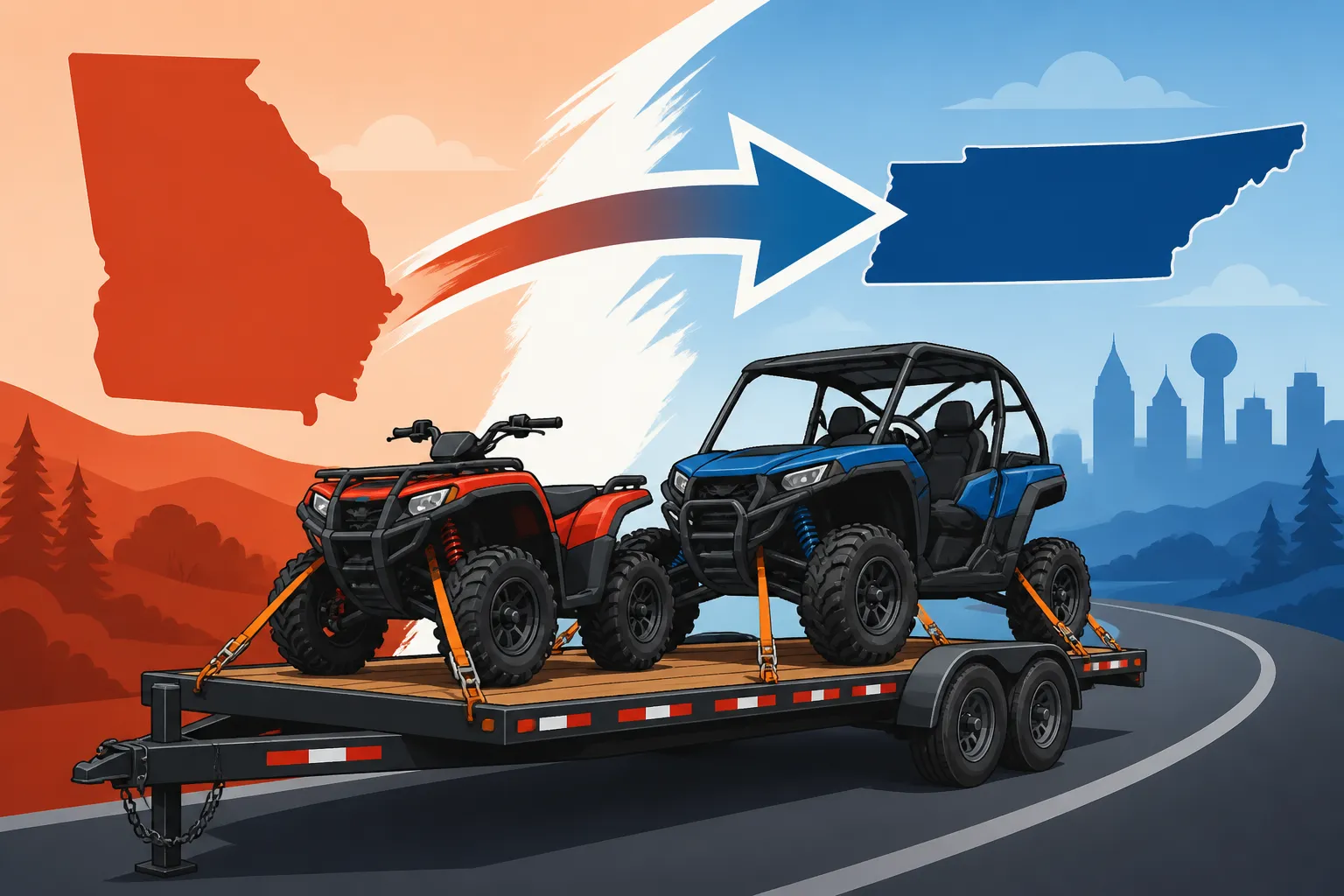
Bringing a Machine From Georgia to Tennessee
Moving your beloved ATV or UTV across state lines can feel like navigating a confusing maze of paperwork and rules, especially when you're coming from Georgia into Tennessee. You've enjoyed those Georgia trails, but now you're settling into the Volunteer State and just want to get your machine legally set up without a massive headache. Trust me, many riders face this exact frustration. This guide is designed to walk you through every step of bringing your off-highway vehicle (OHV) from Georgia to Tennessee, ensuring you understand the unique titling process here and avoid any unexpected bumps in the road.
Understanding Tennessee's Unique OHV Approach
When you’re accustomed to how things work in Georgia, Tennessee’s system for ATVs and UTVs can feel a bit… different. It’s not necessarily harder, but it definitely operates on its own set of principles. The biggest takeaway here is that Tennessee doesn't register your OHV in the same way it would a car or truck, but that doesn't mean it's a free-for-all. There are specific requirements you need to meet to be a legal owner and rider.
The Title is Key, Not Registration
One of the first things that might surprise Georgia riders is that Tennessee doesn't have a traditional "registration" system for off-highway vehicles, at least not in the sense of issuing yearly tags for road use. Instead, the focus is almost entirely on the title. Your ATV or UTV needs a Tennessee title to prove ownership and to be legally recognized in the state. This distinction is really important. While a car gets a title and annual registration, an OHV generally just gets a title, which then makes it eligible for a special sticker that indicates it has been properly titled in Tennessee. This means you won't be paying yearly renewal fees for a "registration" but rather managing the title itself. It's a common point of confusion, and understanding this fundamental difference is the first step in a smooth transition. Many folks arrive here wondering [Why Tennessee Does Not Register Off-Road Machines], and this is exactly why: the state handles OHVs differently.
The Elusive TDR Sticker Explained
So, if there's no registration, what's with that sticker you might have heard about? That's the Tennessee Department of Revenue (TDR) Sticker. This isn't a registration tag that expires yearly and gives you road privileges. Rather, it’s a specific sticker issued by your county clerk that serves as tangible proof that your ATV or UTV has been properly titled in the state of Tennessee. It’s essentially a visual confirmation that the ownership process has been completed. Think of it less as a license plate and more as a seal of approval on your machine. This sticker, usually affixed to a visible part of your OHV, verifies that your machine has gone through the state's titling process. It’s part of what makes [Tennessee's TDR Sticker Explained] so vital for new residents. It effectively says, "This machine has a legitimate Tennessee title."
Why the County Clerk is Your Go-To
In many states, if you need to title a vehicle, you head straight to the Department of Motor Vehicles or a similar state agency. In Tennessee, however, when it comes to OHVs, your local county clerk's office is your primary point of contact. They are the ones who handle the titling applications, collect the necessary fees, and issue that TDR sticker. This can be a bit of a shift if you're used to a more centralized state system. Don't go searching for a dedicated "ATV registration office" because you'll just end up at the county clerk anyway. Knowing this upfront will save you a lot of time and potential frustration. So, when it's time to get your Georgia machine titled, you'll be making a trip to the county clerk's office in the Tennessee county where you reside. This is why [Titling at a Tennessee County Clerk] is the practical next step for many riders.
Gathering Your Georgia Paperwork
Bringing an OHV from Georgia to Tennessee requires showing clear proof of ownership. The state wants to be absolutely sure that the machine you're trying to title genuinely belongs to you. This means gathering specific documents from its life in Georgia. Don't underestimate the importance of this step; having everything in order before you visit the clerk's office can make the difference between a quick process and multiple frustrating trips.
Your Georgia Title: The Most Important Document
The absolute centerpiece of your paperwork, if you have one, is your Georgia title certificate. This document officially establishes you as the legal owner of the ATV or UTV in Georgia. When you present this to the Tennessee county clerk, it acts as the direct chain of ownership. Make sure the title is in your name and that all the information on it—such as the Vehicle Identification Number (VIN)—matches your machine exactly.
What if you don't have a Georgia title? This can happen, especially with older ATVs or UTVs, as Georgia's titling laws for OHVs might not have been as stringent in the past, or for certain types of machines. If your Georgia machine was never titled in Georgia, or if you simply can't find the title, don't panic. You'll need to prepare alternative forms of proof, but having the original, properly executed Georgia title is by far the easiest path.
Proof of Ownership If There's No Title
Sometimes, you might find yourself in a situation where your Georgia-based OHV never had a formal title, or perhaps it was lost years ago. This doesn't necessarily mean you can't title it in Tennessee, but it does mean you'll need to work a little harder to establish clear ownership. In such cases, the Tennessee county clerk will typically require a robust bill of sale. This document should clearly state:
- The full names and addresses of both the buyer (you) and the seller.
- The date of the sale.
- A detailed description of the ATV or UTV, including its make, model, year, and crucially, its full VIN.
- The purchase price.
- Signatures of both the buyer and seller.
- Ideally, notarization, though this can vary by county.
If you bought the machine new, your original purchase agreement from the Georgia dealer might suffice. For private sales, a comprehensive bill of sale is essential. You can find reliable, professional templates for these kinds of documents from online resources like LawDepot, which can help ensure all the necessary information is included. This protects both parties and provides the Tennessee clerk with the evidence they need. Remember, the goal is to provide undeniable proof that you legally own the machine, so any documents, like previous registration cards or old insurance policies that list the VIN and your name, could also be helpful supporting evidence. These scenarios often align with [Tennessee OHV Bill of Sale Requirements].
Lien Releases and Other Hurdles
Before you can title your OHV in Tennessee, any existing financial liens must be cleared. If you financed your ATV or UTV in Georgia, the lender (bank, credit union, etc.) would have held the original title or had their lien noted on it. To get a clean Tennessee title in your name, you must prove that the loan has been paid in full. This usually comes in the form of a lien release document from your Georgia lender.
It’s absolutely critical to obtain this release before you head to the Tennessee county clerk's office. Without it, they cannot issue a clear title to you. Make sure the lien release is an original document, not just a copy, as many clerks require the original. Sometimes, your Georgia lender will mail the original title directly to you once the lien is satisfied, or they'll send you a separate release document. If you're unsure, contact your lender well in advance to understand their specific process for [Releasing a Lien on a Tennessee Title]. Don't let this be a surprise hurdle at the counter!
The Step-by-Step Titling Process in Tennessee
Alright, you’ve got all your Georgia paperwork in order, and you understand the nuances of Tennessee’s OHV system. Now it’s time to actually get that title and TDR sticker. This process is fairly straightforward once you know the steps and what to expect. Just remember, a little preparation goes a long way to making this a smooth experience.
Visiting Your Local County Clerk's Office
The first, and most crucial, step is to visit the county clerk's office in the Tennessee county where you officially reside. This is not just any county clerk; it must be the one serving your residential address. Before you even leave your house, it's a really smart idea to call their office or check their website. Each county clerk's office might have slightly different operating hours, specific forms they prefer, or even require appointments for titling services. Some might ask you to bring the OHV for a VIN inspection, though this is less common for standard titling than for complex cases. A quick call can save you a wasted trip and ensure you have any last-minute required items.
When you go, make sure you bring all your Georgia paperwork, your Tennessee driver's license (or other valid photo ID), and your method of payment for the fees. It's always a good idea to bring a little extra cash or have multiple payment options, just in case. They'll guide you through filling out the specific Tennessee OHV titling application forms they use.
Completing the Application and Paying Fees
Once at the clerk's office, you'll fill out the necessary Tennessee OHV title application. This form will ask for details about you, the owner, and comprehensive information about your ATV or UTV, including the make, model, year, and of course, the all-important VIN. The clerk will review your Georgia title (or alternative proof of ownership) and any lien releases. They'll verify that everything matches up.
Then comes the part where you open your wallet: the fees. There are generally a few components to the total cost:
- Tennessee State Title Fee: This is a standard fee charged by the state for issuing a new OHV title. It's a foundational cost for any titling process.
- County Clerk Fee: Your local county clerk's office will charge a service fee for processing your application. This is a smaller, flat fee for their administrative work. This is the [Tennessee's $8.50 County Clerk Fee] you'll likely encounter.
- Lien Notation Fee (if applicable): If you still have a lien on your OHV (which you should have cleared in Georgia, but sometimes a new one is taken out in TN), there will be a fee to record that lien on the new Tennessee title. This is the [Tennessee's $11 Lien Fee].
- Sales Tax (if applicable): This is a big one. If you purchased your OHV in Georgia and haven't paid Tennessee sales tax on it yet, you will be required to pay it at the clerk's office at the time of titling. We'll dive into this more in the next section.
It’s really important to remember that these are separate charges. For a general idea of the costs, here's a breakdown, but always check with your specific county clerk for the most current figures:
| Fee Type | Description | Estimated Cost Shape (Check Current Figures!) |
|---|---|---|
| State Title Fee | The core fee for issuing a new Tennessee OHV title. | A moderate flat fee |
| County Clerk Fee | An additional fee charged by the specific county clerk's office for service. | A smaller flat fee |
| Lien Notation Fee | If you have a loan on your OHV, this fee records the lien on the title. | A small flat fee |
| Sales Tax | If not already paid, this is collected on the purchase price of the OHV. | A percentage of the sale price |
Understanding [What a Tennessee OHV Title Costs] involves knowing these different components.
What to Expect After You Apply
Once you've submitted your application, paid all the fees, and everything checks out, the county clerk's office will process your request. You generally won't walk out with your new Tennessee title in hand that very day. Instead, they will usually mail the official Tennessee title certificate to you. This process can take a few weeks. They will, however, typically issue you the Tennessee TDR sticker on the spot.
This sticker, which serves as your proof of title, needs to be affixed to a visible and permanent part of your ATV or UTV. The clerk might even tell you the recommended placement. Keep an eye on your mailbox for your official title document. If you don't receive it within the expected timeframe, don't hesitate to follow up with the county clerk's office. Knowing [How Long a TDR Sticker Takes to Arrive] can manage your expectations.
Common Pitfalls and Pro Tips for Georgia Imports
Even with all the right information, there are still a few areas where riders bringing their machines from Georgia to Tennessee can run into unexpected issues. Being aware of these common pitfalls and having a few pro tips up your sleeve can make your titling experience much smoother.
Sales Tax Considerations for Out-of-State Purchases
This is a big one that often catches people off guard. If you recently purchased your ATV or UTV in Georgia and haven't paid Tennessee sales tax on it yet, you will almost certainly be required to pay it when you title the machine in Tennessee. Tennessee law generally requires sales tax to be paid on vehicles (including OHVs) purchased for use in the state, even if bought elsewhere.
The sales tax is typically calculated based on the purchase price listed on your bill of sale or the fair market value of the machine. If the clerk suspects the sale price on your bill of sale is artificially low, they may refer to an independent valuation guide to determine the tax owed. This is why having a clear, accurate, and professional bill of sale is so important. Be prepared for this expense; it's often the largest single cost when titling an imported machine. For more details on this, look into [Tennessee Sales Tax at the Title Counter].
The Importance of a Bill of Sale
Even if you have a perfectly valid Georgia title, a well-drafted bill of sale is still incredibly valuable, especially for machines purchased in a private sale. It serves several crucial functions:
- Proof of Purchase Price: This is vital for accurate sales tax calculation. A clearly stated purchase price helps the county clerk determine the correct amount of tax you owe.
- Confirmation of Ownership Transfer: While the title formally transfers ownership, a bill of sale provides a transactional record. It confirms the date the sale occurred and that the previous owner relinquished their rights.
- Documentation for Discrepancies: In rare cases of disputes or if there's a minor discrepancy on the Georgia title, a comprehensive bill of sale can act as supporting evidence.
- Protection for Both Parties: It legally documents the terms of the sale, protecting both you as the buyer and the seller from future misunderstandings.
If you're creating one yourself for an older machine, or even if the seller provides one, double-check that it includes all the necessary details we discussed earlier (buyer/seller info, machine description, VIN, purchase price, date, signatures). As mentioned, resources like LawDepot can offer templates that ensure you cover all your bases.
Checking Your VIN Before You Start
Before you even load your ATV or UTV onto a trailer for the move to Tennessee, or definitely before you head to the county clerk, make sure the Vehicle Identification Number (VIN) on your machine physically matches the VIN on all your Georgia paperwork—the title, bill of sale, and any lien releases. This might seem like a small detail, but a mismatch can cause significant delays and headaches at the clerk's office.
Additionally, it's a good practice to run a quick VIN check through an online database, if available. This can sometimes reveal if the machine has been reported stolen or has any other red flags that might complicate the titling process. While this isn't a mandatory step for titling, it's a smart due diligence measure for any OHV owner. Preventing issues upfront, like those covered in [Checking a VIN Before a Tennessee Purchase], is always better than trying to fix them later. Ensure the VIN on your machine is clearly visible and accessible, as the clerk might ask to see it, or require a physical inspection.
Disclaimer
This article is for general informational purposes only and does not constitute professional advice. Laws, prices and regulations vary by location and change over time. Consult a qualified professional for guidance on your specific situation.