Why the Buyer Needs a Fresh TDR Sticker
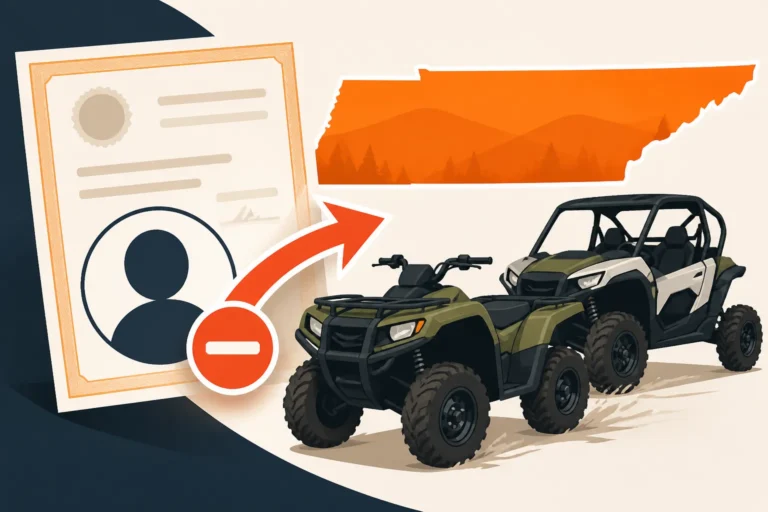
It's an all-too-common scenario in Tennessee: you've just found that perfect used ATV or side-by-side, the price is right, and the seller says, "It's already got a TDR sticker, so you're good to go!" You hand over the cash, shake hands, and ride off feeling great, only to realize later that the existing sticker on the machine might as well be confetti. This guide is here to walk you through exactly why, as the new owner, you absolutely need to obtain a fresh Tennessee Department of Revenue (TDR) sticker for your off-highway vehicle (OHV), dispelling the myth that an old sticker transfers with the sale.
Understanding Tennessee's TDR Sticker System
Before we dive into why you need a new one, let's clear up some common misconceptions about what the TDR sticker actually is and isn't. It's often misunderstood, leading to confusion and frustration for both buyers and sellers of ATVs, UTVs, and other off-road machines in our beautiful state.
What is the TDR Sticker and What Does It Signify?
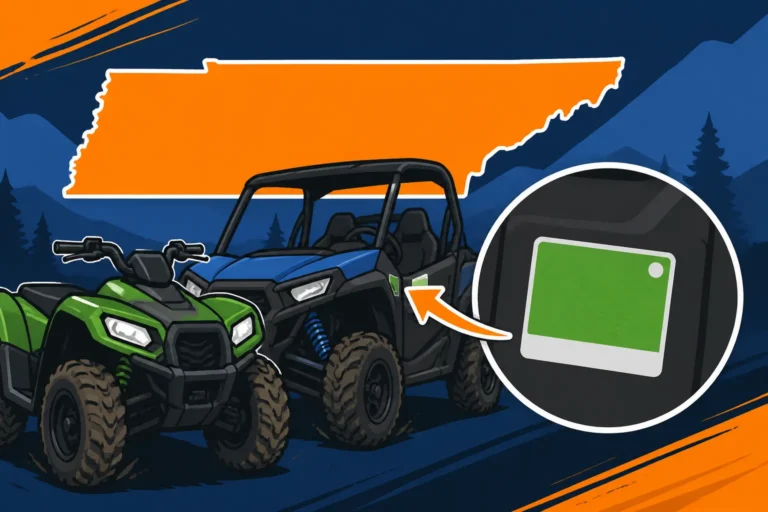
Here in Tennessee, we don't register our off-highway vehicles in the same way we do cars or trucks with annual license plates. That's a huge point of confusion for many newcomers or those used to other states' systems. Instead, Tennessee focuses on titling OHVs. The TDR sticker isn't a registration tag; it's tangible proof that your off-highway vehicle has been properly titled in Tennessee. It literally stands for "Tennessee Department of Revenue" and is issued by the county clerk's office after a successful titling application. Think of it as a small, adhesive badge that says, "Hey, this machine has legal ownership paperwork on file with the state." It's directly tied to the official title document itself. For a deeper dive into this unique system, you can learn more about [Tennessee's TDR Sticker Explained] and why it's truly [A Sticker That Proves a Tennessee Title Exists].
This sticker is a crucial component of proving legal ownership and ensuring that your machine is recognized within the state's system. While it doesn't grant you street-legal status, which is a whole other conversation, it's your go-to indicator that the paperwork for your OHV's ownership is squared away. Without it, verifying who legally owns the machine can become a tangled mess, especially if there's ever a dispute or if you need to prove ownership for insurance purposes or when crossing state lines to ride.
Why the Sticker Isn't Like a Car Tag
It's easy to assume the TDR sticker works like a vehicle's license plate, which typically gets renewed annually and stays with the car no matter who owns it (though the registration itself is tied to the owner). But that's not how it functions for OHVs in Tennessee. Unlike a car tag, the TDR sticker is not designed for annual renewal or transfer between owners. It's a one-time issuance directly linked to the specific act of titling the OHV in a particular person's or entity's name. When that ownership changes, the validity of that specific sticker ends. This is a fundamental difference in how Tennessee manages off-road machines compared to on-road vehicles. If you're curious about the state's approach, exploring [Why Tennessee Does Not Register Off-Road Machines] can provide more context.
The state's philosophy is that the sticker is a byproduct of the titling event, not a standalone registration document that can simply be handed over. This makes sense when you consider that the primary purpose is to prove a title exists, and titles, by their very nature, are specific to their named owner(s). Therefore, when the owner changes, the title changes, and subsequently, the old sticker becomes obsolete, necessitating a new one to reflect the new legal ownership. It's a direct reflection of the chain of custody and legal accountability for that specific off-highway vehicle.
The Moment of Truth: Why the Sale Voids the Old Sticker
This is where the rubber meets the road (or, more accurately, the tire hits the trail). The moment an OHV changes hands, the existing TDR sticker enters a state of limbo, effectively becoming invalid for the new owner. This isn't just a bureaucratic hurdle; it's a core principle of how Tennessee tracks ownership.
Transfer of Ownership and Title Requirements
When you purchase an OHV, whether it's from a private seller in a rural part of Scott County or a dealer near Oliver Springs, the most critical piece of the puzzle is the transfer of the vehicle's title. This is the legal document that officially declares who owns the machine. Without a properly transferred title, you don't legally own the OHV, regardless of how much money you paid. The previous owner's name is on the old title, and therefore, their TDR sticker is tied directly to their ownership, not yours.
Once you take possession of the OHV, your first legal step as the new owner is to transfer that title into your name at a Tennessee County Clerk's office. This is a mandatory process that ensures the state's records accurately reflect who is responsible for the machine. The state provides a clear process for [Tennessee OHV Title Transfer]. For private sales, having a solid [A Tennessee Bill of Sale for an OHV] is absolutely essential, and many buyers find a reliable template from resources like LawDepot helpful to ensure all the necessary details are captured accurately. This bill of sale, along with the properly signed-over original title, forms the backbone of your new titling application.
The New Owner, The New Title, The New Sticker
The good news is that once you've successfully transferred the title into your name, the process for getting your new TDR sticker is automatic. When you go to the county clerk's office, hand over the old title signed by the seller, present your bill of sale (perhaps one you crafted with help from LawDepot to make sure it's legally sound), and pay the necessary fees, the clerk will process your application for a new title. This act of [Titling an OHV in Tennessee] triggers the issuance of a brand-new TDR sticker, which will be sent to you along with your new title document. It's an integral part of the titling process itself.
So, while you might see an old TDR sticker on a machine you just bought, understand that its validity for you is zero. You, as the new legal owner, must obtain a new title, and in doing so, you will receive a new TDR sticker. This ensures that the sticker on the machine directly corresponds to the current legal owner listed on the state's title records. This process is handled by your local county clerk, and understanding [Titling at a Tennessee County Clerk] is key to a smooth experience. It's a clean slate approach: new owner, new title, new proof of title sticker.
Practical Implications for the New Buyer
Ignoring the need for a fresh TDR sticker might seem like a small detail, but it can lead to some significant headaches down the trail. It's not just about compliance; it's about safeguarding your investment and ensuring you have clear, undisputed ownership.
What Happens if You Don't Get a New Sticker?
Let's imagine you bought that ATV, and you decided to just keep the old TDR sticker on it. What's the worst that could happen? Well, quite a bit, actually.
Firstly, and most critically, you lack clear proof of your ownership. While you might have a bill of sale, the official state record, and the TDR sticker still point to the previous owner. If your OHV is ever stolen, having an outdated sticker and a title that isn't in your name can significantly complicate recovery efforts. Law enforcement will check state records, and if your name isn't on file, proving it's yours becomes an uphill battle.
Secondly, while the TDR sticker isn't a "permit" for riding, it is a document that can be referenced by authorities. If you're pulled over while riding on a designated county road (where OHV use is allowed under specific conditions), or if a park ranger at a place like Windrock Park has questions about your machine's provenance, having a sticker that doesn't match your ownership could raise red flags. It might lead to further questioning, delays, or even a citation for not having proper documentation if they suspect fraud or theft. While many parks require their own specific permits, the underlying legal titling of your machine is always important. Even though Tennessee doesn't have fines specifically for an "untitled" OHV in the same way it does for a car, the lack of a proper title in your name can create legal ambiguities that you definitely want to avoid.
The Cost and Process of Obtaining a Fresh Sticker
Alright, so you know you need a new sticker. What's involved? Thankfully, the process is straightforward, and the costs are generally reasonable, though they do add up. When you head to your county clerk's office to title your OHV, you'll generally encounter a few fees:
- State Title Fee: This is the base fee charged by the state of Tennessee for issuing a new title.
- County Clerk Fee: Your local county clerk's office charges a small fee for their services in processing the paperwork. This is a standard fee you'll encounter for any vehicle titling. [Tennessee's $8.50 County Clerk Fee] covers this administrative cost.
- Lien Fee (if applicable): If you're financing your OHV and there's a lien on the title, there will be an additional fee to record that lien. This fee is typically around $11.00. [Tennessee's $11 Lien Fee] specifically addresses this.
All these fees contribute to the overall [What a Tennessee OHV Title Costs]. When you're ready to make it happen, remember to bring the following:
- The original title, properly signed over by the seller.
- A bill of sale (again, a well-drafted one from a source like LawDepot can be invaluable).
- Proof of your identity (driver's license).
- The necessary funds for the fees.
You'll pay these fees directly at the county window. For more details on the paperwork, check out [Tennessee OHV Title Paperwork].
Here's a quick breakdown of common fees you might encounter:
| Fee Type | Purpose | Estimated Cost Range | What It Covers |
|---|---|---|---|
| State Title Fee | Required by the state for title issuance | ~$7.00 – $10.00 | New legal title document |
| County Clerk Fee | Local administrative processing | ~$8.50 | Handling your paperwork and issuing the sticker |
| Lien Fee (if applicable) | Recording a loan/lien on the title | ~$11.00 | Legal documentation of financed machines |
| Sales Tax | State and local sales tax on purchase price | Varies by county | Collected at time of titling if not paid to dealer |
Note: Specific fees can change, so always check with your local county clerk's office for the most current figures.
The sticker itself isn't an extra charge; it's simply issued as part of the titling process once these fees are paid. It's proof of the state title fee being paid and the title being issued in your name. For more on where these funds go, you might find [Where Tennessee Title Fees Go] interesting.
Ensuring a Smooth Transaction: Tips for Buyers
Buying a used OHV should be an exciting experience, not a source of future headaches. By taking a few proactive steps, you can ensure your purchase and subsequent titling process are as smooth as possible.
Due Diligence Before You Buy
Before you even think about handing over cash, perform your due diligence. This means more than just kicking the tires. Always, always check the VIN (Vehicle Identification Number) on the machine against the VIN on the title document. Make sure they match exactly. You can also use the VIN to perform a background check on the machine, looking for any red flags like reported theft or previous salvage titles. Resources that explain [Checking a VIN Before a Tennessee Purchase] can walk you through this essential step. A mismatch could indicate a stolen vehicle or a fraudulent title.
Furthermore, ensure you get a clear and complete bill of sale from the seller. This document, signed by both parties, should clearly state the purchase price, the date of sale, the VIN of the OHV, and the names and addresses of both the buyer and seller. As mentioned earlier, utilizing a reliable template, such as one available through LawDepot, can simplify this process and ensure legal compliance. This bill of sale will be a crucial piece of paperwork when you go to the county clerk's office, especially when purchasing from a private party in Tennessee. Having a robust [Tennessee OHV Bill of Sale Requirements] will protect you down the line.
Planning for the Titling Process
Once you've made the purchase, don't delay in getting that title transferred and your new TDR sticker. Many buyers make the mistake of riding their new acquisition for weeks or even months before tackling the paperwork, only to face issues later. Factor in the time to visit your local county clerk's office, as well as the funds for the titling fees, immediately after your purchase. Think of it as part of the total cost of ownership, just like fuel or gear.
Remember, the previous owner's sticker holds no legal weight for you. It might still be physically attached to the machine, but in the eyes of the Tennessee Department of Revenue, it's voided by the change of ownership. Making this a priority will save you potential hassle, confusion, and even legal complications down the line. It's a fundamental part of [Buying a Used OHV in Tennessee] responsibly. By being prepared, you'll be able to hit the trails with confidence, knowing all your paperwork is in order and your ownership is fully legitimate.
Disclaimer
This article is for general informational purposes only and does not constitute professional advice. Laws, prices and regulations vary by location and change over time. Consult a qualified professional for guidance on your specific situation.