Tennessee Sales Tax at the Title Counter
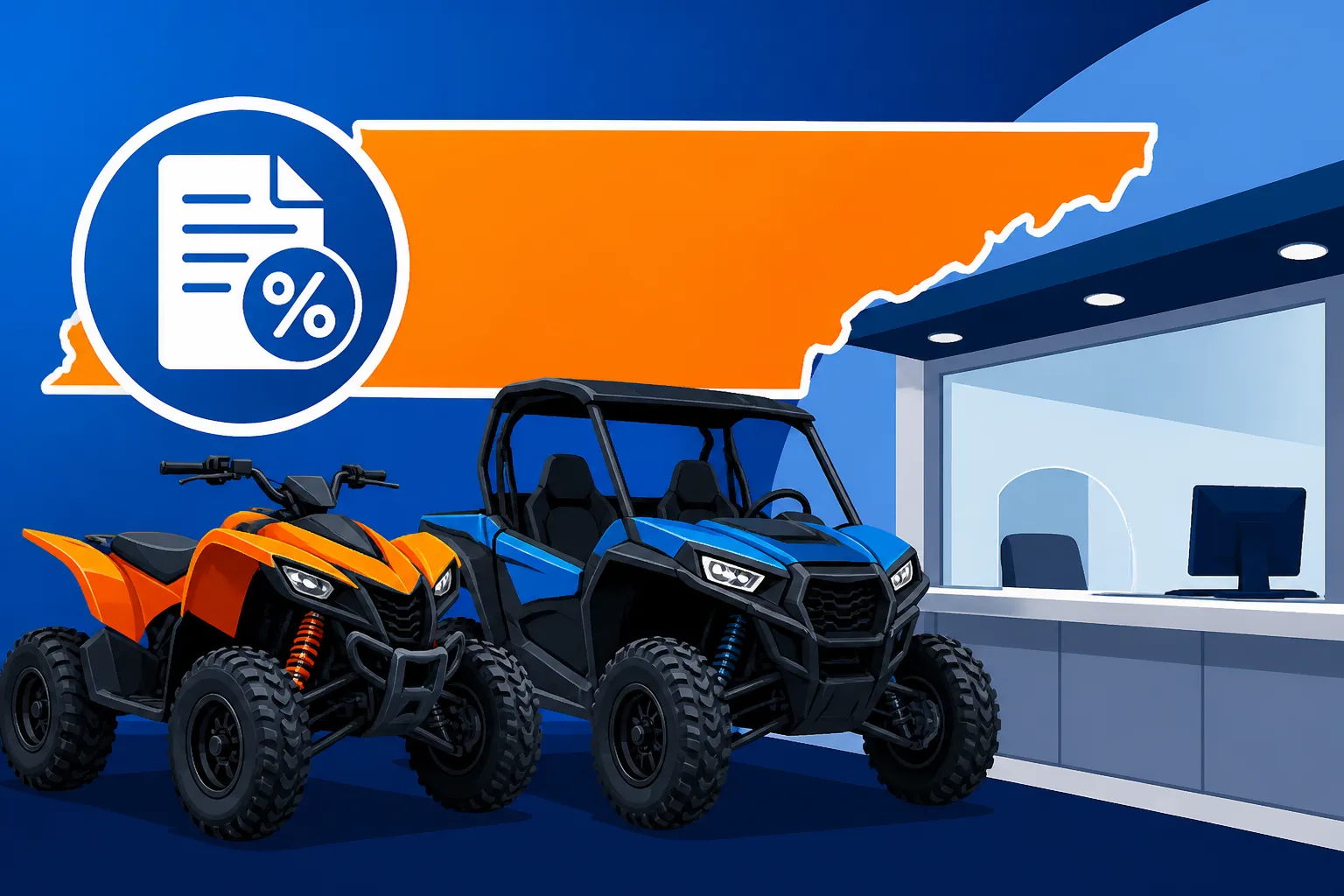
Buying an ATV or UTV in Tennessee, especially from a private seller, often comes with a bit of a cloud of confusion, and not just about the machine's condition. Many folks find themselves scratching their heads over what's actually due at the county clerk's office when it comes to sales tax. This guide is here to clear the air, walking you through exactly how sales tax on your off-road pride and joy is handled at the title counter in Tennessee.
The Core Principle of Sales Tax on Your OHV in Tennessee
Let's cut right to it: Tennessee charges sales tax on the purchase of off-highway vehicles (OHVs), and that includes ATVs and UTVs, whether they're brand new from a dealer or a well-loved used machine bought from a neighbor down the road. This isn't a surprise to folks buying new, but it often catches used buyers off guard.
Why Sales Tax Applies to Off-Road Machines
It's a common misconception that because an ATV or UTV isn't "street legal" in the same way a car is, it might be exempt from sales tax. Unfortunately, that's just not the case here in the Volunteer State. In Tennessee, OHVs are considered tangible personal property, much like any other vehicle you'd purchase. The state sees this as a taxable transaction, regardless of whether you're planning to tear up the trails at Windrock or just use it to haul feed around your farm in rural Scott County.
The purpose behind this is straightforward: revenue generation for the state. While the OHV might not be cruising down I-40, it's still an asset being transferred, and the state collects a percentage of that transaction. This is a statewide mandate, meaning the rules for sales tax are consistent whether you're in East Tennessee, Middle Tennessee, or West Tennessee. You might pay different local option sales taxes on other goods, but for vehicle transactions at the title counter, the state rate is what applies, plus any applicable local sales tax collected by the county. It's a fundamental part of the state's taxation structure, ensuring that transactions involving significant purchases contribute to public services.
The Role of the County Clerk in Tax Collection
When you purchase an OHV, you'll eventually make your way to your local county clerk's office to [Titling an OHV in Tennessee] and get your [Tennessee's TDR Sticker Explained]. It's at this very counter that the sales tax collection happens. Many people think of the county clerk as purely a local government entity, but in this specific instance, they're acting as an agent for the Tennessee Department of Revenue. They process the title paperwork, collect the various fees, and yes, they also collect the sales tax on behalf of the state.
This setup helps streamline the process for you, the buyer. Instead of having to go to one office for your title and another for your tax payment, it's all handled in one fell swoop. The clerk's office calculates the amount due, collects it along with other fees like the [Tennessee County Clerk OHV Fee], and then remits that sales tax money to the state. This is why you'll find the process remarkably similar, regardless of whether you're titling your machine at the Anderson County clerk's window near Oliver Springs or at the Campbell County office closer to LaFollette. They're all working under the same state guidelines for sales tax collection, ensuring fairness and consistency across Tennessee.
Determining the Taxable Amount: Purchase Price vs. Fair Market Value
This is where things can get a little tricky, especially for private sales. The core idea is that sales tax is based on the purchase price of your OHV. However, Tennessee has provisions in place to ensure that the stated purchase price is realistic and fair.
When Your Bill of Sale Sets the Price
In an ideal world, the amount you declare on your bill of sale is exactly what you paid, and that's what the sales tax is calculated on. This is usually the case when you buy a new or used machine from a licensed dealer. They'll provide you with a detailed bill of sale showing the purchase price, and the county clerk will use that figure directly.
For private sales, a properly executed bill of sale is absolutely crucial. This document should clearly state the buyer's name, seller's name, the OHV's vehicle identification number (VIN), make, model, year, and, most importantly, the agreed-upon purchase price. Without a clear and accurate bill of sale, the clerk's office might not have sufficient documentation to process your title, or they might question the value. Using a reliable template from a service like LawDepot can ensure you have all the necessary fields covered, protecting both you and the seller. A thorough [A Tennessee Bill of Sale for an OHV] is your best friend in this process, providing concrete evidence of the transaction terms.
The "Fair Market Value" Safety Net for the State
Here's a common point of contention and frustration for many buyers. What if you bought an older ATV for a steal, say for only $500, but the county clerk looks up the make and model and finds its average retail value is closer to $2,500? In Tennessee, clerks have the authority to refer to valuation guides (like NADA or other recognized industry guides) to determine the fair market value of the OHV. If the declared purchase price on your bill of sale is significantly lower than this established fair market value, the clerk might assess the sales tax based on that higher, fair market value.
This rule is in place to prevent people from declaring an artificially low purchase price to avoid paying their full share of sales tax. While it can feel unfair if you genuinely got a great deal or if the machine needs extensive repairs, the state's position is that the tax should reflect the vehicle's true worth. It's designed to close loopholes and ensure equitable tax collection across all transactions. So, even if you paid next to nothing for a fixer-upper, be prepared that the county clerk might have a different idea of its taxable value. This often means paying tax on more than you actually shelled out, which can be a bitter pill to swallow.
Gifts, Trades, and Other Unique Scenarios
Sales tax isn't always cut and dry. There are a few unique situations that come up:
- Gifts: If an OHV is truly gifted to you – meaning no money exchanged hands – then there is no sales tax due. However, you'll still need to provide an affidavit of gift or similar documentation to the county clerk to prove it was a gift, along with the previous owner's title. You'll still have to pay the standard titling fees, but the sales tax portion won't apply. This often happens within families, like a parent gifting a youth machine to their child, which ties into [Tennessee Titles for a Youth Machine].
- Trades: When you trade in an old OHV towards the purchase of a new one, you typically only pay sales tax on the difference between the trade-in value and the purchase price of the new machine. For example, if you buy a new UTV for $15,000 and trade in your old ATV for $5,000, you'll pay sales tax on $10,000. It's crucial that your bill of sale from the dealer clearly itemizes the trade-in value to accurately reflect this.
- Inherited Machines: When you inherit an OHV, you are not subject to sales tax on the value of the machine itself. However, you will still need to follow the proper procedures for [Titling an Inherited Machine in Tennessee], which involves presenting legal documents like a death certificate, will, or affidavit of heirship. Again, titling fees will apply, but the sales tax typically won't.
Each of these scenarios requires specific documentation to substantiate the claim, so it's always best to be over-prepared rather than under-prepared when you head to the clerk's office.
Navigating the Payment Process at the Title Counter
Once you understand how the sales tax amount is determined, the next step is actually paying it. The process is usually quite efficient at the county clerk's office, but knowing what to expect can save you time and hassle.
What You'll Need to Bring
To successfully title your OHV and pay all associated fees and taxes, you'll need a collection of crucial documents and payment. Missing even one piece of paper can lead to a frustrating delay. Here's a rundown of what to have ready:
- Original Title: If you're buying a used machine that already has a Tennessee title, the seller should sign it over to you. If it's a new machine, you'll have the Manufacturer's Statement of Origin (MSO) or Manufacturer's Certificate of Origin (MCO). If you're bringing an OHV in from out-of-state, bring its original out-of-state title.
- Bill of Sale: This document, whether from a dealer or a private seller, is paramount. As discussed, it establishes the purchase price for sales tax calculation. Make sure it's complete, legible, and includes all required information, including the VIN. A template from LawDepot can be invaluable here for private sales.
- Proof of Identity: Your valid driver's license or other government-issued photo ID.
- Proof of Residency: Although often covered by your ID, sometimes additional proof like a utility bill might be requested, especially if your ID address is new or different.
- Payment: Be prepared to cover the total cost, which includes the sales tax, the state titling fee, the [Tennessee County Clerk OHV Fee], and potentially an [Tennessee's $11 Lien Fee] if you're financing your purchase.
Having all these documents organized will make your visit to the county clerk's office much smoother, whether you're in Sevier County preparing for a mountain adventure or in Lauderdale County for a ride along the river. This comprehensive set of documents is key for [Tennessee OHV Title Paperwork].
Accepted Payment Methods
Most Tennessee county clerk offices are equipped to handle various forms of payment. However, it's always a good idea to check with your specific county clerk's office beforehand, especially if you're dealing with a large sum for an expensive OHV. Generally, you can expect the following:
- Cash: Always accepted, but be mindful of carrying large amounts.
- Checks: Personal checks are usually accepted, but sometimes there might be a waiting period before the title is fully processed if they need to clear. Cashier's checks or money orders are generally preferred for larger amounts or for ensuring immediate processing.
- Credit/Debit Cards: Most offices accept major credit and debit cards. Be aware that a processing fee (often a percentage of the total transaction) might be added when using a card. This fee is usually imposed by the card processor, not the county itself.
Knowing their preferred or accepted methods can save you a trip to the ATM or a surprising card processing fee. Some smaller, rural county offices might have more limited options than larger metropolitan ones.
Paying Tax on an Out-of-State Purchase
Bringing an OHV into Tennessee that you purchased in another state? You're still on the hook for Tennessee sales tax, with one important caveat. When you go to [Buying an Out-of-State Machine for Tennessee], you'll need to present your out-of-state title and bill of sale.
If you can prove that you already paid a sales tax in the state where you bought the OHV, Tennessee will typically credit you for that amount. For example, if you paid 5% sales tax in Georgia, and Tennessee's rate is 7%, you'd only owe the remaining 2% to Tennessee. If you paid a higher rate in the other state, you generally won't get a refund, but you won't owe any additional tax to Tennessee. However, if you purchased the OHV in a state that has no sales tax, or if you simply didn't pay any sales tax on the transaction there, then you will be responsible for the full Tennessee sales tax rate when you title it here. This reciprocity principle is crucial for ensuring fair taxation across state lines and is part of the overall cost of [Tennessee OHV Title Cost].
Common Misconceptions and Exemptions
The world of sales tax can be rife with misunderstandings. Let's tackle some of the most common ones specifically related to OHVs in Tennessee.
"It's Used, So No Tax, Right?"
This is perhaps the biggest and most common misunderstanding among buyers, and it leads to a lot of surprised faces at the county clerk's window. Many states do not charge sales tax on private party sales of used vehicles, cars included. However, Tennessee is different. In Tennessee, sales tax is absolutely due on the purchase of a used OHV from a private party when you go to title it.
This means if you buy a used side-by-side from someone in Fentress County, you will pay sales tax on the purchase price (or fair market value) just as if you bought it new from a dealer. This often catches buyers off guard, especially those who've moved from states with different rules. It's a crucial distinction to remember and budget for when you're looking at a used machine, as that sales tax can add a significant amount to your overall cost, particularly on higher-value machines. The state doesn't differentiate between new or used when it comes to the sales tax on the initial transfer of ownership for titling purposes.
Agricultural Use and Other Exemptions
While the general rule is that sales tax applies, there are very specific, limited exemptions. The most commonly inquired-about exemption for OHVs is for bona fide agricultural use. If your ATV or UTV is primarily used for farming, such as hauling feed, checking fences, or transporting tools on your farm, it might qualify for a sales tax exemption.
However, this isn't a blanket exemption, and recreational use will typically disqualify it. To claim this exemption, you'll likely need to complete a specific affidavit at the county clerk's office, attesting to its dedicated agricultural purpose. The state takes these exemptions seriously, and misrepresenting the use can lead to penalties. It's important to understand that "agricultural use" is narrowly defined; occasionally riding your ATV on a dirt track on your farmland for fun probably won't cut it. For the vast majority of recreational riders, this exemption won't apply. Always check with your local county clerk or the Tennessee Department of Revenue for the most current requirements for such exemptions.
No Sales Tax on a Sticker, Just the Title
Another point of confusion sometimes arises around the costs associated with getting your OHV ready for the trails. When you pay for your [Tennessee's TDR Sticker Explained], that fee itself is not subject to sales tax. The sticker is essentially a permit proving your machine has been properly titled in Tennessee. It's a flat fee, not a percentage-based tax on the value of the OHV.
The sales tax is levied on the purchase price of the OHV itself, as part of the titling process. The sticker fee, along with other administrative charges like the county clerk's processing fee, are separate line items you pay at the same time. Think of it this way: you pay sales tax on the machine you bought, and then you pay a separate, fixed fee to get the sticker that verifies you own a properly titled machine in Tennessee. The sticker is a simple identifier, and its cost is part of the [Tennessee OHV Title Cost], but it's distinct from the sales tax.
What Happens If You Don't Pay or Underpay?
Ignoring sales tax or trying to skirt the rules can lead to more headaches and expenses down the road. Tennessee has clear guidelines, and there are consequences for non-compliance.
Delayed Titling and Penalties
When you purchase an OHV, Tennessee law typically gives you a certain amount of time – often 30 days from the date of purchase – to title it in your name. During this process, you are required to pay the sales tax. If you fail to title your OHV within this timeframe, or if you go to title it and refuse to pay the assessed sales tax, several things can happen:
- Delayed Title and Sticker: You won't receive your official [Tennessee OHV Title] or the crucial [Why the Tennessee Sticker Cannot Be Renewed] if you don't complete the full titling process, which includes paying sales tax. This means your machine won't be legally recognized as titled in your name, which could cause issues if you're ever stopped or if you try to sell it later.
- Late Penalties: Tennessee imposes penalties for late payment of sales tax and late titling. These penalties typically accrue from the date of purchase. While I can't provide specific figures, these charges can add up, making the initial tax burden significantly higher. It's always cheaper to pay on time than to face accumulated penalties. This is part of avoiding [Tennessee Fines for an Untitled OHV].
- Interest: In addition to penalties, the state may also charge interest on the unpaid sales tax amount from the date it was originally due.
It's truly in your best interest to handle the titling and sales tax payment promptly after your purchase. Ignoring it only makes the situation more complicated and expensive.
Potential Audits and Further Action
While it might seem unlikely for an individual ATV or UTV purchase, the Tennessee Department of Revenue does have the authority to audit transactions. If for some reason the state believes that sales tax was intentionally underpaid or evaded on an OHV purchase, they can investigate. This could involve reviewing your bill of sale, comparing it to valuation guides, and contacting you for clarification or further documentation.
If an audit reveals that sales tax was indeed underpaid, you would be liable for the original sales tax amount, plus any accrued penalties and interest. In extreme cases of deliberate fraud, more severe legal action could be pursued. This is another reason why maintaining accurate and honest documentation, like a well-structured bill of sale (which a service like LawDepot can help you create), is so vital. It provides a clear paper trail and protects you from potential scrutiny. The state wants its revenue, and while they understand honest mistakes, intentional evasion is met with corrective action.
Here's a quick comparison of how sales tax might be applied in different OHV purchase scenarios:
| Scenario | Sales Tax Basis | Required Documentation | Key Consideration |
|---|---|---|---|
| New OHV (Dealer Purchase) | Declared Purchase Price on Dealer Bill of Sale (plus any applicable local sales tax) | Dealer Bill of Sale, MSO/MCO | Dealer usually handles the paperwork and collects tax upfront. |
| Used OHV (Private Sale) | Declared Purchase Price or Fair Market Value (whichever is higher, plus local sales tax) | Bill of Sale (from seller), Previous Title, VIN | Clerk may use valuation guide if declared price is suspiciously low. |
| OHV from Out-of-State | Declared Purchase Price or Fair Market Value (minus any sales tax paid in prior state, plus local sales tax) | Bill of Sale, Out-of-State Title, Proof of Sales Tax Paid | Proof of sales tax paid in prior state may reduce or eliminate TN tax liability. |
| Gifted OHV | No Sales Tax | Affidavit of Gift, Previous Title, Donor/Recipient IDs | Still requires [Titling an Inherited Machine in Tennessee] and payment of fees. |
| Trade-In Scenario | Tax on the difference between the trade-in value and the new OHV's purchase price | Itemized Bill of Sale from dealer showing trade details, MSO/MCO | Ensure trade-in value is clearly documented by the dealer. |
Understanding Tennessee's approach to sales tax at the title counter for your ATV or UTV is crucial for a smooth and stress-free ownership experience. Don't let the process intimidate you; being prepared with the right documents and knowledge is half the battle.
Disclaimer
This article is for general informational purposes only and does not constitute professional advice. Laws, prices and regulations vary by location and change over time. Consult a qualified professional for guidance on your specific situation.