2,500 Pounds and 80 Inches
It can be incredibly confusing to navigate the world of off-highway vehicles (OHVs) in Tennessee, especially when you encounter specific measurements like "2,500 pounds and 80 inches." Many riders scratch their heads trying to figure out if these numbers even apply to their machine or why they matter so much. This guide is here to untangle the mystery behind these critical dimensions, explaining what they mean for your ATV or UTV's classification and, ultimately, how it impacts titling in the Volunteer State.
Understanding Tennessee's Off-Highway Vehicle Categories
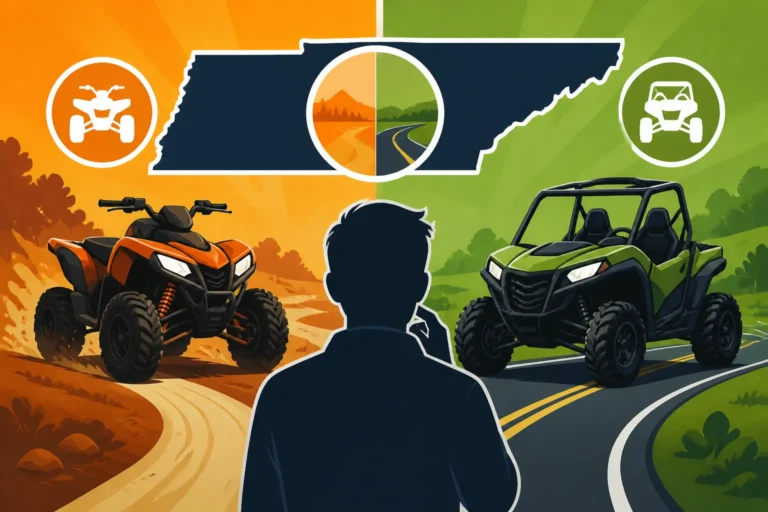
Tennessee law has a way of classifying off-highway vehicles that, while seemingly straightforward, can catch even seasoned riders off guard. The distinctions made by the state are crucial because they determine everything from how your machine is titled to whether it can legally operate on certain roads. It's not just about having a cool ride; it's about understanding where your machine fits into the legal landscape.
The Basics of Class I OHVs
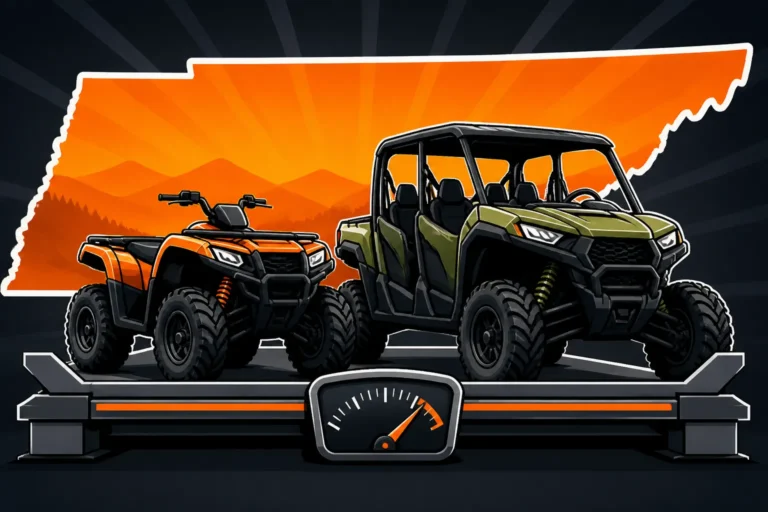
When you think of a typical ATV or a smaller side-by-side, you're likely thinking about what Tennessee defines as a Class I OHV. These are the machines that most folks are familiar with, built for recreational use on trails and off-road environments. The key to being a Class I OHV in Tennessee hinges on specific size and weight limitations. Your machine must weigh 2,500 pounds or less and be 80 inches or less in width. Think about a standard four-wheeler or a compact two-seat UTV; these generally fall comfortably within these parameters.
These limits aren't arbitrary; they're designed to categorize machines that typically have a certain footprint and impact on trails and other shared spaces. Most manufacturers design their ATVs to meet these kinds of specifications, making them widely accessible and easily classified. When you head to the county clerk's office for [Titling an OHV in Tennessee], the first thing they'll likely consider is whether your machine meets [Tennessee's Class I OHV Definition]. This classification makes the titling process relatively smooth, as it's the most common type of OHV.
Delving into Class II OHVs
Then there's the Class II OHV, a category that often includes larger, more specialized, or sometimes even custom-built machines. A vehicle is considered a Class II OHV if it exceeds either the 2,500-pound weight limit or the 80-inch width limit, or both. This means if your UTV weighs 2,600 pounds but is only 70 inches wide, it's a Class II. Likewise, if it weighs 2,000 pounds but measures 82 inches across, it's also a Class II. This distinction is vital because it separates the smaller, more agile machines from the larger, heavier ones that might have different operational characteristics or require different infrastructure.
Examples of Class II OHVs often include bigger utility task vehicles (UTVs) designed for multiple passengers or heavy hauling, specialized rock crawlers, or even some [Sand Rails Under Tennessee Class II]. The legislative intent behind creating this separate class was likely to acknowledge the growing diversity in OHV design and to ensure that larger vehicles are appropriately categorized and regulated. For owners of these robust machines, understanding [Tennessee's Class II OHV Definition] is crucial. While the titling process itself is similar to Class I, the classification ensures that the state has an accurate record of the machine's capabilities, which can be important for future legislation or specific use restrictions.
The Critical Impact of the 2,500 Pound Weight Limit
The 2,500-pound weight limit is one of the foundational criteria Tennessee uses to classify an OHV. It's a hard line in the sand, and crossing it immediately places your machine into a different category, even if it's otherwise compact. For many riders, this weight limit can be a source of confusion, especially with the wide array of accessories and modifications available today.
Gross Vehicle Weight Rating GVWR vs. Actual Weight
When we talk about the 2,500-pound weight limit, it's important to clarify what "weight" Tennessee is generally referring to. Most often, this refers to the unladen weight or curb weight of the vehicle, which is its weight as manufactured, without passengers, cargo, or additional equipment. However, some interpretations might lean towards the Gross Vehicle Weight Rating (GVWR) – the maximum operating weight specified by the manufacturer, which includes the vehicle itself plus its maximum load capacity. In Tennessee's OHV statutes, the focus is typically on the inherent weight of the machine itself. For most county clerks, they'll be looking at the weight listed on your Manufacturer's Statement of Origin (MSO) or previous title.
This distinction is crucial because accessorizing your machine can add significant pounds. A winch, a heavy-duty bumper, a full roll cage, or even a robust sound system can easily push a machine that was originally just under the 2,500-pound mark over the limit. For owners, this means staying aware of their machine's factory specifications and any substantial additions. If your machine's MSO or title indicates a weight that's close to the threshold, it's wise to be absolutely sure of its classification.
Why Weight Matters for Titling and Road Use
The weight of your OHV directly dictates its classification, which then influences the titling process. If your machine is documented as being over 2,500 pounds, it simply cannot be titled as a Class I OHV. It immediately falls into the Class II category. This isn't a punitive measure, but rather a way for the state to accurately track the types of off-highway vehicles operating within its borders. While the actual titling fees might not differ significantly based on class – you'll still pay the standard state title fee and the county clerk's fee, like [Tennessee's $8.50 County Clerk Fee] – the classification itself is important for identification and statistical purposes.
Beyond titling, understanding your machine's classification based on weight can also have indirect implications for how and where you can legally ride. While this guide primarily focuses on titling, it's worth noting that some local ordinances or trail systems might have specific rules for larger, heavier machines. Knowing your vehicle's class from the outset helps you plan your adventures and ensures you're compliant with all relevant regulations. It's about more than just a piece of paper; it's about correctly identifying your vehicle within [Tennessee's Four Vehicle Categories] to ensure smooth ownership and operation.
The Significance of the 80-Inch Width Measurement
Just like the weight limit, the 80-inch width measurement serves as another key gatekeeper for Tennessee's OHV classification system. This particular dimension is often where many modern UTVs, especially multi-passenger models, find themselves nudged from Class I into Class II. It's a measurement that's easy to overlook but critical to verify.
Measuring Your Machine Accurately
When determining your machine's width for classification, you need to measure from the widest point, usually from the outermost edge of one tire to the outermost edge of the other, including any fender flares or accessories that permanently extend beyond the main body of the vehicle. It's not just the frame or the cab; it's the absolute widest span. This can be tricky, as custom wheels with different offsets, aftermarket fender extensions, or even certain mirrors can push a machine over the 80-inch threshold without the owner realizing it.
A good practice is to grab a tape measure and physically check your vehicle, especially if you've made modifications or if its factory width is close to the limit. Imagine you're standing directly in front or behind your machine; you're looking for the total width it occupies. If you're planning to buy a used machine, especially something like a [Does a Four-Seat UTV Still Count as Class I?], make sure to either measure it yourself or get confirmation of its exact width from the seller. Accuracy here prevents issues down the road when you go to [Titling at a Tennessee County Clerk] and ensures your paperwork aligns with your vehicle's physical reality.
Width and Its Role in Classification and Operations
Exceeding the 80-inch width limit, much like exceeding the 2,500-pound weight limit, instantly reclassifies your machine as a Class II OHV. This is a non-negotiable aspect of Tennessee law. If your side-by-side rolls in at 81 inches wide, it's a Class II, regardless of its weight. This distinction is particularly relevant for the ever-popular UTV market, where wider, more stable platforms are common for trail riding and utility work.
While the immediate impact is on titling, the long-term implications of width can extend to where you can actually ride. Some trails or off-road parks, particularly those with narrow gates or tight passages, might have their own width restrictions. Knowing your vehicle is a Class II due to its width means you're informed about its capabilities and potential limitations before you even leave your driveway. For titling purposes, the county clerk will record this classification based on the information provided on the MSO or previous title, solidifying your machine's identity as a Class II OHV in the state's records.
Navigating Titling with These Specifications
Understanding the 2,500-pound and 80-inch rules is one thing, but translating that knowledge into a successful titling process is where the rubber meets the road. The documentation you bring to the county clerk's office is paramount, as it's the basis for your vehicle's official classification.
Paperwork and the County Clerk's Role
When you arrive at a Tennessee county clerk's office to title your OHV, the information about its weight and width will typically come from the Manufacturer's Statement of Origin (MSO) for a new vehicle, or the existing title if you're buying a used machine. These documents are designed to provide the core specifications of your OHV. The MSO, in particular, will list the vehicle's model, year, VIN, and crucial details like its unladen weight and overall dimensions. This is the primary source of truth for the clerk.
The county clerk's role is to accurately record this information and issue a Tennessee title that reflects your machine's correct classification. They are essentially applying the state's definitions to the data presented in your documents. If your MSO clearly states a weight of 2,800 pounds, the clerk will title it as a Class II OHV. They rely on these official documents, so ensuring they are accurate and complete is your responsibility. This is also where things like a [Tennessee Bill of Sale Requirements] come into play, especially for private sales, as they can sometimes supplement or clarify details when an MSO isn't available or a previous title has missing information.
What Happens If Your Machine Crosses a Threshold?
Let's imagine a scenario: You bought a UTV that, according to its MSO, weighed 2,400 pounds and was 78 inches wide – a clear Class I OHV. Over time, you've added a heavy-duty roof, a larger bumper with a winch, and wider off-road tires. Now, your machine might realistically exceed 2,500 pounds or be wider than 80 inches. What then?
The key here is that the classification for titling purposes is generally based on the manufacturer's original specifications as documented on the MSO or initial title. Modifications made after titling usually don't trigger a reclassification of your existing title. However, if you were to sell this highly accessorized machine, the new buyer would still typically title it based on the original MSO or previous title's stated specifications. The machine would technically retain its Class I title designation. But it's important to be realistic about its current dimensions, as exceeding these limits could potentially affect its legal use on certain roads or trails that specifically reference actual vehicle dimensions, not just titled class. It's always best to be transparent in a sale and make sure the new owner understands what they're getting and what its capabilities and restrictions are.
Real-World Scenarios and Practical Advice
Navigating the nuances of OHV classification, especially with the 2,500-pound and 80-inch thresholds, can feel like a maze. But with a bit of foresight and careful attention to detail, you can ensure a smooth titling process and avoid potential headaches.
Buying and Selling Machines Near the Limits
For buyers, especially if you're in the market for a used UTV or a larger ATV, it's crucial to pay close attention to the machine's stated specifications. Don't just assume it's a Class I OHV. Always ask to see the MSO or the current title. If you're [Buying a Used OHV in Tennessee], make sure to [Checking a VIN Before a Tennessee Purchase] and cross-reference the stated weight and width with the manufacturer's original specs if possible. A machine advertised as a Class I might actually be a Class II if it's on the larger side, and knowing this upfront is vital.
For sellers, transparency is your best friend. Clearly communicate your machine's classification to potential buyers. If your UTV is a Class II because it's over 80 inches wide, state that honestly. When drafting a bill of sale, which is highly recommended for any private transaction, be sure to include the vehicle's VIN, make, model, year, and its stated weight and width. Services like LawDepot can provide templates for a comprehensive bill of sale that ensures all necessary details are covered, protecting both you and the buyer. A well-documented sale helps prevent disputes later regarding the machine's classification or specifications.
Ensuring Compliance and Avoiding Pitfalls
The simplest way to ensure you're compliant with Tennessee's OHV classification rules is to know your machine inside and out. Always keep your Manufacturer's Statement of Origin or your vehicle's title handy, as these documents are the definitive source for its official specifications. If you've modified your machine with accessories that significantly alter its weight or width, while this might not change its titled class, be aware of how those changes might affect its actual footprint.
If you're ever in doubt about your machine's classification or the titling process, don't hesitate to reach out to your local county clerk's office. They are the experts in processing these documents and can provide specific guidance based on your vehicle's details. Understanding [Why the Class Matters on a Tennessee County Road] is essential, even if you primarily ride off-road, as it provides a clearer picture of your OHV's legal standing. By being proactive and informed, you can enjoy your machine without the worry of unexpected bureaucratic hurdles.
| Characteristic | Class I OHV | Class II OHV |
|---|---|---|
| Weight Limit | 2,500 pounds or less | Exceeds 2,500 pounds |
| Width Limit | 80 inches or less | Exceeds 80 inches |
| Common Examples | Most ATVs, smaller 2-seat UTVs | Larger UTVs, 4+ seat UTVs, sand rails |
| Titling Basis | MSO/Title confirms both limits met | MSO/Title indicates one or both limits exceeded |
| Road Use Implication | Specific rules for certain roads | Specific rules for certain roads, often stricter |
| Reference | [Tennessee's Class I OHV Definition] | [Tennessee's Class II OHV Definition] |
Disclaimer
This article is for general informational purposes only and does not constitute professional advice. Laws, prices and regulations vary by location and change over time. Consult a qualified professional for guidance on your specific situation.