North Cumberland Permits That Expired on July 1
A North Cumberland permit bought before July 1 may still be valid, while a permit bought later may not cover riding there. The transition is easy to misunderstand because the new North Cumberland Wildlife Management Area permit is separate from other Tennessee licenses. Here’s how to check whether an older permit still works, what to buy next, and which rules apply on the trails.
Did your North Cumberland permit expire on July 1?
Not necessarily. The date marks a change in which permits are valid for riding on the North Cumberland Wildlife Management Area, not an automatic expiration date for every older permit. According to the Tennessee Wildlife Resources Agency, High Impact Permits and Annual Licenses purchased before July 1, 2026, are honored on NCWMA until the license expires.
That means the key details are when you bought the permit or license and whether it has reached its own expiration. If you purchased a qualifying High Impact Permit or Annual License before the cutoff and it remains valid, TWRA says it continues to be honored on NCWMA through its expiration. You do not need to treat the cutoff itself as the end date for that qualifying permit.
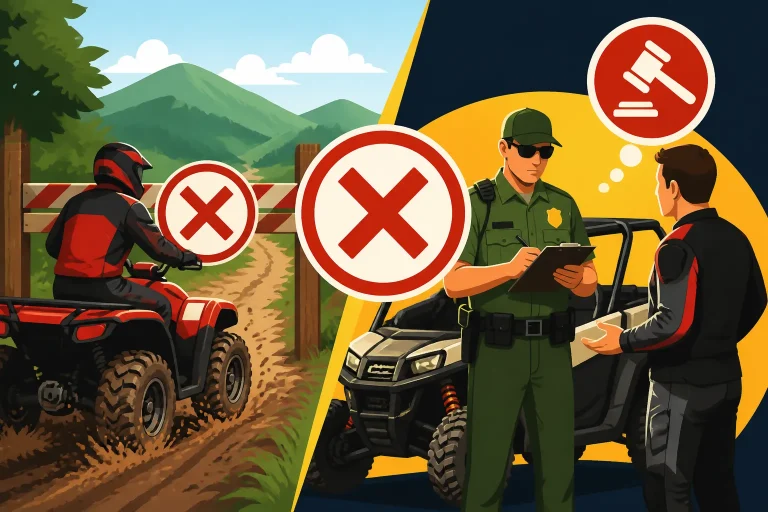
The other side of the transition matters just as much: according to TWRA, High Impact Permits and Licenses purchased on or after July 1, 2026, are not valid for riding on NCWMA. A current license may still have a use elsewhere, but it does not replace the separate NCWMA OHV riding permit for this area.
| What you have | Does it cover NCWMA riding? |
|---|---|
| A High Impact Permit or Annual License bought before the cutoff and still valid | TWRA says it is honored until that license expires. |
| A High Impact Permit or Annual License bought on or after the cutoff | TWRA says it is not valid for riding on NCWMA. |
| A current Annual or Lifetime Sportsman license | It does not include the NCWMA OHV riding permit, according to TWRA. |
| A qualifying Sportsman license plus the Sportsman Supplemental Annual OHV Permit | TWRA says the supplemental permit provides an option for eligible license holders. |
| A permit for a different riding area or private park | Do not assume it works on NCWMA; check the permit’s stated area and TWRA’s current rules. |
If your permit was purchased before the cutoff, check its expiration rather than assuming it became invalid on July 1. If you bought it on or after the cutoff, plan on obtaining the NCWMA permit that fits your trip. Keep the purchase record and permit details available so you can verify them if there is uncertainty at the trailhead.
For background on the change, see Why Old High Impact Permits Expired. If you’re comparing the newer permit options, North Cumberland OHV Permit Cost explains the categories and Why Tennessee Has No Statewide Trail Sticker helps distinguish trail permits from vehicle paperwork.
Which permit should you buy now?
For riding on NCWMA, start by matching the permit to your residency and how long you plan to ride. TWRA lists the following prices as of November 2026. The agency also says the NCWMA OHV permit is separate from Annual and Lifetime Sportsman licenses.
| Permit | Resident cost | Nonresident cost |
|---|---|---|
| One-day permit | $20 | $50 |
| Three-day permit | $30 | $125 |
| Seven-day permit | $100 | $200 |
| Annual permit | $150 | $300 |
The Sportsman Supplemental Annual OHV Permit costs $40, according to TWRA. It is available to individuals with a valid Annual or Lifetime Sportsman license; it does not mean that the Sportsman license alone covers NCWMA riding. For the commercial option, TWRA lists the Annual NCWMA OHV Guide Permit at $700. It includes the privileges of a standard OHV riding permit.
Choose a permit based on the actual riding area and trip, not just the name of a license you already own. A permit that covers another activity or another designated area may not cover NCWMA. TWRA says riders using other designated wildlife management areas outside NCWMA are still required to obtain the High Impact Habitat Conservation Permit. Check the applicable area’s requirements before assuming one purchase covers more than one place. Does One Permit Cover Every North Cumberland Unit? addresses that question directly.
TWRA says permits are available through its customer portal beginning July 1. Use the agency’s portal to select the NCWMA option and confirm the current purchase process. For help with the online step, see Buying a Permit Through the State Portal. If you’re planning a short visit, Tennessee’s $20 Resident Day Permit and Tennessee’s $50 Nonresident Day Permit offer more detail on day permits; annual options are covered in Tennessee’s $150 Resident Annual OHV Permit and Tennessee’s $300 Nonresident Annual.
A permit is required per vehicle, according to TWRA. It is not a single pass for everyone in a group or for every machine a family brings. Before leaving, confirm that the permit arrangement covers each vehicle you plan to operate, and that an adult with a valid permit will be associated with each vehicle as required.
Who needs to have a permit in the vehicle?
TWRA requires at least one adult per vehicle to possess a valid permit on NCWMA. The permit rule is vehicle-based, so a group should plan vehicle by vehicle rather than assuming one adult’s permit covers the whole party.
There is a specific provision for younger riders: according to TWRA, an individual aged 17 or younger who operates an OHV alone does not need a permit, but must follow the manufacturer’s age limits. That exception does not remove the need to check age suitability, supervision expectations, or other safety requirements for the machine and riding location.
TWRA also says all minors must wear a helmet while riding ATVs. That is separate from the permit question: a rider who does not need a permit under the youth provision still has to comply with applicable safety rules.
A separate rule on TWRA’s information says a special-use permit is required for ATV riders at North Cumberland unless they are properly licensed hunters or are under age 13. Because this special-use permit language is not the same as the newer OHV riding permit categories, don’t assume one exemption automatically settles every requirement. If your trip is connected to hunting, or the rider is a minor, confirm with TWRA which permit and license rules apply to that specific use.
Individuals with a disability license must still purchase an NCWMA OHV riding permit, according to TWRA. Likewise, a highway-legal vehicle does not avoid the trail permit requirement: TWRA says vehicles such as Jeeps and trucks also need the required NC OHV permit when using the trails.
Tour operators and commercial users have another requirement. According to TWRA, anyone receiving compensation for tour guide services or commercial operation of OHVs on NCWMA must obtain the North Cumberland OHV Guide Permit. The agency says the guide permit includes the privileges of a standard riding permit. TWRA also says roadside assistance providers do not need a guide permit.
For a practical pre-trip check, make sure you can answer these questions:
- Is the permit valid for NCWMA, rather than only for another area or activity?
- Was an older qualifying permit bought before the cutoff, and is it still within its validity period?
- Does each vehicle have the required permit coverage?
- Is at least one adult with a valid permit associated with each vehicle, where required?
- If a young person is operating alone, are the manufacturer’s age limits being followed?
- Does a commercial tour or operation require the guide permit?
If any answer is unclear, check directly with TWRA before loading up. One Adult per Vehicle With a Permit provides more detail on the vehicle-based requirement.
What else should riders check before heading out?
A valid permit does not replace the other rules for the area. TWRA describes North Cumberland as a wildlife management area with riding requirements that apply alongside permit rules. Check the trail and property information before your trip, especially if your route crosses different units or you plan to ride during a hunting season. Tennessee Rules for Riding a WMA gives a broader overview of WMA riding.
TWRA sets the area-wide speed limit at 25 mph and says driving an ATV above that speed is considered reckless driving. The agency also requires all off-highway vehicles to have mufflers installed that keep noise output acceptable. A permit is not permission to exceed speed or equipment requirements.
During deer or elk gun and muzzleloader seasons, TWRA requires riders to wear at least 500 square inches of daylight fluorescent orange. During big game seasons, riders must also meet the applicable hunter-orange apparel requirements. If you are carrying a firearm on an ATV, TWRA says it must be unloaded. Riders hunting from or using an ATV also need to follow the applicable license and legal equipment requirements; TWRA identifies shooting from a motorized vehicle as illegal road hunting on its properties.
Check rules for the specific property, not just the general NCWMA permit terms. For example, TWRA says that at Chuck Swan State Forest the main forest road is off limits to ATVs, and that noise output there must not exceed 86 dB measured at 50 feet from the exhaust. The agency recommends the annual Tennessee Hunting & Trapping Guide for regulations that apply to individual properties.
Finally, distinguish a trail permit from vehicle title paperwork. A permit authorizes the relevant use under the applicable land rules; it is not proof that an OHV has been titled. The Tennessee Department of Revenue says a TDR sticker is evidence that a title has been issued for an OHV not registered for road operation, and that these stickers are non-renewable and non-transferable. For more on that separate process, see Why Tennessee Does Not Register Off-Road Machines and A Sticker That Proves a Tennessee Title Exists.
Before you ride, verify that your permit is valid for the area, that it covers the vehicle you will use, and that your group understands the seasonal and property-specific rules. If you are relying on an older permit, its purchase date and expiration determine whether it continues to be honored on NCWMA.
Sources
- Tennessee Department of Revenue — Off Highway Vehicles (checked November 3, 2026)
- Tennessee Wildlife Resources Agency — North Cumberland OHV Riding Area (checked November 3, 2026)
- Tennessee Wildlife Resources Agency — New OHV Permit Requirements to Take Effect July 1, 2026 (checked November 3, 2026)
- Tennessee Wildlife Resources Agency — ATVs: Rules of the Off-road by Paul E. Moore (checked November 3, 2026)
Disclaimer
This article is for general informational purposes only and does not constitute professional advice. Laws, prices and regulations vary by location and change over time. Consult a qualified professional for guidance on your specific situation.