Tennessee Orange Requirements for Riders
If you’re planning an ATV or UTV ride during hunting season, figuring out whether you need orange can be confusing: the answer depends on the season and the property, and orange is separate from your trail permit. Here’s what the Tennessee rule says, how to meet the minimum, and what to check before you ride.
When Tennessee Riders Need Daylight Fluorescent Orange
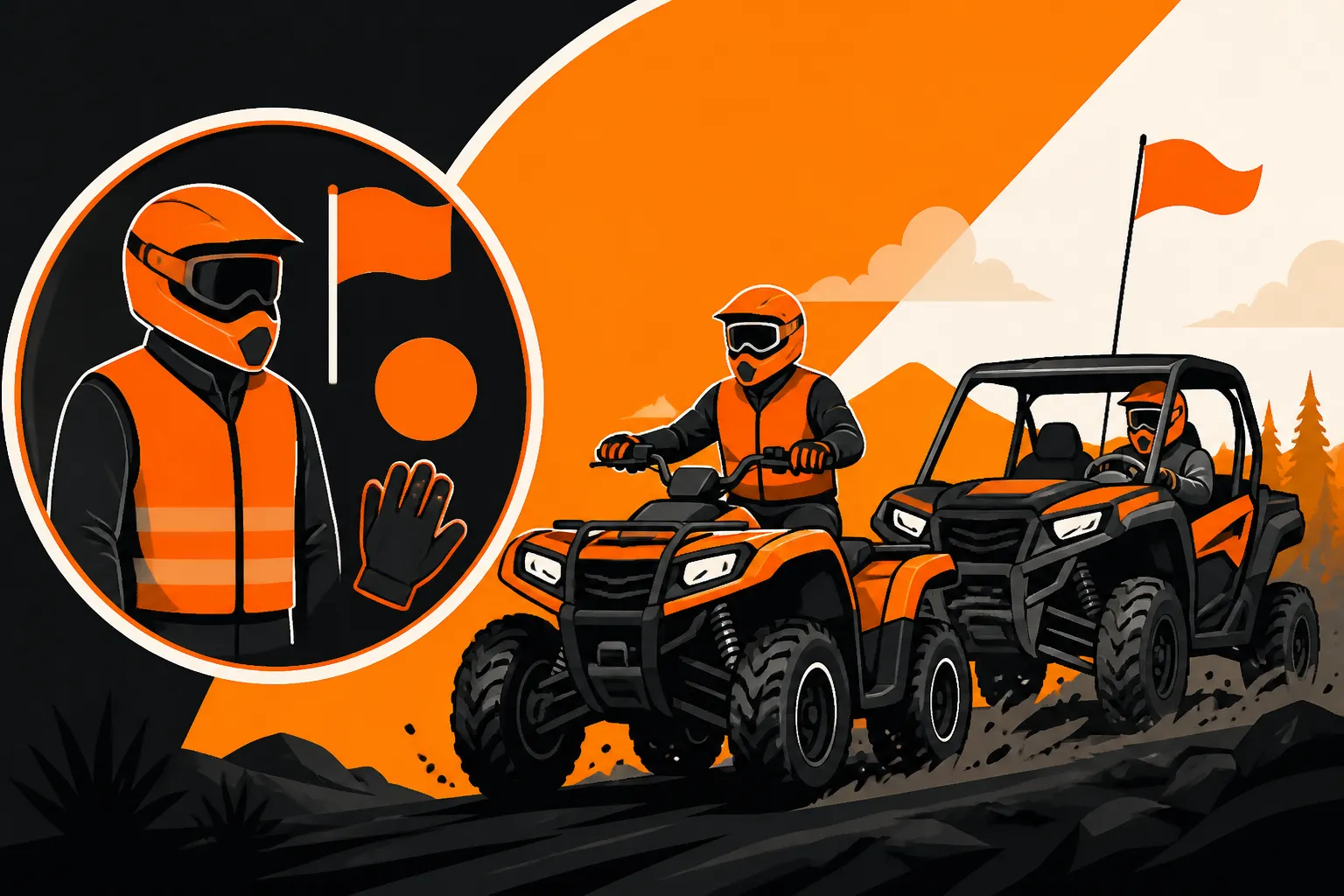
According to the Tennessee Wildlife Resources Agency, users must wear at least 500 square inches of daylight fluorescent orange during deer/elk-gun and muzzleloader seasons. The rule is tied to those seasons; it is not a general statement that riders must wear orange on every ride throughout the year.
The wording matters. The requirement refers to users, not only people who are hunting. If you ride during one of the named seasons, don’t assume you are exempt because you are using a trail for recreation rather than hunting. Check the rules for the specific property you plan to visit, too: regulations can vary by area, and the annual Tennessee Hunting & Trapping Guide is a useful place to check property-specific requirements.
| Situation | What to keep in mind |
|---|---|
| Riding during deer/elk-gun season | The Tennessee Wildlife Resources Agency requires users to wear at least 500 square inches of daylight fluorescent orange. |
| Riding during muzzleloader season | The same minimum orange requirement applies, according to the Tennessee Wildlife Resources Agency. |
| Riding outside the named seasons | The listed orange requirement is tied to deer/elk-gun and muzzleloader seasons. Check the property’s current rules for other requirements. |
| Riding while also hunting | Hunting-season licensing, equipment, and apparel rules may apply in addition to trail rules. |
| Riding on a particular WMA or forest | Check that property’s rules rather than assuming requirements are identical across Tennessee. |
For help understanding the season-specific context, see Tennessee Rules for Riding in Deer Season and Tennessee Trail Seasons and Closures. For property rules on wildlife management areas, Tennessee Rules for Riding a WMA is also relevant.
The safest practical approach is to plan around the stricter requirement if your ride could fall within a named hunting season. Confirm the season dates and the rules for your destination before leaving home. A ride planned as recreation can still take place during a season when orange is required.
What Counts Toward the Orange Minimum
The rule specifies both a minimum area and a type of orange: at least 500 square inches of daylight fluorescent orange. It is not enough to choose something merely described as orange if you cannot confirm that it is the required fluorescent type and provides the required area.
A vest is a straightforward option because it can make orange coverage easy to see, but clothing choice is up to you as long as you meet the requirement. A vest, jacket, or other apparel may work; the important point is to check the actual fluorescent-orange area rather than relying on the garment’s general color or appearance.
A few practical checks can help:
- Check the product description and label. Look for daylight fluorescent orange and information about the area of orange material. If the details are unclear, choose another garment or confirm the measurement with the seller.
- Don’t count on a small accent. Orange trim or a small patch may be visible but does not automatically establish that you have the required area.
- Be cautious with camouflage. A garment that includes orange accents may not provide enough daylight fluorescent orange overall. Check the actual orange coverage.
- Choose apparel that stays in place. Gear that is covered by a pack, folded under a jacket, or difficult to see while riding may be less useful for visibility. Wear the orange as visible outer apparel.
- Recheck worn or modified items. A damaged garment or one altered after purchase may no longer have the coverage you expected.
If you’re shopping online, Amazon may offer orange riding apparel, but don’t rely on a product title or image alone. Confirm that the item is daylight fluorescent orange and that its stated area meets the 500-square-inch minimum. If the listing does not provide enough detail, ask the seller or select a better-documented item.
The rule is about the apparel a user wears, so don’t assume that an orange panel on the ATV or UTV replaces clothing. Likewise, a helmet, machine decal, or other gear is not a safe substitute unless the property’s official instructions specifically say it counts. When there is any doubt about whether your apparel meets the standard, choose clothing with clearly documented fluorescent-orange coverage.
Visibility also depends on how you wear the garment. Keep the orange exposed rather than covered by a dark jacket or riding pack. If weather changes lead you to add a layer, check that you have not concealed most of the required area. These steps do not change the rule; they make it easier to show that you are prepared to follow it.
Orange Is Separate From Permits and Other Riding Rules
Orange apparel and riding permits solve different problems. Wearing orange does not replace a permit, and having the right permit does not satisfy an apparel requirement. Riders should check both before heading to a managed area.
North Cumberland Wildlife Management Area is the only WMA in Tennessee that allows recreational ATV riding outside of use for hunting, according to the Tennessee Wildlife Resources Agency. The agency also says an OHV special use permit is required there unless the rider is a properly licensed hunter or under age 13. These permit exceptions do not remove the seasonal orange requirement. For details on permit coverage, see Does One Permit Cover Every North Cumberland Unit? and Tennessee Trail Permits Explained.
The Tennessee Wildlife Resources Agency states that at least one adult per vehicle must have a valid permit for North Cumberland Wildlife Management Area. The agency also says an individual age 17 or younger who operates an OHV alone does not need a permit, but must follow the manufacturer’s age limits. Because permit eligibility and orange apparel are separate questions, check both rather than treating one as a substitute for the other.
Property rules can also include restrictions that have little to do with orange. For example, the Tennessee Wildlife Resources Agency says all minors must wear a helmet while riding ATVs. It also says firearms transported on ATVs must be unloaded, and shooting from a motorized vehicle on TWRA properties is illegal. If a ride involves transporting a firearm, review Tennessee Rules for Carrying a Firearm on an ATV and the specific destination’s rules.
For other designated wildlife management areas outside North Cumberland, the Tennessee Wildlife Resources Agency says riders are still required to obtain the High Impact Habitat Conservation Permit. Permit rules can change, so check the agency’s current information before relying on an older permit or license. The agency says that High Impact Permits and Annual Licenses purchased before July 1, 2026, will be honored on North Cumberland until they expire; those purchased on or after that date will not be valid for riding there.
A Pre-Ride Check for Hunting-Season Trips
A little preparation can prevent a last-minute problem at the trailhead. Before your trip, confirm the season, destination, apparel, and any permit or property-specific requirements. If your plans change, check again: a different trail area or date may mean different rules.
Use this checklist:
- Identify your riding area. Confirm the exact WMA, forest, park, or other property where you plan to ride. Don’t assume a rule for one location applies everywhere.
- Check whether your ride falls during a named season. The Tennessee Wildlife Resources Agency’s orange minimum applies during deer/elk-gun and muzzleloader seasons.
- Confirm your apparel. Make sure it is daylight fluorescent orange and provides at least 500 square inches, as required by the Tennessee Wildlife Resources Agency.
- Keep the orange visible. Wear it where outer layers or riding gear will not hide it.
- Check permits separately. Verify whether your destination requires a permit and whether it is valid for that area and rider.
- Review additional property rules. Look for requirements about helmets, firearms, access, noise, or closed areas that could affect your ride.
If your trip includes hunting, don’t treat the trail rule as a substitute for hunting regulations. The Tennessee Wildlife Resources Agency says riders must be properly licensed for the specific hunting season and carry only legal firearms or archery equipment. During big game seasons, riders must meet hunter-orange apparel requirements. Check the current guide and rules for the property before combining riding with hunting activity.
The basic takeaway is simple: during deer/elk-gun and muzzleloader seasons, wear at least 500 square inches of daylight fluorescent orange. Then check the destination’s current rules and permit requirements separately. That approach helps avoid confusing clothing requirements with access rules and makes it easier to arrive ready for the conditions at the property.
Sources
- Tennessee Wildlife Resources Agency — North Cumberland OHV Riding Area (checked November 3, 2026)
- Tennessee Wildlife Resources Agency — ATVs: Rules of the Off-road by Paul E. Moore (checked November 3, 2026)
Disclaimer
This article is for general informational purposes only and does not constitute professional advice. Laws, prices and regulations vary by location and change over time. Consult a qualified professional for guidance on your specific situation.