Tennessee’s Class I OHV Definition
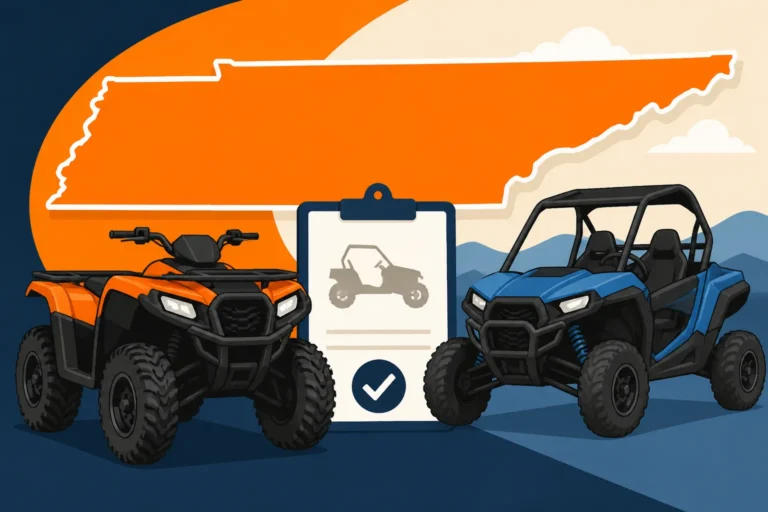
It can be incredibly confusing trying to figure out where your beloved ATV or UTV fits into the legal landscape here in Tennessee. Many folks assume "off-road vehicle" is a catch-all term, but our state actually breaks things down into very specific categories, each with its own set of rules and implications for titling and use. This guide is here to untangle the specifics of Tennessee's Class I Off-Highway Vehicle (OHV) definition, helping you understand exactly what it means for your machine and your riding adventures.
Understanding Tennessee's OHV Landscape
Navigating the rules and regulations for your off-highway vehicle in Tennessee can feel like trying to find your way through a new trail system without a map. There are so many different types of machines, and the state has distinct ways of classifying them. This isn't just bureaucratic jargon; these classifications directly impact how you title your machine, where you can ride it, and what equipment it needs to be considered compliant. It’s important to remember that Tennessee doesn't just see a "four-wheeler" or a "side-by-side"; it sees specific categories that dictate much of your ownership experience.
For many riders, the initial thought might be that as long as it's not a regular car, it's an OHV. However, the nuances in the law create different pathways for various machines. Understanding these foundational categories is the first step toward making sure your machine is properly documented and that you're riding legally, whether you're hitting the trails at Windrock or just using your quad around the farm. It really helps to know which box your machine falls into from the get-go.
The Need for Clear Definitions
The main reason Tennessee, like many states, has such granular definitions for OHVs stems from a need for public safety, environmental protection, and a streamlined titling process. Without these clear categories, it would be a free-for-all on trails and roads, leading to confusion for law enforcement and potential dangers for riders and other outdoor enthusiasts. These definitions are designed to differentiate between machines that are built for different purposes and capabilities.
Think about it: a small, single-rider ATV designed for recreational trail use has very different characteristics and potential impacts than a large, multi-passenger UTV often used for utility work or even modified for slower road use. By defining these differences, the state can apply appropriate regulations. This is why you'll see specific weight limits, width restrictions, and passenger capacities tied to these classifications—they're not arbitrary, but rather a reflection of how the state intends for these machines to be used and managed. This framework also helps in identifying machines for proper titling purposes.
Tennessee's Four Vehicle Categories
Before we dive deep into Class I, it's helpful to briefly understand the broader context of [Tennessee's Four Vehicle Categories]. Our state broadly classifies vehicles, and OHVs fall within some specific sub-categories. You have your standard automobiles and motorcycles, of course, but then there are also distinct classifications for different types of off-road and limited-speed vehicles. This wider view helps us appreciate why a Class I definition is so important within the OHV world.
These categories aren't just for fun; they dictate everything from whether you need a title, to how you pay sales tax, to if a machine is eligible for any limited road use. For instance, low-speed vehicles and medium-speed vehicles have very different criteria and road access than a pure off-highway vehicle, even if they sometimes look similar. It's like having different types of fishing licenses for different kinds of fish; each requires specific attention. This system ensures that machines are used appropriately and that the state can manage resources effectively.
The Official Class I OHV Definition
Alright, let's get down to brass tacks and talk about what Tennessee specifically means when it refers to a Class I Off-Highway Vehicle. This is the definition that will guide whether your ATV or many types of smaller UTVs fall into this category, impacting your titling process and overall legal standing. Understanding these exact parameters is crucial, as misclassification can lead to headaches down the line.
The official definition for a Class I OHV in Tennessee is quite precise, focusing on key physical attributes of the machine. It's designed to capture the essence of what most people commonly think of as an ATV or a smaller, recreational side-by-side. If your machine doesn't quite fit here, it might fall under another category like Class II, which we'll touch on later, or even one of the special "street legal" categories.
Defining Features: Weight, Width, and Passengers
At its core, a Class I OHV is defined by a specific set of physical limitations. To qualify as a Class I OHV in Tennessee, a vehicle must meet the following criteria:
- Weight: It must have an unladen (empty) weight of 2,500 pounds or less. This is a critical measurement, as many modern, larger side-by-sides can easily exceed this limit, pushing them into the Class II category.
- Width: The vehicle's overall width, from its widest point (excluding mirrors), must be 80 inches or less. Again, newer, wider UTVs might push this boundary, so it's essential to measure accurately.
- Passengers: It must be designed by the manufacturer to carry four passengers or less. This often means smaller side-by-sides with two to four seats. If your machine is designed for more, it's definitely not a Class I.
These aren't suggestions; they are hard and fast requirements outlined in Tennessee law. Any machine exceeding even one of these limits will not be considered a Class I OHV, which has significant implications for titling and potential road use. For example, if you have a larger UTV that weighs 2,600 pounds, even if it's only 70 inches wide and has two seats, it immediately falls out of Class I.
The "Unladen Weight" Clarification
The term "unladen weight" is important to understand. It means the weight of the vehicle when it's empty, without any cargo, passengers, or even fuel. This is typically the weight specified by the manufacturer. You're not supposed to add up the weight with your winch, roof, full tank of gas, and tool kit. It's about how the machine rolls off the assembly line. This specification is crucial because it creates a consistent standard for classification across all machines.
For many owners, checking the manufacturer's specifications for their particular model is the easiest way to confirm unladen weight. This information is usually found in the owner's manual or on the manufacturer's website. Trying to weigh it yourself can be tricky and lead to inaccuracies, so relying on official figures is always the best approach. If you're buying a used machine and these specs are hard to find, a bill of sale can be crucial for documenting details, and resources like LawDepot can help you draft a proper one if needed.
Key Characteristics of a Class I OHV
Beyond the official weight, width, and passenger count, Class I OHVs share several other characteristics that help distinguish them in the real world. These aren't necessarily part of the legal definition but are common attributes that make a machine fall into this category and determine how it's used and perceived. From its primary design purpose to its typical engine size, these features paint a clearer picture of what a Class I OHV truly is.
When you're looking at a machine, you can often tell pretty quickly if it's likely a Class I, even before you pull out the tape measure or check the spec sheet. These vehicles are generally built for specific types of off-road recreation or utility, rather than multi-purpose roles that might include significant road travel. This inherent design also guides how they are titled and regulated within the state.
Design Intent: Off-Road Focus
A defining characteristic of Class I OHVs is their primary design intent: they are built for off-road use. This means they are engineered with features like high ground clearance, knobby tires, robust suspension systems, and often a lack of typical on-road safety features like turn signals (though some UTVs may have them for compliance in certain limited road-use scenarios). Their very construction signals that they are meant for dirt, mud, rocks, and trails, not paved highways.
This off-road focus influences everything from their gearing ratios to their brake systems. They are not designed to travel at highway speeds or to be subjected to the rigors of continuous road driving. While certain limited road uses are now permitted in specific areas under new laws, it's always within a very controlled and secondary context. Their true home is the trail, the farm, or the worksite away from public roads, which is why [Why Tennessee Does Not Register Off-Road Machines] for general road use is a concept worth understanding.
Engine Size and Power Output
While the Class I definition doesn't specify an engine size or power output, the limitations on weight and width inherently guide these aspects. Most Class I ATVs and UTVs will feature engines that fit within these parameters, often ranging from smaller youth models up to powerful machines designed for aggressive trail riding or heavy farm work. You'll find everything from 250cc quads to 1000cc side-by-sides in this category.
The engines are typically air-cooled or liquid-cooled, and designed for torque and low-speed power delivery, essential for navigating challenging off-road terrain. The power output is balanced to allow the machine to perform well off-road without exceeding the unladen weight limit. This means that while some Class I machines are incredibly powerful, they are still within the defined physical envelope that distinguishes them from larger utility vehicles or modified trucks.
Common Machines That Qualify as Class I
So, what kinds of machines typically fit this Class I definition? When you think about common ATVs and UTVs you see on the trails or around rural properties, many of them will comfortably fall into this category. It's helpful to visualize these common examples to solidify your understanding of the Class I criteria. Knowing these examples can help you quickly assess whether a machine you're looking to buy or sell will be classified as Class I.
This section will help demystify the classification by giving you real-world examples. It's one thing to read about weight and width; it's another to picture your favorite quad or side-by-side fitting squarely within those parameters. This practical understanding is vital for navigating the titling process, especially if you're [Titling a Side-by-Side in Tennessee] or [Titling a Quad in Tennessee].
All-Terrain Vehicles (ATVs)
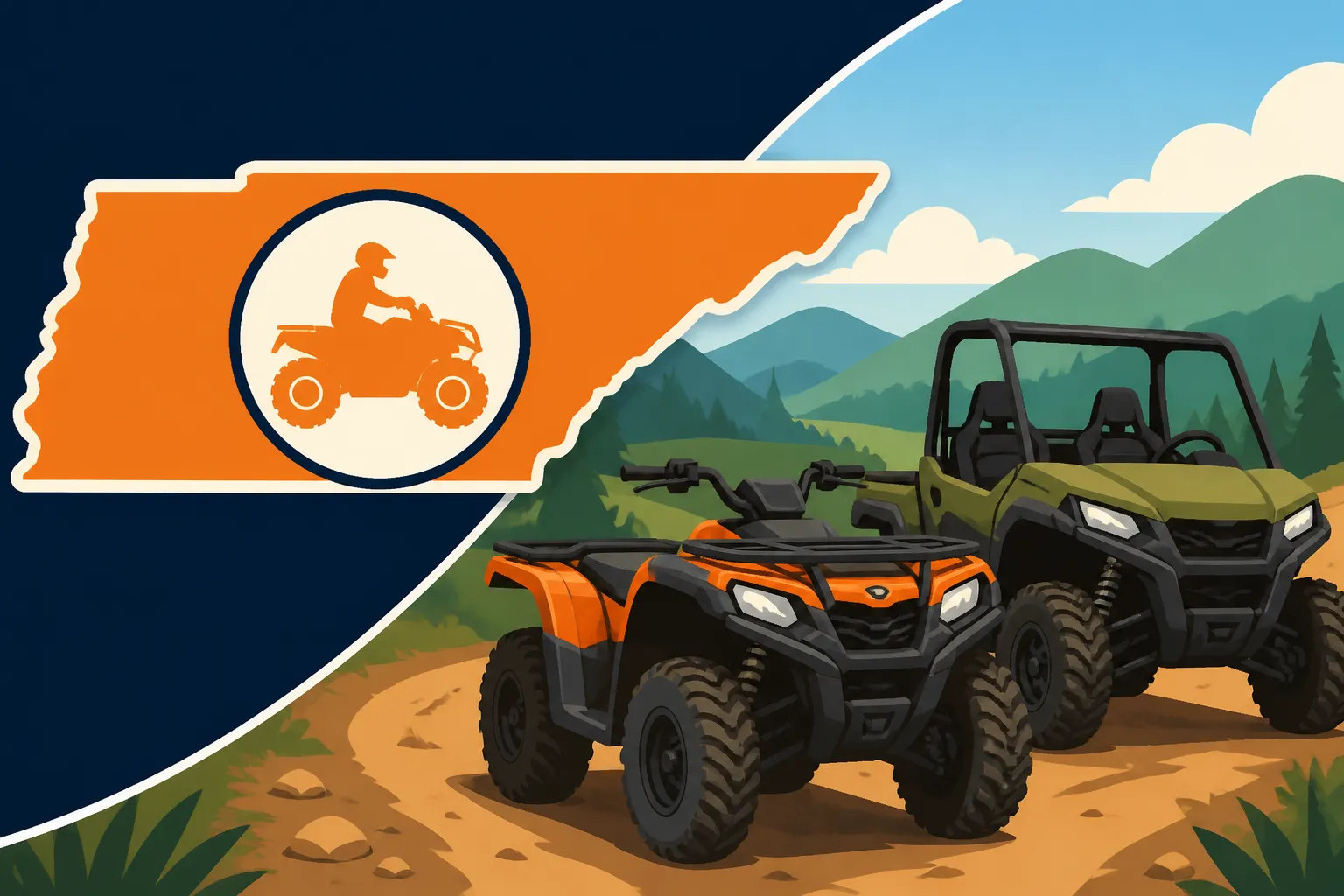
When it comes to Class I, most traditional All-Terrain Vehicles (ATVs) are the quintessential examples. These are the machines you sit astride, typically with handlebars for steering. From smaller youth models to full-sized sport and utility quads, the vast majority of ATVs will fit within the 2,500-pound unladen weight, 80-inch width, and single-rider (or occasionally two-rider) capacity.
Whether you have a Yamaha Grizzly, a Honda Foreman, a Polaris Sportsman, or a Can-Am Outlander, if it’s a typical four-wheel ATV, it's almost certainly a Class I OHV. These machines are designed for agile off-road navigation, often single-person operation, and are the backbone of recreational off-roading. They are built to be nimble and capable on tight trails, making them perfect examples of the Class I definition.
Smaller Side-by-Sides (UTVs)
Many smaller to mid-sized Side-by-Side (SxS) vehicles, also known as Utility Terrain Vehicles (UTVs), also fall into the Class I definition. These are the machines where you sit side-by-side with a passenger, typically with a steering wheel and foot pedals, much like a car. The key here is "smaller to mid-sized." This usually includes two-seat models and many four-seat models.
For instance, machines like the Polaris RZR Trail series, some smaller Can-Am Commander models, or a Kawasaki Teryx often meet the Class I criteria. They are designed for recreational trail riding, light utility work, and often have a bed for hauling small loads. The critical factor is ensuring they don't exceed the 2,500-pound unladen weight or the 80-inch width, and are designed for [Four Passengers on a Tennessee Class I] or less. As UTVs have grown in size, it's become more important than ever to check those specs closely.
Distinguishing Class I from Other OHV Categories
While Class I OHVs cover a broad range of popular off-road machines, it's equally important to understand what they aren't. Tennessee has other vehicle categories that, at first glance, might seem similar but have distinct legal definitions and implications. Misidentifying your vehicle's class can lead to issues with titling, insurance, and knowing where you can legally operate your machine. This comparison is vital for proper compliance.
Knowing the differences helps you avoid common pitfalls. For instance, you wouldn't want to assume your massive new six-seater UTV is a Class I only to find out it's a Class II, which might have different rules for, say, limited road use. The state has gone to great lengths to define these distinctions, and as responsible owners, we need to respect that.
Class I vs. Class II OHVs
The most direct comparison for a Class I OHV is its sibling, the [Tennessee's Class II OHV Definition]. The main differentiator, as you might have guessed, comes down to those critical dimensions we discussed earlier: weight, width, and passenger capacity. If a machine exceeds the Class I limits, it automatically becomes a Class II OHV.
Here's a quick breakdown:
- Class I: Unladen weight 2,500 lbs or less, width 80 inches or less, designed for 4 passengers or less.
- Class II: Exceeds any of the Class I criteria. This means if it weighs over 2,500 lbs, or is wider than 80 inches, or is designed for more than 4 passengers, it's a Class II.
This distinction is important because Class II OHVs, by their very nature of being larger and heavier, often have different considerations regarding where they can be operated, especially concerning any limited road use. [2,500 Pounds and 80 Inches] are the magic numbers that draw the line. Many of the newer, larger, and more powerful UTVs that can carry more people or are built like mini-trucks will fall squarely into the Class II category. Think of your six-seater "crew" models or highly modified dune buggies; these are often Class II.
Class I vs. Low Speed and Medium Speed Vehicles
It's also crucial not to confuse Class I OHVs with Low Speed Vehicles (LSVs) or Medium Speed Vehicles (MSVs). These are entirely separate categories of vehicles that, while sometimes looking like a golf cart or a small UTV, are specifically designed and certified for limited public road use, not primarily for off-road recreation.
- Low Speed Vehicles (LSVs): These are typically golf cart-like vehicles with a top speed between 20 mph and 25 mph. They are registered and titled for road use on roads posted 35 mph or less, and have specific safety equipment requirements (headlights, taillights, turn signals, seatbelts, windshield, VIN). They are not OHVs and are not designed for off-road use.
- Medium Speed Vehicles (MSVs): These are similar but have a top speed between 30 mph and 35 mph. They also require full street-legal equipment and are titled for limited road use.
A Class I OHV, even if it can be modified to meet some road-use equipment standards, is fundamentally an off-road machine. An LSV or MSV is fundamentally a road machine, albeit a slow one. The titling and registration processes are entirely different, and mixing them up can lead to major legal headaches. You'd need a very different kind of bill of sale or titling document for an LSV compared to a Class I OHV, and companies like LawDepot can provide templates tailored for specific vehicle types.
Why the Class I Designation Matters for Riders
Understanding whether your machine is a Class I OHV isn't just about passing a quiz; it has tangible, real-world impacts on how you own and operate your vehicle in Tennessee. From the paperwork you file to the places you can legally ride, this classification forms the bedrock of compliance. Ignoring these distinctions can lead to fines, difficulties in selling your machine, or even legal trouble.
For every enthusiast, ensuring your machine is properly classified means peace of mind and hassle-free enjoyment. It affects everything from how you approach a county clerk to what you need to tell your insurance provider. Let's delve into the practical implications of being a Class I OHV owner in Tennessee.
Titling and Proof of Ownership
Perhaps the most significant impact of the Class I designation is on the titling process. In Tennessee, all Class I OHVs are required to be titled. This isn't the same as registering a car or truck; it's a way to establish legal ownership and a chain of title, which is vital for buying, selling, and proving your machine isn't stolen. Without a title, you'll run into major problems when it comes to any official transaction involving your machine.
When you purchase a new or used Class I OHV, you'll need to apply for a title through your county clerk's office. This title will officially declare your machine as a Class I OHV. The process involves submitting proper paperwork, paying fees, and often providing a bill of sale or previous title. [Titling an OHV in Tennessee] is a mandatory step, and knowing your machine is Class I clarifies exactly which forms and rules apply to you at the title counter.
Limited Road Use and Trail Access
While Class I OHVs are primarily for off-road use, their classification can sometimes impact eligibility for very specific, limited road use. Recent legislative changes in Tennessee have created narrow windows for OHVs to operate on certain public roads, particularly in "adventure tourism districts" or on designated county roads. However, these rules are often very specific to the OHV class.
For example, a Class I OHV might be permitted on certain unpaved county roads if the county commission has approved it by a two-thirds vote, or within specific "adventure tourism" areas under strict conditions, usually with speed, time, and equipment restrictions. A larger Class II OHV might face even tighter restrictions or be barred entirely from certain road types due to its size and weight. Your Class I status means you need to consult the specific local ordinances and state laws that apply to [Why Your Class Decides Your Road Rights] to ensure you're compliant.
Insurance and Valuation
When insuring your Class I OHV, the classification plays a role in how your policy is structured and its cost. Insurance providers need to know exactly what kind of machine you're insuring to assess risk and determine coverage options. A Class I OHV will typically fall under an off-road vehicle policy, distinct from automotive or motorcycle insurance.
Having a Class I title also provides clear documentation for insurance purposes, proving ownership and the vehicle's identity. Furthermore, in the unfortunate event of a theft or total loss, a clear title that defines your machine as a Class I OHV is essential for valuation and processing claims. It ensures everyone is on the same page regarding the type of asset you own.
Paperwork and Practicalities for Class I OHVs
Once you understand what a Class I OHV is, the next step is to know what to do with that information. Owning one isn't just about riding; it's also about managing the paperwork and practical steps that keep you on the right side of the law. This involves everything from where you go to get your title to what documents you need to bring with you. Being prepared makes the process much smoother and less stressful.
Many people find the paperwork aspect daunting, but with a little guidance, it's quite manageable. Knowing the specific requirements for your Class I machine will save you time and frustration, whether you're buying a brand-new side-by-side or passing down an old ATV.
Titling Your Class I OHV at the County Clerk's Office
The primary point of contact for titling your Class I OHV in Tennessee is your local county clerk's office. This is where you'll submit your application, pay any required fees, and eventually receive your official Tennessee title. It's a localized process, which means while the state sets the general rules, the specific experience might vary slightly from one county to the next.
When you go to [Titling at a Tennessee County Clerk], you'll typically need to bring documentation such as the manufacturer's statement of origin (for new machines), a properly endorsed previous title (for used machines), a bill of sale, and proof of identification. The clerk will verify your information and process your application. This is also where you'll pay sales tax if applicable and other associated fees like the [Tennessee's $8.50 County Clerk Fee] and potentially an [Tennessee's $11 Lien Fee] if you financed your purchase.
The Importance of a Bill of Sale
Whether you're buying or selling a Class I OHV, a comprehensive bill of sale is an absolutely critical document. It serves as proof of the transaction, detailing the buyer, seller, date, purchase price, and a clear description of the machine, including its Vehicle Identification Number (VIN). For a buyer, it's a vital piece of evidence needed to apply for a new title. For a seller, it proves you no longer own the machine and are not responsible for it.
A well-drafted [A Tennessee Bill of Sale for an OHV] should clearly state the machine's classification (Class I OHV), its make, model, year, and VIN. While many generic templates exist, ensuring yours includes all necessary details for Tennessee's titling requirements is important. Resources like LawDepot offer legally sound templates that can be customized for your specific transaction, ensuring all the right boxes are checked for a Class I OHV transfer.
What the TDR Sticker Means for Your Class I
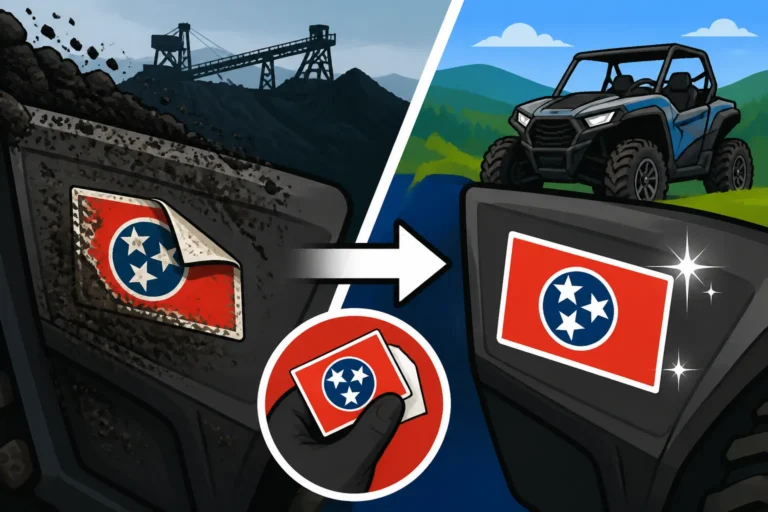
After your Class I OHV is titled, you won't get a traditional license plate like a car. Instead, the Tennessee Department of Revenue (TDR) will issue a small, non-expiring decal—often referred to as the [Tennessee's TDR Sticker Explained]. This sticker is physical proof that your machine has been titled in Tennessee and is in compliance with ownership laws. It's a unique identifier tied to your machine's VIN and your title.
The TDR sticker must be affixed to your Class I OHV in a conspicuous place, as specified by the state. While it isn't a "registration" in the same sense as an automobile plate, it serves as verification of legal ownership. It's important to remember that this sticker is specific to the machine and its titled owner. It cannot be renewed, and it becomes void upon the sale of the machine or if the machine is dismantled. So, every new owner of a Class I OHV must get a fresh title and a new TDR sticker in their name.
Navigating Future Changes and Staying Informed
The world of off-highway vehicle regulations is not static, especially here in Tennessee. With the growing popularity of ATVs and UTVs, and evolving debates around road access and environmental impact, laws can and do change. What holds true today might have subtle modifications next year. As a Class I OHV owner, staying informed is not just recommended; it's essential to ensure you remain compliant and enjoy your riding without unexpected legal snags.
Think of it like staying on top of weather patterns before a big ride; you need to know what's coming to be prepared. Relying on outdated information or simply assuming the rules haven't changed can lead to significant inconvenience, or worse, fines and penalties.
Monitoring Legislative Updates for OHVs
The best way to stay informed is to keep an eye on legislative updates, particularly those related to off-highway vehicles and motor vehicle classifications. Bills are regularly introduced in the Tennessee General Assembly that can impact everything from titling fees to road access rules. Organizations that advocate for OHV riders are often excellent resources for tracking these proposed changes.
Following news from the Tennessee Department of Revenue (TDR), which oversees vehicle titling, and the Tennessee Wildlife Resources Agency (TWRA), which manages many riding areas, can also provide direct information about changes that might affect your Class I OHV. These agencies typically publish updates on their official websites, ensuring that the latest information is readily available to the public.
Local Ordinances and Adventure Tourism Districts
Beyond statewide legislation, local ordinances play a significant role, especially concerning any limited road use for Class I OHVs. Tennessee has seen an increase in "adventure tourism districts" and specific county-by-county decisions regarding OHV access to local roads. What is permissible in one county, like Scott County or Campbell County, might be strictly prohibited in another.
Always check with the specific county or municipality you plan to ride in if you intend to use any public roads. These local rules can be very granular, specifying permitted roads, hours of operation, and even equipment requirements. Understanding [What an Adventure Tourism District Means for Riders] is key if you plan to explore these specific regions where OHV tourism is encouraged. Ignorance of local laws is never an excuse, so a quick call or website check before you load up can save you a world of trouble.
Table: Class I vs. Class II OHV Comparison
To help clarify the differences at a glance, here's a quick comparison between Tennessee's Class I and Class II OHV definitions. This table highlights the critical distinctions that determine which category your off-highway vehicle falls into, and thus how it is treated under state law.
| Feature | Tennessee Class I OHV | Tennessee Class II OHV |
|---|---|---|
| Unladen Weight | 2,500 pounds or less | Greater than 2,500 pounds |
| Overall Width | 80 inches or less (excluding mirrors) | Greater than 80 inches (excluding mirrors) |
| Passenger Count | Designed for 4 passengers or less | Designed for more than 4 passengers |
| Common Examples | Most ATVs, smaller 2-seat and 4-seat UTVs | Larger, heavier UTVs (e.g., 6-seat crew models), sand rails |
| Titling Req. | Mandatory for all machines | Mandatory for all machines |
| Primary Use | Off-road recreation, utility, farm work | Off-road recreation, heavy utility, specialized vehicles |
| Road Use | Very limited; specific local/state designations | Even more limited; specific local/state designations |
This table provides a concise summary, but remember that the full legal text always applies. When in doubt, always refer to the specific statutes or consult with your local county clerk's office for the most accurate and up-to-date information regarding your machine.
Disclaimer
This article is for general informational purposes only and does not constitute professional advice. Laws, prices and regulations vary by location and change over time. Consult a qualified professional for guidance on your specific situation.